


 Home
HomeChina Blocks AI Services Nationwide to Guard Exam Integrity
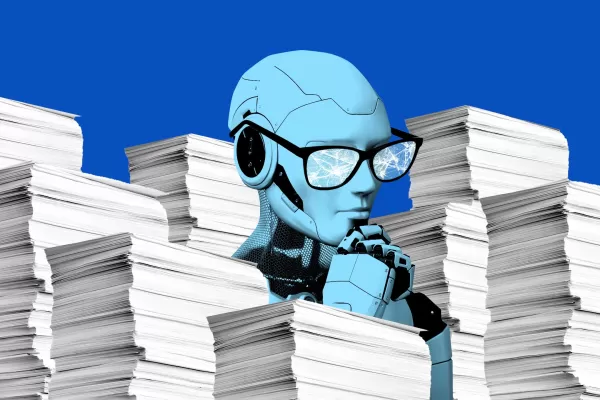
Chinese AI firms have temporarily disabled select chatbot features to curb student cheating during the national college entrance exams, according to a Bloomberg report. Leading AI applications such as Alibaba's Qwen and ByteDance's Doubao have blocked their image recognition from analyzing exam-related questions, while Tencent's Yuanbao and Moonshot's Kimi have suspended photo-recognition services completely for the duration of the tests.
The growing prevalence of AI chatbots has simplified academic dishonesty for students globally. In response, some U.S. schools are returning to paper-based assessments, with the Wall Street Journal noting a significant rise in blue book sales at American universities over the past two years.
China's demanding multi-day "gaokao" exams, held from June 7 to 10, involve over 13.3 million students competing for limited university seats. While electronic devices like phones and laptops are already prohibited during the lengthy tests, disabling AI chatbots provides an extra layer of security against cheating throughout the exam period.
When queried about the service halt, the Yuanbao and Kimi chatbots stated functions were suspended "to ensure the fairness of the college entrance examinations," Bloomberg reports. Likewise, the DeepSeek AI model, which gained popularity earlier this year, is restricting access during specific hours "to ensure fairness in the college entrance examination," as noted by The Guardian.
No official announcements from the mentioned AI companies have been found publicly. The Guardian adds that discussions about the shutdowns are primarily circulating among students on Weibo, China's social media platform. The intensely competitive gaokao exam, being the sole pathway to university admission in China, has raised worries that students might attempt to use AI tools to gain an unfair advantage.
Related article
 Warner Music acquires AI attribution startup Sureel AI
Warner Music Group (WMG) confirmed on Wednesday that it is acquiring Sureel AI, an artificial intelligence attribution startup. Sureel’s proprietary technology generates “AI DNA” for musical tracks, deconstructing them into constituent elements to tr
Amazon introduces Alexa for Shopping while pushing Rufus to the background
Amazon has launched Alexa for Shopping, merging its Rufus shopping chatbot with Alexa+ across the app, website, and Echo Show devices.The assistant answers product queries, compares items, tracks prices, and supports shopping reminders. It also handl
Microsoft, Azure and AI Tech Combat California Wildfire Risks
Microsoft invests in AI-driven wildfire detection, with Juan Lavista Ferres, CVP and Chief Data Scientist, discussing strategies to mitigate environmental damage.According to NASA, climate change impacts everyone on Earth, manifesting as rising tempe
Related Special Topic Recommendations
chatbot
Warner Music acquires AI attribution startup Sureel AI
Warner Music Group (WMG) confirmed on Wednesday that it is acquiring Sureel AI, an artificial intelligence attribution startup. Sureel’s proprietary technology generates “AI DNA” for musical tracks, deconstructing them into constituent elements to tr
Amazon introduces Alexa for Shopping while pushing Rufus to the background
Amazon has launched Alexa for Shopping, merging its Rufus shopping chatbot with Alexa+ across the app, website, and Echo Show devices.The assistant answers product queries, compares items, tracks prices, and supports shopping reminders. It also handl
Microsoft, Azure and AI Tech Combat California Wildfire Risks
Microsoft invests in AI-driven wildfire detection, with Juan Lavista Ferres, CVP and Chief Data Scientist, discussing strategies to mitigate environmental damage.According to NASA, climate change impacts everyone on Earth, manifesting as rising tempe
Related Special Topic Recommendations
chatbot
 Best AI Roleplay Chat Apps for Language Practice, Interview Prep, and Daily Fluency
2026 Latest Best Top-rated AI Roleplay Chat Apps for Language Practice, Interview Prep, and Daily Fluency! XIX.AI curates a powerful game-changing collection that offers free vs paid comparison, real-world tests, and updated rankings weekly. These must-try tools help you boost writing skills, overcome fluency challenges, and improve communication efficiency across all daily scenarios. Explore now to discover your perfect tool for language growth!
 10 tools
 xix.ai
Music composition
AI Stem Separation Tools for Remix Production, Sampling Prep, and Karaoke Masters
xix.ai
Music composition
AI Stem Separation Tools for Remix Production, Sampling Prep, and Karaoke Masters
2026 Latest Best Top-rated AI Stem Separation Tools Curated for Remix Production, Sampling Prep, and Karaoke Masters. These powerful game-changing tools offer real-world tests to deliver precise audio isolation, boosting productivity significantly. XIX.AI provides a weekly updated free vs paid comparison guide to help you find the must-try solution that suits your needs. Explore now to unlock your AI edge.
8 tools
xix.ai
Data Analysis
AI SQL Copilots for Revenue Dashboards, Funnel Analysis, and Product Metrics
2026 Latest Best AI SQL Copilots Ranked Top-Rated! XIX.AI curates a powerful game-changing collection for weekly updated real-world tests. These must-try tools help you generate accurate revenue dashboards, analyze sales funnels, and track product metrics swiftly, boosting productivity massively. Explore now to Discover your perfect tool for data-driven decision making! 238 characters
9 tools
xix.ai
Music composition
Best AI Melody Writing Tools for Song Drafts
2026 Latest Best Top-Rated AI Melody Writing Tools for Song Drafts! XIX.AI has curated a highly powerful game-changing collection that goes through rigorous real-world tests to deliver the best writing experience. You can find detailed free vs paid comparisons, accurate rankings, and must-try options designed to help you create stunning song drafts effortlessly and boost your creative productivity significantly. Explore now to discover your perfect tool!
8 tools
xix.ai
chatbot
Best AI Conversation Trainer Tools for Interview Practice
2026 Latest Best Top-rated AI Conversation Trainer Tools for Interview Practice are here on XIX.AI! This curated collection features powerful, game-changing tools that go through rigorous real-world tests to deliver accurate feedback. You’ll find a free vs paid comparison and detailed rankings to help you choose the must-try option that boosts your confidence and skills. Explore now to Discover your perfect tool for interview success!
12 tools
xix.ai
Design & Art
Best AI Style Transfer Tools for Creative Experiments
2026 Latest Best Top-rated AI Style Transfer Tools for Creative Experiments! XIX.AI has curated a powerful, game-changing collection of must-try tools that deliver exceptional results through real-world tests and rigorous rankings. These top solutions help creatives boost productivity significantly by accelerating content creation and unlocking endless creative possibilities. Explore now to discover your perfect tool and start creating today!
9 tools
xix.ai

 Comments (2)
0/500
Comments (2)
0/500
![RalphMartínez]()
Interesting move, but I wonder if this is just a temporary fix. Students will always find new ways to use tech, maybe even offline models? 🤔 It feels like a game of cat and mouse between regulators and tech-savvy kids.
![CharlesMartinez]()
Essa atação me faz pensar... Até onde vamos priorizar a segurança em detrimento da educação? 🤔 E se os alunos aprendessem a usar essas ferramentas de forma ética, em vez de simplesmente bloqueá-las? A prova em si já é um sistema tão pressurizado, talvez o problema seja maior que o uso de IA. Fica parecendo um remendo.
Chinese AI firms have temporarily disabled select chatbot features to curb student cheating during the national college entrance exams, according to a Bloomberg report. Leading AI applications such as Alibaba's Qwen and ByteDance's Doubao have blocked their image recognition from analyzing exam-related questions, while Tencent's Yuanbao and Moonshot's Kimi have suspended photo-recognition services completely for the duration of the tests.
The growing prevalence of AI chatbots has simplified academic dishonesty for students globally. In response, some U.S. schools are returning to paper-based assessments, with the Wall Street Journal noting a significant rise in blue book sales at American universities over the past two years.
China's demanding multi-day "gaokao" exams, held from June 7 to 10, involve over 13.3 million students competing for limited university seats. While electronic devices like phones and laptops are already prohibited during the lengthy tests, disabling AI chatbots provides an extra layer of security against cheating throughout the exam period.
When queried about the service halt, the Yuanbao and Kimi chatbots stated functions were suspended "to ensure the fairness of the college entrance examinations," Bloomberg reports. Likewise, the DeepSeek AI model, which gained popularity earlier this year, is restricting access during specific hours "to ensure fairness in the college entrance examination," as noted by The Guardian.
No official announcements from the mentioned AI companies have been found publicly. The Guardian adds that discussions about the shutdowns are primarily circulating among students on Weibo, China's social media platform. The intensely competitive gaokao exam, being the sole pathway to university admission in China, has raised worries that students might attempt to use AI tools to gain an unfair advantage.








 Warner Music acquires AI attribution startup Sureel AI
Warner Music Group (WMG) confirmed on Wednesday that it is acquiring Sureel AI, an artificial intelligence attribution startup. Sureel’s proprietary technology generates “AI DNA” for musical tracks, deconstructing them into constituent elements to tr
Amazon introduces Alexa for Shopping while pushing Rufus to the background
Amazon has launched Alexa for Shopping, merging its Rufus shopping chatbot with Alexa+ across the app, website, and Echo Show devices.The assistant answers product queries, compares items, tracks prices, and supports shopping reminders. It also handl
Warner Music acquires AI attribution startup Sureel AI
Warner Music Group (WMG) confirmed on Wednesday that it is acquiring Sureel AI, an artificial intelligence attribution startup. Sureel’s proprietary technology generates “AI DNA” for musical tracks, deconstructing them into constituent elements to tr
Amazon introduces Alexa for Shopping while pushing Rufus to the background
Amazon has launched Alexa for Shopping, merging its Rufus shopping chatbot with Alexa+ across the app, website, and Echo Show devices.The assistant answers product queries, compares items, tracks prices, and supports shopping reminders. It also handl
 Microsoft, Azure and AI Tech Combat California Wildfire Risks
Microsoft invests in AI-driven wildfire detection, with Juan Lavista Ferres, CVP and Chief Data Scientist, discussing strategies to mitigate environmental damage.According to NASA, climate change impacts everyone on Earth, manifesting as rising tempe
Microsoft, Azure and AI Tech Combat California Wildfire Risks
Microsoft invests in AI-driven wildfire detection, with Juan Lavista Ferres, CVP and Chief Data Scientist, discussing strategies to mitigate environmental damage.According to NASA, climate change impacts everyone on Earth, manifesting as rising tempe

2026 Latest Best Top-rated AI Roleplay Chat Apps for Language Practice, Interview Prep, and Daily Fluency! XIX.AI curates a powerful game-changing collection that offers free vs paid comparison, real-world tests, and updated rankings weekly. These must-try tools help you boost writing skills, overcome fluency challenges, and improve communication efficiency across all daily scenarios. Explore now to discover your perfect tool for language growth!
10 tools
xix.ai

2026 Latest Best Top-rated AI Stem Separation Tools Curated for Remix Production, Sampling Prep, and Karaoke Masters. These powerful game-changing tools offer real-world tests to deliver precise audio isolation, boosting productivity significantly. XIX.AI provides a weekly updated free vs paid comparison guide to help you find the must-try solution that suits your needs. Explore now to unlock your AI edge.
8 tools
xix.ai

2026 Latest Best AI SQL Copilots Ranked Top-Rated! XIX.AI curates a powerful game-changing collection for weekly updated real-world tests. These must-try tools help you generate accurate revenue dashboards, analyze sales funnels, and track product metrics swiftly, boosting productivity massively. Explore now to Discover your perfect tool for data-driven decision making! 238 characters
9 tools
xix.ai

2026 Latest Best Top-Rated AI Melody Writing Tools for Song Drafts! XIX.AI has curated a highly powerful game-changing collection that goes through rigorous real-world tests to deliver the best writing experience. You can find detailed free vs paid comparisons, accurate rankings, and must-try options designed to help you create stunning song drafts effortlessly and boost your creative productivity significantly. Explore now to discover your perfect tool!
8 tools
xix.ai
2026 Latest Best Top-rated AI Conversation Trainer Tools for Interview Practice are here on XIX.AI! This curated collection features powerful, game-changing tools that go through rigorous real-world tests to deliver accurate feedback. You’ll find a free vs paid comparison and detailed rankings to help you choose the must-try option that boosts your confidence and skills. Explore now to Discover your perfect tool for interview success!
12 tools
xix.ai

2026 Latest Best Top-rated AI Style Transfer Tools for Creative Experiments! XIX.AI has curated a powerful, game-changing collection of must-try tools that deliver exceptional results through real-world tests and rigorous rankings. These top solutions help creatives boost productivity significantly by accelerating content creation and unlocking endless creative possibilities. Explore now to discover your perfect tool and start creating today!
9 tools
xix.ai

Interesting move, but I wonder if this is just a temporary fix. Students will always find new ways to use tech, maybe even offline models? 🤔 It feels like a game of cat and mouse between regulators and tech-savvy kids.
Essa atação me faz pensar... Até onde vamos priorizar a segurança em detrimento da educação? 🤔 E se os alunos aprendessem a usar essas ferramentas de forma ética, em vez de simplesmente bloqueá-las? A prova em si já é um sistema tão pressurizado, talvez o problema seja maior que o uso de IA. Fica parecendo um remendo.












