


 Home
HomeBrain-Machine Interface Enables Mental Handwriting Breakthrough
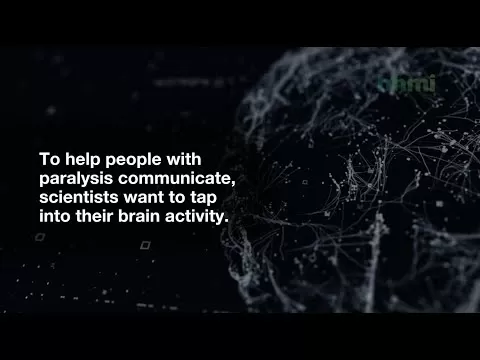
Groundbreaking research from the Howard Hughes Medical Institute has achieved a world-first: translating imagined handwriting into digital text through a brain-machine interface. Scientists successfully decoded neural patterns associated with handwritten letters from a paralyzed participant, creating a revolutionary communication method.
Breakthrough Technology
The pioneering system utilizes implanted neural sensors combined with advanced machine learning algorithms to interpret handwriting attempts from brain activity alone. During trials, a participant with paralysis achieved typing speeds of 90 characters per minute – more than double previous brain-computer interface records.
How It Works
- Tiny sensors implanted in motor cortex detect neuron activity
- Machine learning algorithm recognizes unique neural patterns for each letter
- System converts imagined writing attempts into text in real-time
Research Team & Publication
The interdisciplinary project was led by Krishna Shenoy, HHMI Investigator at Stanford University, in collaboration with Stanford neurosurgeon Jaimie Henderson. Their findings were published May 12 in the prestigious journal Nature, marking a significant milestone in assistive neurotechnology.
Clinical Applications
This breakthrough holds tremendous promise for restoring communication abilities:
- Enables rapid typing without physical movement
- Potential alternative communication method for nonverbal individuals
- May help patients with ALS, spinal cord injuries, and stroke
Participant Results
The 65-year-old clinical trial participant from BrainGate2 demonstrated:
- Accurate sentence copying via imagined writing
- Ability to answer questions in real-time
- Typing speed comparable to smartphone use
Scientist Perspectives
"This paper is a perfect example: the interface decodes the thought of writing and produces the action," said Jose Carmena, neural engineer at UC Berkeley.
Frank Willett, neuroscientist on the team, explained: "Each letter creates highly distinctive neural patterns that our algorithm learns to distinguish efficiently."
Future Directions
The researchers plan to:
- Expand trials to nonverbal participants
- Improve accuracy and speed further
- Develop practical implementations
Technical Specifications
- Two microelectrode arrays implanted in hand/arm motor area
- Advanced machine learning interpretation
- Real-time text display interface
This transformative technology demonstrates how preserved neural activity can be harnessed to bypass physical limitations, offering new communication possibilities for paralyzed individuals.
Related article
 How Cloudflare Tools Secure Autonomous AI Payments
Cloudflare Tools secure autonomous AI payments to tackle what PSE Consulting’s Andrew O’Connor calls one of the biggest barriers to market adoptionSafeguarding web infrastructure is transforming as organisations search for reliable frameworks to depl
Cohere’s Joëlle Pineau on Sovereign AI and Enterprise Security
IDC research commissioned by Cohere explores sovereign AI, with Chief AI Officer Joëlle Pineau outlining essential strategies for enterprise cloud security and data governance.According to IDC’s report, The State of Sovereign AI Adoption in 2026, com
How AI and Robotics Are Transforming bp’s Oil Production
Digital twin technology enables bp to simulate energy asset operations, identifying improvement opportunities and predicting failures before they occur. Credit: bpRicky Burns, Transformation & Technology Manager at bp, explains how digital tools help
Related Special Topic Recommendations
writing
How Cloudflare Tools Secure Autonomous AI Payments
Cloudflare Tools secure autonomous AI payments to tackle what PSE Consulting’s Andrew O’Connor calls one of the biggest barriers to market adoptionSafeguarding web infrastructure is transforming as organisations search for reliable frameworks to depl
Cohere’s Joëlle Pineau on Sovereign AI and Enterprise Security
IDC research commissioned by Cohere explores sovereign AI, with Chief AI Officer Joëlle Pineau outlining essential strategies for enterprise cloud security and data governance.According to IDC’s report, The State of Sovereign AI Adoption in 2026, com
How AI and Robotics Are Transforming bp’s Oil Production
Digital twin technology enables bp to simulate energy asset operations, identifying improvement opportunities and predicting failures before they occur. Credit: bpRicky Burns, Transformation & Technology Manager at bp, explains how digital tools help
Related Special Topic Recommendations
writing
 Best AI Writing Assistants for Long Articles: Outline and Draft Faster
2026 Latest Best AI Writing Assistants for Long Articles: Outline and Draft Faster. XIX.AI curates the top-rated, must-try tools that offer powerful, game-changing support to boost writing efficiency significantly. You’ll find detailed free vs paid comparison, real-world tests, and updated rankings weekly. Explore now to Discover your perfect tool and Start creating today to Unlock your AI edge.
 8 tools
 xix.ai
Education and Learning
ChatGPT Study Tools for Exam Revision, Flashcards, and Homework Explanations
xix.ai
Education and Learning
ChatGPT Study Tools for Exam Revision, Flashcards, and Homework Explanations
2026 Latest Best ChatGPT Study Tools for Exam Revision, Flashcards, and Homework Explanations! XIX.AI has curated a top-rated list of powerful game-changing tools designed to boost your productivity. These must-try solutions offer free vs paid comparison, real-world tests, and detailed rankings to help you find the perfect option for efficient exam preparation and homework support. Explore now to unlock your AI edge!
10 tools
xix.ai
Education and Learning
AI Study Planner Tools for Exam Preparation
2026 Latest Best Top-Rated AI Study Planner Tools for Exam Preparation are here on XIX.AI! This curated collection features powerful, game-changing tools that help you streamline your review process, boost focus, and create personalized study schedules. We conduct real-world tests to determine the top options, offering a free vs paid comparison along with weekly updated rankings. Must-try solutions designed to maximize your productivity and help you ace every exam. Explore now to find your perfect tool!
14 tools
xix.ai
SEO
Best AI Keyword Gap Tools for Organic Growth
2026 Latest Best Top-rated AI Keyword Gap Tools for Organic Growth! XIX.AI has carefully curated a powerful, game-changing collection of the best tools available, featuring weekly updated rankings and real-world tests. You can find a detailed free vs paid comparison to help you choose the perfect option that boosts your content creation efficiency and unlocks your AI edge. Explore now!
8 tools
xix.ai
SEO
AI Internal Link Tools for Better Site Structure
2026 Latest Best Top-Rated AI Internal Link Tools for Better Site Structure are here on XIX.AI! This curated collection features powerful, game-changing solutions that go through real-world tests to deliver superior results. Get a free vs paid comparison, see rankings, and discover must-try options to boost your site’s SEO performance and streamline content organization. Explore now to unlock your AI edge!
11 tools
xix.ai
Productivity
Best AI Note Organizing Tools for Daily Work
2026 Latest Best Top-rated AI Note Organizing Tools for Daily Work are here on XIX.AI! This curated list features powerful, game-changing solutions that help boost productivity significantly through real-world tests and rigorous rankings. You’ll find a detailed free vs paid comparison to help you choose the perfect fit for your needs. Explore now to Discover your perfect tool and Unlock your AI edge in daily tasks!
11 tools
xix.ai

 Comments (2)
0/500
Comments (2)
0/500
![RogerGonzalez]()
¡Increíble! Siempre pensé que escribir con la mente era cosa de ciencia ficción, pero ahora es realidad. ¿Se imaginan poder redactar mensajes sin mover un solo músculo? 🤯 Aunque claro, me pregunto... si todos pudiéramos escribir con el pensamiento, ¿las discusiones en redes sociales serían aún más caóticas porque la gente tuitearía sin filtro directamente desde su cerebro? 😅 Igual es un avance impresionante para personas con movilidad reducida. ¡Sigan así, científicos!
![RaymondGreen]()
AIがこんなに進化してるなんて…でも思考を直接読み取られるのってちょっと気味悪くない?🤔 暗証番号とか夢の中で考えてたら漏れちゃいそうで怖い
Groundbreaking research from the Howard Hughes Medical Institute has achieved a world-first: translating imagined handwriting into digital text through a brain-machine interface. Scientists successfully decoded neural patterns associated with handwritten letters from a paralyzed participant, creating a revolutionary communication method.
Breakthrough Technology
The pioneering system utilizes implanted neural sensors combined with advanced machine learning algorithms to interpret handwriting attempts from brain activity alone. During trials, a participant with paralysis achieved typing speeds of 90 characters per minute – more than double previous brain-computer interface records.
How It Works
- Tiny sensors implanted in motor cortex detect neuron activity
- Machine learning algorithm recognizes unique neural patterns for each letter
- System converts imagined writing attempts into text in real-time
Research Team & Publication
The interdisciplinary project was led by Krishna Shenoy, HHMI Investigator at Stanford University, in collaboration with Stanford neurosurgeon Jaimie Henderson. Their findings were published May 12 in the prestigious journal Nature, marking a significant milestone in assistive neurotechnology.
Clinical Applications
This breakthrough holds tremendous promise for restoring communication abilities:
- Enables rapid typing without physical movement
- Potential alternative communication method for nonverbal individuals
- May help patients with ALS, spinal cord injuries, and stroke
Participant Results
The 65-year-old clinical trial participant from BrainGate2 demonstrated:
- Accurate sentence copying via imagined writing
- Ability to answer questions in real-time
- Typing speed comparable to smartphone use
Scientist Perspectives
"This paper is a perfect example: the interface decodes the thought of writing and produces the action," said Jose Carmena, neural engineer at UC Berkeley.
Frank Willett, neuroscientist on the team, explained: "Each letter creates highly distinctive neural patterns that our algorithm learns to distinguish efficiently."
Future Directions
The researchers plan to:
- Expand trials to nonverbal participants
- Improve accuracy and speed further
- Develop practical implementations
Technical Specifications
- Two microelectrode arrays implanted in hand/arm motor area
- Advanced machine learning interpretation
- Real-time text display interface
This transformative technology demonstrates how preserved neural activity can be harnessed to bypass physical limitations, offering new communication possibilities for paralyzed individuals.








 How Cloudflare Tools Secure Autonomous AI Payments
Cloudflare Tools secure autonomous AI payments to tackle what PSE Consulting’s Andrew O’Connor calls one of the biggest barriers to market adoptionSafeguarding web infrastructure is transforming as organisations search for reliable frameworks to depl
How Cloudflare Tools Secure Autonomous AI Payments
Cloudflare Tools secure autonomous AI payments to tackle what PSE Consulting’s Andrew O’Connor calls one of the biggest barriers to market adoptionSafeguarding web infrastructure is transforming as organisations search for reliable frameworks to depl
 Cohere’s Joëlle Pineau on Sovereign AI and Enterprise Security
IDC research commissioned by Cohere explores sovereign AI, with Chief AI Officer Joëlle Pineau outlining essential strategies for enterprise cloud security and data governance.According to IDC’s report, The State of Sovereign AI Adoption in 2026, com
Cohere’s Joëlle Pineau on Sovereign AI and Enterprise Security
IDC research commissioned by Cohere explores sovereign AI, with Chief AI Officer Joëlle Pineau outlining essential strategies for enterprise cloud security and data governance.According to IDC’s report, The State of Sovereign AI Adoption in 2026, com
 How AI and Robotics Are Transforming bp’s Oil Production
Digital twin technology enables bp to simulate energy asset operations, identifying improvement opportunities and predicting failures before they occur. Credit: bpRicky Burns, Transformation & Technology Manager at bp, explains how digital tools help
How AI and Robotics Are Transforming bp’s Oil Production
Digital twin technology enables bp to simulate energy asset operations, identifying improvement opportunities and predicting failures before they occur. Credit: bpRicky Burns, Transformation & Technology Manager at bp, explains how digital tools help
2026 Latest Best AI Writing Assistants for Long Articles: Outline and Draft Faster. XIX.AI curates the top-rated, must-try tools that offer powerful, game-changing support to boost writing efficiency significantly. You’ll find detailed free vs paid comparison, real-world tests, and updated rankings weekly. Explore now to Discover your perfect tool and Start creating today to Unlock your AI edge.
8 tools
xix.ai

2026 Latest Best ChatGPT Study Tools for Exam Revision, Flashcards, and Homework Explanations! XIX.AI has curated a top-rated list of powerful game-changing tools designed to boost your productivity. These must-try solutions offer free vs paid comparison, real-world tests, and detailed rankings to help you find the perfect option for efficient exam preparation and homework support. Explore now to unlock your AI edge!
10 tools
xix.ai

2026 Latest Best Top-Rated AI Study Planner Tools for Exam Preparation are here on XIX.AI! This curated collection features powerful, game-changing tools that help you streamline your review process, boost focus, and create personalized study schedules. We conduct real-world tests to determine the top options, offering a free vs paid comparison along with weekly updated rankings. Must-try solutions designed to maximize your productivity and help you ace every exam. Explore now to find your perfect tool!
14 tools
xix.ai

2026 Latest Best Top-rated AI Keyword Gap Tools for Organic Growth! XIX.AI has carefully curated a powerful, game-changing collection of the best tools available, featuring weekly updated rankings and real-world tests. You can find a detailed free vs paid comparison to help you choose the perfect option that boosts your content creation efficiency and unlocks your AI edge. Explore now!
8 tools
xix.ai

2026 Latest Best Top-Rated AI Internal Link Tools for Better Site Structure are here on XIX.AI! This curated collection features powerful, game-changing solutions that go through real-world tests to deliver superior results. Get a free vs paid comparison, see rankings, and discover must-try options to boost your site’s SEO performance and streamline content organization. Explore now to unlock your AI edge!
11 tools
xix.ai

2026 Latest Best Top-rated AI Note Organizing Tools for Daily Work are here on XIX.AI! This curated list features powerful, game-changing solutions that help boost productivity significantly through real-world tests and rigorous rankings. You’ll find a detailed free vs paid comparison to help you choose the perfect fit for your needs. Explore now to Discover your perfect tool and Unlock your AI edge in daily tasks!
11 tools
xix.ai

¡Increíble! Siempre pensé que escribir con la mente era cosa de ciencia ficción, pero ahora es realidad. ¿Se imaginan poder redactar mensajes sin mover un solo músculo? 🤯 Aunque claro, me pregunto... si todos pudiéramos escribir con el pensamiento, ¿las discusiones en redes sociales serían aún más caóticas porque la gente tuitearía sin filtro directamente desde su cerebro? 😅 Igual es un avance impresionante para personas con movilidad reducida. ¡Sigan así, científicos!
AIがこんなに進化してるなんて…でも思考を直接読み取られるのってちょっと気味悪くない?🤔 暗証番号とか夢の中で考えてたら漏れちゃいそうで怖い












