


 Home
AI-Generated Blonde Images: Why They Captivate and Dominate Online Searches
The digital revolution continues to transform creative expression, with AI-powered image generation emerging as one of the most fascinating developments. Among these algorithmic creations, strikingly realistic depictions of blonde women have captured significant attention, sparking discussions about artistry, ethics, and technological innovation. This comprehensive exploration examines this visually compelling trend while analyzing its broader implications for visual media.
Key Points
AI-generated blonde imagery demonstrates remarkable realism and technical sophistication.
These creations prompt important conversations about authenticity and ethical representation.
Underlying technologies continue advancing exponentially, expanding creative possibilities.
Responsible development requires thoughtful consideration of ethical dimensions.
Visual industries from marketing to entertainment are experiencing transformation.
The Rise of AI-Generated Imagery
Fundamentals of AI Image Creation
Artificial intelligence synthesizes visual content through advanced machine learning techniques that analyze vast image databases. Systems like Generative Adversarial Networks employ competing neural networks that progressively improve output quality through iterative refinement.
This technological breakthrough enables unprecedented creative flexibility:
- GAN Architecture: Paired networks generate and evaluate images simultaneously
- Diffusion Processes: Build images through controlled noise reduction
- Transformer Networks: Apply language processing techniques visually
The Cultural Phenomenon of Blonde Imagery
The prevalence of blonde representations reflects complex cultural dynamics:

Multiple factors influence this algorithmic preference:
- Training dataset composition
- Historical beauty standards
- Aesthetic visual contrast
- Algorithmic reinforcement patterns
Ethical and Societal Implications
Authenticity and Representation Challenges
The emergence of hyperrealistic synthetic imagery presents crucial ethical considerations:
- Truth in media disclosure requirements
- Psychological impacts of unrealistic ideals
- Consent protocols for synthetic likenesses
- Algorithmic accountability frameworks
Potential for Malicious Applications
While innovative, the technology enables several concerning use cases:
- Identity manipulation through deepfakes
- Disinformation campaigns
- Cyberharassment vectors
- Financial fraud opportunities
Creation Guide
Platform Selection
Leading generation platforms offer distinct advantages:
- Midjourney: Artistic stylization
- DALL-E: Photorealistic capabilities
- Stable Diffusion: Open-source flexibility
- NightCafe: User-friendly interface

Prompt Engineering Techniques
Effective prompt formulation requires:
- Specific descriptive language
- Stylistic modifiers
- Contextual detail
- Iterative refinement
Image Refinement Process
Post-generation enhancement tools enable:
- Precision editing through inpainting
- Style transfer capabilities
- Resolution enhancement
- Composition adjustments
Benefits and Limitations
Advantages
- Democratized creative expression
- Rapid prototyping capabilities
- Cost-effective visual production
- Stylistic experimentation
Challenges
- Copyright uncertainties
- Algorithmic bias concerns
- Potential authenticity erosion
- Misuse vulnerabilities
FAQ
Intellectual Property Considerations
Current legal frameworks remain ambiguous regarding AI-generated content ownership, varying significantly across jurisdictions.
Commercial Usage Policies
Platform-specific licenses dictate permissible applications, often requiring upgraded subscriptions for business use.
Ethical Creation Practices
Responsible generation involves transparency about synthetic origins, inclusive representation, and consent awareness.
Related Considerations
Photographic Industry Transformation
AI integration is reshaping photographic workflows through automated editing and generative techniques.
Human Creativity Preservation
While AI augments creative processes, uniquely human qualities—emotional depth, conceptual innovation—remain irreplaceable.
Related article
 Stripe to Acquire OpenRouter as AI Model Routing Gains Momentum
Stripe has agreed to acquire OpenRouter, an AI model-routing platform that gives developers access to hundreds of models through a single interface. The deal adds model selection and routing to Stripe’s existing work around AI usage and token-based b
Former OpenAI Researcher Barrett Zoph Returns to Google to Support Gemini Development
Barret Zoph, who previously abruptly left and joined OpenAI due to a disagreement with Thinking Machines Lab CEO Miriam Mularati, has once again changed employers. Alphabet's Google announced that Zoph will return as Vice President of Research, bring
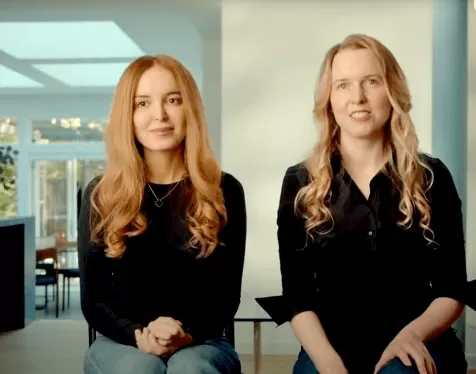
How Recursive Intelligence Raised $335M at $4B Valuation in 4 Months
The co-founders of startup Ricursive Intelligence seemed destined to be co-founders.Anna Goldie, CEO, and Azalia Mirhoseini, CTO, are so well-known in the AI community that they were among those AI engineers who “got those weird emails from Zuckerber
Related Special Topic Recommendations
Design & Art
 Top AI Illustration Tools: Create Editorial Scenes and Cover Art Faster
2026 Latest Top-rated AI Illustration Tools: Our curated list features the best powerfully designed tools for creating stunning editorial scenes and eye-catching cover art quickly. Each option has gone through rigorous real-world tests, offering a free vs paid comparison to help you find the perfect match for your workflow. Try these must-try solutions today to unlock your AI edge and boost your creative productivity. Explore now at XIX.AI.
 10 tools
 xix.ai
Education and Learning
Top AI Tutors for Exam Prep: Practice Math, Science, and English
2026 Latest Top-Rated Best AI Tutors for Exam Prep are here on XIX.AI! Our curated list features powerful game-changing tools that offer free vs paid comparison, real-world tests, and weekly updated rankings. They help boost your writing efficiency, simplify complex topic learning, and unlock your academic potential. Explore now to Discover your perfect exam prep tool and Start creating today to Unlock your AI edge!
10 tools
xix.ai
Finance
AI Budget Planning Tools for Personal Money Management
2026 Latest Best Top-Rated AI Budget Planning Tools for Personal Money Management are here on XIX.AI! This curated collection features powerful, game-changing solutions that help you conduct real-world tests, understand spending habits, and create personalized plans to boost productivity. Enjoy a free vs paid comparison along with detailed rankings. Must-try tools designed to simplify money management and unlock your AI edge. Explore now!
11 tools
xix.ai
Health & Wellness
AI Sleep Tracking Assistants: Improve Recovery with Better Bedtime Habits
2026 Latest Best Top-Rated AI Sleep Tracking Assistants curated for ultimate recovery. This fully updated weekly guide features powerful tools that deliver real-world tests, free vs paid comparison, and detailed rankings to help you find the must-try solution that boosts sleep quality and supports better bedtime habits. Explore now at XIX.AI to Unlock your AI edge.
10 tools
xix.ai
Data Analysis
AI SQL Copilots for Product and Revenue Analytics
2026 Latest Best Top-Rated AI SQL Copilots for Product and Revenue Analytics! XIX.AI has curated a powerful, game-changing collection of must-try tools that undergo real-world tests through weekly updated rankings. These tools help users boost productivity significantly by accelerating data analysis, streamlining complex queries, and generating accurate insights to drive smarter business decisions. Explore now to Discover your perfect tool for unlocking your AI edge!
14 tools
xix.ai
Education and Learning
Best AI Homework Helpers That Teach: Learn Concepts, Not Just Answers
2026 Latest Best Top-Rated AI Homework Helpers That Teach Core Concepts Not Just Answers Powerful Tools for Students Must-Try Curated List Weekly Updated Free vs Paid Comparison Real-World Tests Accurate Rankings to Help You Unlock Your Full Learning Potential Explore now to Discover your perfect tool for smarter studying.
10 tools
xix.ai

 Comments (4)
0/500
![FrankMartínez]()
Haha, no surprise here. The 'blonde' obsession just moved from stock photos to AI prompts. Is it a data bias thing or are we just stuck in a feedback loop? The internet truly loves its clichés. 🤷♀️
![DennisAllen]()
Неожиданно, но факт: алгоритмы явно предпочитают блондинок 😅 Интересно, это отражает культурные стереотипы или просто так лучше тренируются модели? Иногда кажется, что ИИ становится зеркалом наших собственных предубеждений...
![HarryMartínez]()
Interessant, wie KI-Bilder von blonden Frauen so präsent sind. Habt ihr auch das Gefühl, dass diese Ästhetik oft sehr ähnlich aussieht? Irgendwie gruselig, aber auch faszinierend, wie Algorithmen unsere Vorlieben spiegeln. 🤖 Vielleicht sollte man mehr über die kulturellen Auswirkungen nachdenken...
![LarryEvans]()
Cet article m'a fait réfléchir sur les stéréotypes véhiculés par l'IA. On voit effectivement des tonnes d'images de femmes blondes générées par IA, mais est-ce que cette dominance reflète nos biais ou les amplifie? 🤔 C'est troublant de voir comment la technologie peut renforcer des clichés.
The digital revolution continues to transform creative expression, with AI-powered image generation emerging as one of the most fascinating developments. Among these algorithmic creations, strikingly realistic depictions of blonde women have captured significant attention, sparking discussions about artistry, ethics, and technological innovation. This comprehensive exploration examines this visually compelling trend while analyzing its broader implications for visual media.
Key Points
AI-generated blonde imagery demonstrates remarkable realism and technical sophistication.
These creations prompt important conversations about authenticity and ethical representation.
Underlying technologies continue advancing exponentially, expanding creative possibilities.
Responsible development requires thoughtful consideration of ethical dimensions.
Visual industries from marketing to entertainment are experiencing transformation.
The Rise of AI-Generated Imagery
Fundamentals of AI Image Creation
Artificial intelligence synthesizes visual content through advanced machine learning techniques that analyze vast image databases. Systems like Generative Adversarial Networks employ competing neural networks that progressively improve output quality through iterative refinement.
This technological breakthrough enables unprecedented creative flexibility:
- GAN Architecture: Paired networks generate and evaluate images simultaneously
- Diffusion Processes: Build images through controlled noise reduction
- Transformer Networks: Apply language processing techniques visually
The Cultural Phenomenon of Blonde Imagery
The prevalence of blonde representations reflects complex cultural dynamics:
Multiple factors influence this algorithmic preference:
- Training dataset composition
- Historical beauty standards
- Aesthetic visual contrast
- Algorithmic reinforcement patterns
Ethical and Societal Implications
Authenticity and Representation Challenges
The emergence of hyperrealistic synthetic imagery presents crucial ethical considerations:
- Truth in media disclosure requirements
- Psychological impacts of unrealistic ideals
- Consent protocols for synthetic likenesses
- Algorithmic accountability frameworks
Potential for Malicious Applications
While innovative, the technology enables several concerning use cases:
- Identity manipulation through deepfakes
- Disinformation campaigns
- Cyberharassment vectors
- Financial fraud opportunities
Creation Guide
Platform Selection
Leading generation platforms offer distinct advantages:
- Midjourney: Artistic stylization
- DALL-E: Photorealistic capabilities
- Stable Diffusion: Open-source flexibility
- NightCafe: User-friendly interface
Prompt Engineering Techniques
Effective prompt formulation requires:
- Specific descriptive language
- Stylistic modifiers
- Contextual detail
- Iterative refinement
Image Refinement Process
Post-generation enhancement tools enable:
- Precision editing through inpainting
- Style transfer capabilities
- Resolution enhancement
- Composition adjustments
Benefits and Limitations
Advantages
- Democratized creative expression
- Rapid prototyping capabilities
- Cost-effective visual production
- Stylistic experimentation
Challenges
- Copyright uncertainties
- Algorithmic bias concerns
- Potential authenticity erosion
- Misuse vulnerabilities
FAQ
Intellectual Property Considerations
Current legal frameworks remain ambiguous regarding AI-generated content ownership, varying significantly across jurisdictions.
Commercial Usage Policies
Platform-specific licenses dictate permissible applications, often requiring upgraded subscriptions for business use.
Ethical Creation Practices
Responsible generation involves transparency about synthetic origins, inclusive representation, and consent awareness.
Related Considerations
Photographic Industry Transformation
AI integration is reshaping photographic workflows through automated editing and generative techniques.
Human Creativity Preservation
While AI augments creative processes, uniquely human qualities—emotional depth, conceptual innovation—remain irreplaceable.








 Stripe to Acquire OpenRouter as AI Model Routing Gains Momentum
Stripe has agreed to acquire OpenRouter, an AI model-routing platform that gives developers access to hundreds of models through a single interface. The deal adds model selection and routing to Stripe’s existing work around AI usage and token-based b
 Former OpenAI Researcher Barrett Zoph Returns to Google to Support Gemini Development
Barret Zoph, who previously abruptly left and joined OpenAI due to a disagreement with Thinking Machines Lab CEO Miriam Mularati, has once again changed employers. Alphabet's Google announced that Zoph will return as Vice President of Research, bring
 How Recursive Intelligence Raised $335M at $4B Valuation in 4 Months
The co-founders of startup Ricursive Intelligence seemed destined to be co-founders.Anna Goldie, CEO, and Azalia Mirhoseini, CTO, are so well-known in the AI community that they were among those AI engineers who “got those weird emails from Zuckerber

2026 Latest Top-rated AI Illustration Tools: Our curated list features the best powerfully designed tools for creating stunning editorial scenes and eye-catching cover art quickly. Each option has gone through rigorous real-world tests, offering a free vs paid comparison to help you find the perfect match for your workflow. Try these must-try solutions today to unlock your AI edge and boost your creative productivity. Explore now at XIX.AI.
10 tools
xix.ai

2026 Latest Top-Rated Best AI Tutors for Exam Prep are here on XIX.AI! Our curated list features powerful game-changing tools that offer free vs paid comparison, real-world tests, and weekly updated rankings. They help boost your writing efficiency, simplify complex topic learning, and unlock your academic potential. Explore now to Discover your perfect exam prep tool and Start creating today to Unlock your AI edge!
10 tools
xix.ai

2026 Latest Best Top-Rated AI Budget Planning Tools for Personal Money Management are here on XIX.AI! This curated collection features powerful, game-changing solutions that help you conduct real-world tests, understand spending habits, and create personalized plans to boost productivity. Enjoy a free vs paid comparison along with detailed rankings. Must-try tools designed to simplify money management and unlock your AI edge. Explore now!
11 tools
xix.ai

2026 Latest Best Top-Rated AI Sleep Tracking Assistants curated for ultimate recovery. This fully updated weekly guide features powerful tools that deliver real-world tests, free vs paid comparison, and detailed rankings to help you find the must-try solution that boosts sleep quality and supports better bedtime habits. Explore now at XIX.AI to Unlock your AI edge.
10 tools
xix.ai

2026 Latest Best Top-Rated AI SQL Copilots for Product and Revenue Analytics! XIX.AI has curated a powerful, game-changing collection of must-try tools that undergo real-world tests through weekly updated rankings. These tools help users boost productivity significantly by accelerating data analysis, streamlining complex queries, and generating accurate insights to drive smarter business decisions. Explore now to Discover your perfect tool for unlocking your AI edge!
14 tools
xix.ai

2026 Latest Best Top-Rated AI Homework Helpers That Teach Core Concepts Not Just Answers Powerful Tools for Students Must-Try Curated List Weekly Updated Free vs Paid Comparison Real-World Tests Accurate Rankings to Help You Unlock Your Full Learning Potential Explore now to Discover your perfect tool for smarter studying.
10 tools
xix.ai

Haha, no surprise here. The 'blonde' obsession just moved from stock photos to AI prompts. Is it a data bias thing or are we just stuck in a feedback loop? The internet truly loves its clichés. 🤷♀️
Неожиданно, но факт: алгоритмы явно предпочитают блондинок 😅 Интересно, это отражает культурные стереотипы или просто так лучше тренируются модели? Иногда кажется, что ИИ становится зеркалом наших собственных предубеждений...
Interessant, wie KI-Bilder von blonden Frauen so präsent sind. Habt ihr auch das Gefühl, dass diese Ästhetik oft sehr ähnlich aussieht? Irgendwie gruselig, aber auch faszinierend, wie Algorithmen unsere Vorlieben spiegeln. 🤖 Vielleicht sollte man mehr über die kulturellen Auswirkungen nachdenken...
Cet article m'a fait réfléchir sur les stéréotypes véhiculés par l'IA. On voit effectivement des tonnes d'images de femmes blondes générées par IA, mais est-ce que cette dominance reflète nos biais ou les amplifie? 🤔 C'est troublant de voir comment la technologie peut renforcer des clichés.












