


 Home
HomeBillie Eilish Releases Stirring AI Rendition of 'Young and Beautiful'
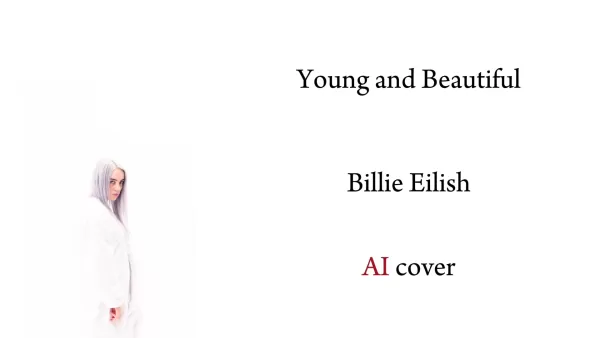
Artificial Intelligence is forging new paths for musical creativity and reinterpretation. A compelling illustration of this is an AI-generated cover of Lana Del Rey's iconic 'Young and Beautiful,' reimagined in Billie Eilish's distinct style. This version presents a uniquely haunting interpretation, merging Eilish's signature vocal delivery with the melancholic soul of Del Rey's original masterpiece. This article explores this intriguing AI creation, examining its emotional resonance and the sophisticated technology that enabled it. We'll look at this remarkable fusion of art and technology.
Key Points
An AI has created a cover of 'Young and Beautiful' that mimics Billie Eilish's vocal style.
The cover artfully combines Eilish's intimate vocal approach with the wistful core of Lana Del Rey's song.
AI-generated music covers are achieving greater sophistication and emotional depth.
This rendition demonstrates AI's potential in reinterpreting and creating music.
It underscores the growing intersection of technology and artistic expression, offering new creative possibilities.
The Allure of 'Young and Beautiful'
Why Lana Del Rey's Song Resonates
Lana Del Rey's 'Young and Beautiful' is more than a song; it's an emotional journey delving into transient youth, enduring love, and the poignant awareness of fading beauty. Featured in the film adaptation of 'The Great Gatsby,' it quickly became one of her signature works, praised for its lyrical profundity, haunting melody, and Del Rey's characteristically vintage-inspired vocal performance. The track evokes a powerful sense of nostalgia and longing, connecting with listeners on a deeply personal level.
The song’s vulnerability is key to its relatability. The lyrics grapple with the insecurity of whether love can last beyond physical beauty—a universal anxiety about aging and relationships. Its melancholic tone, set against lush orchestral arrangements, creates an aura of timeless elegance, perfectly complementing the themes of 'The Great Gatsby.' The song's enduring appeal lies in its exploration of a fundamental human desire: for love to transcend the physical and the innate fear of impermanence.
Beyond its emotional weight, the song is celebrated for its musical composition. The fusion of classical orchestral elements with Del Rey’s modern, alternative sound creates a unique sonic tapestry that is both somber and beautiful. This distinctive quality has made it a popular choice for covers and reinterpretations, each attempting to capture the original's essence while adding a fresh perspective.
Key Elements of the Song's Resonance:
- Relatable Themes: Tackles universal concerns about aging and the endurance of love.
- Emotional Depth: Conveys a profound sense of nostalgia and yearning.
- Musical Composition: Merges classical orchestration with contemporary alternative styles.
- Cultural Impact: Its association with 'The Great Gatsby' cemented its timeless quality.
The Original's Impact and Popularity
Released as part of 'The Great Gatsby' soundtrack, 'Young and Beautiful' soared up the charts, achieving both commercial success and critical acclaim. Its significant influence is visible through its frequent use in films, television, and other media. The song's profound themes have made it a reference point in cultural discussions about beauty and relationships.
Impact Metrics of 'Young and Beautiful':
Metric Value Chart Position Top 40 on Billboard Streaming Count Over 1 billion streams Awards Multiple nominations Media Usage Featured in numerous films and TV shows
The song's success stems from several factors. Its connection to 'The Great Gatsby' provided a major platform and an immediate audience. Lana Del Rey's unique vocal delivery and the song's captivating melody captured the cultural moment, appealing to those drawn to its nostalgic aesthetic and emotional richness. Ultimately, its lyrics, which explore the intricacies of love and beauty, resonated widely, securing its status as a timeless piece.
Furthermore, the song has inspired countless covers and reinterpretations. Artists have explored it through acoustic, orchestral, and various other arrangements, showcasing its versatility and lasting appeal. Its popularity continues on social media, where it fuels countless videos and creative content, further embedding it in contemporary culture.
The Technology Behind the AI Cover
Understanding AI Vocal Synthesis
Producing an AI cover that authentically mimics an artist's unique voice involves sophisticated techniques. At its core, AI vocal synthesis trains a model to understand and replicate the subtleties of a specific singer's performance. This process relies on machine learning, signal processing, and extensive datasets of vocal recordings.
Key Techniques Used in AI Vocal Synthesis:
- Data Collection: Compiling a large dataset of vocal recordings from the target artist.
- Feature Extraction: Analyzing these recordings to identify key characteristics like pitch, timbre, and vibrato.
- Model Training: Using a neural network or similar model to learn the patterns of the artist's vocal style.
- Synthesis: Employing the trained model to generate new vocal performances in the artist's style.
Data collection is fundamental. A larger, higher-quality dataset enables the AI to learn the finer details of the voice more accurately. This data often includes studio recordings and live performances to capture the full range of the artist's vocal expression. After collection, the data is processed to extract features that define the voice's unique qualities—pitch (note frequency), timbre (tonal color), and vibrato (subtle pitch variations).
These features train an AI model, such as a neural network, to understand the relationship between them and the artist's style. Once trained, the model can predict how the artist would perform a new song. By inputting a song's melody and lyrics, the model synthesizes a vocal track that mirrors the artist's distinctive sound.
AI vocal synthesis is a rapidly advancing field. As technology progresses, AI-generated covers are likely to become even more convincing, further blurring the lines between human and machine-generated art.
Creating Your Own AI Music Cover
Steps to Generate an AI Cover
If you're interested in creating your own AI music cover, here is a step-by-step guide to begin. Note that while some tools simplify the process, achieving a high-quality result typically requires knowledge of music production and AI concepts.
Steps to Create an AI Music Cover:
- Choose a Song and Vocal Style: Select the song you wish to cover and the artist whose vocal style you want to replicate.
- Gather Vocal Data: Collect a dataset of clean vocal recordings from the target artist.
- Prepare the Data: Clean and preprocess the audio files to remove noise and ensure consistency.
- Train an AI Model: Use an AI model to learn the vocal characteristics from your prepared dataset.
- Synthesize the Vocal Performance: Input the melody and lyrics into the trained model to generate the new vocal track.
- Mix and Master the Cover: Blend the AI-generated vocals with an instrumental track, applying audio effects and adjustments for polish.
- Share Your Creation: Distribute your AI cover on platforms like YouTube or SoundCloud to share it with an audience.
Tools and Resources for Creating AI Music Covers:
- AI Vocal Synthesis Software: iZotope RX, Waves Tune Real-Time, Antares Auto-Tune.
- Machine Learning Frameworks: TensorFlow, PyTorch.
- Online Tutorials and Communities: YouTube tutorials, Reddit communities, specialized forums.
Creating an AI cover presents challenges. Sourcing sufficient high-quality vocal data can be difficult, especially for niche artists. Training the model demands an understanding of machine learning and significant computational power. Finally, mixing and mastering the final track requires a good ear and production skills.
Cost of AI Cover Creation Tools
Subscription Models and One-Time Purchases
Pricing for AI music creation tools varies significantly based on the software and services. Some operate on subscription models, while others are available for a one-time purchase. Here is a general overview:
- Subscription-Based Software: Access to AI tools for a monthly or annual fee, typically ranging from $10 to over $100 per month.
- One-Time Purchases: Software available for a single payment, with prices ranging from around $100 to over $1000.
- Free AI Music Tools: Some basic tools are free, though they often have limited features, suitable for beginners.
- Cloud-Based Services: Pricing models based on usage (pay-as-you-go) or subscriptions for cloud-based AI services.

Additional costs may include purchasing vocal data, instrumental tracks, or other music production software, depending on the project's scope and desired quality.
Pros and Cons of AI Music Covers
Pros
Offers novel and unique musical interpretations
Allows for exploration of diverse vocal styles
Showcases the capabilities of advanced AI technology
Makes music creation more accessible to amateur creators
Cons
Raises questions about artistic authenticity
Involves complex copyright and infringement issues
Potentially impacts opportunities for human vocalists
May lack the nuanced emotional depth of a human performance
Key Features of AI Vocal Synthesis Software
Capabilities for Mimicking Vocal Styles
AI vocal synthesis software includes a suite of features designed to produce realistic vocal performances. Key capabilities include:
- Vocal Style Transfer: Applying the vocal characteristics of one artist to a performance of another song.
- Voice Cloning: Creating a highly accurate digital replica of a specific singer's voice.
- Harmonic Generation: Automatically generating harmonies that complement the main vocal line.
- Pitch and Timing Correction: Correcting any pitch inaccuracies or timing issues in the generated vocal.
- Real-Time Vocal Effects: Applying effects like reverb, delay, or distortion in real-time.
- Customizable Parameters: Adjusting specific aspects like pitch, timbre, and vibrato for finer control.
These features enable users to create AI covers that are both technically impressive and emotionally engaging. When used skillfully with music production knowledge, the results can be remarkably lifelike.
Diverse Applications of AI Music Covers
From Artistic Exploration to Commercial Ventures
AI music covers have a wide array of applications, spanning from artistic projects to commercial uses:
Artistic Exploration: Musicians use AI to experiment with different genres and vocal styles.
Music Education: AI covers can serve as tools for students to study various singing techniques and styles.
Commercial Ventures: Used in creating advertising jingles, film scores, and personalized music products.
Fan Content Creation: Enables fans to produce their own unique versions of beloved songs.
Accessibility: Opens up music creation to individuals who might not have traditional musical training or who have disabilities.
AI's role in music is creating new opportunities for creativity and innovation. As the technology evolves, we can expect to see even more diverse and impactful applications for AI-generated music.
Frequently Asked Questions About AI Music Covers
Are AI-generated covers legal?
The legality of AI-generated covers is complex and depends on copyright law, fair use provisions, and the specific methods used. Generally, it is crucial to obtain permission from the copyright holders of both the original song composition and the recorded vocal style being imitated. Distributing an AI cover without proper licensing can lead to copyright infringement claims.
What are the ethical concerns surrounding AI music?
AI music raises several ethical issues, including questions of authorship, copyright ownership, the potential reduction in work for human musicians, and the devaluation of human artistic expression. Addressing these concerns is vital to ensure the responsible and ethical development of AI in music.
Can AI replace human musicians?
While AI has made impressive advances in music generation, it is unlikely to fully replace human musicians. AI lacks the genuine emotional insight, spontaneous creativity, and lived experience that human artists bring to their work. It is more accurately seen as a powerful tool that can augment and inspire human creativity, not supersede it.
Related Questions
What other AI music projects are gaining popularity?
Beyond AI covers, other AI music projects are gaining traction. These include AI-composed soundtracks for video games that adapt to gameplay, AI tools that assist musicians in production and composition, and platforms that use AI to personalize music recommendations for listeners. These projects demonstrate the expanding role of AI across the music industry.
How can AI be used ethically in music?
Using AI ethically in music involves key principles. Transparency is essential—clearly disclosing when AI is involved in creation. Ensuring fair compensation for artists whose work is used to train AI models is critical. Actively working to prevent bias in AI algorithms promotes diversity and fairness. Ultimately, fostering a collaborative relationship between human artists and AI, rather than a competitive one, helps ensure that technology enhances human creativity responsibly.
Related article
 Former OpenAI Researcher Barrett Zoph Returns to Google to Support Gemini Development
Barret Zoph, who previously abruptly left and joined OpenAI due to a disagreement with Thinking Machines Lab CEO Miriam Mularati, has once again changed employers. Alphabet's Google announced that Zoph will return as Vice President of Research, bring
How Recursive Intelligence Raised $335M at $4B Valuation in 4 Months
The co-founders of startup Ricursive Intelligence seemed destined to be co-founders.Anna Goldie, CEO, and Azalia Mirhoseini, CTO, are so well-known in the AI community that they were among those AI engineers who “got those weird emails from Zuckerber
AI race won’t wait, nor will this TechCrunch Disrupt 25% discount
Every founder building in AI right now is asking the same question: Are we moving fast enough, and effectively enough? TechCrunch Disrupt 2026 puts you in the same room as the people wrestling with that existential question at the highest levels. Fro
Related Special Topic Recommendations
Design & Art
Former OpenAI Researcher Barrett Zoph Returns to Google to Support Gemini Development
Barret Zoph, who previously abruptly left and joined OpenAI due to a disagreement with Thinking Machines Lab CEO Miriam Mularati, has once again changed employers. Alphabet's Google announced that Zoph will return as Vice President of Research, bring
How Recursive Intelligence Raised $335M at $4B Valuation in 4 Months
The co-founders of startup Ricursive Intelligence seemed destined to be co-founders.Anna Goldie, CEO, and Azalia Mirhoseini, CTO, are so well-known in the AI community that they were among those AI engineers who “got those weird emails from Zuckerber
AI race won’t wait, nor will this TechCrunch Disrupt 25% discount
Every founder building in AI right now is asking the same question: Are we moving fast enough, and effectively enough? TechCrunch Disrupt 2026 puts you in the same room as the people wrestling with that existential question at the highest levels. Fro
Related Special Topic Recommendations
Design & Art
 Top AI Illustration Tools: Create Editorial Scenes and Cover Art Faster
2026 Latest Top-rated AI Illustration Tools: Our curated list features the best powerfully designed tools for creating stunning editorial scenes and eye-catching cover art quickly. Each option has gone through rigorous real-world tests, offering a free vs paid comparison to help you find the perfect match for your workflow. Try these must-try solutions today to unlock your AI edge and boost your creative productivity. Explore now at XIX.AI.
 10 tools
 xix.ai
Education and Learning
Top AI Tutors for Exam Prep: Practice Math, Science, and English
xix.ai
Education and Learning
Top AI Tutors for Exam Prep: Practice Math, Science, and English
2026 Latest Top-Rated Best AI Tutors for Exam Prep are here on XIX.AI! Our curated list features powerful game-changing tools that offer free vs paid comparison, real-world tests, and weekly updated rankings. They help boost your writing efficiency, simplify complex topic learning, and unlock your academic potential. Explore now to Discover your perfect exam prep tool and Start creating today to Unlock your AI edge!
10 tools
xix.ai
Finance
AI Budget Planning Tools for Personal Money Management
2026 Latest Best Top-Rated AI Budget Planning Tools for Personal Money Management are here on XIX.AI! This curated collection features powerful, game-changing solutions that help you conduct real-world tests, understand spending habits, and create personalized plans to boost productivity. Enjoy a free vs paid comparison along with detailed rankings. Must-try tools designed to simplify money management and unlock your AI edge. Explore now!
11 tools
xix.ai
Health & Wellness
AI Sleep Tracking Assistants: Improve Recovery with Better Bedtime Habits
2026 Latest Best Top-Rated AI Sleep Tracking Assistants curated for ultimate recovery. This fully updated weekly guide features powerful tools that deliver real-world tests, free vs paid comparison, and detailed rankings to help you find the must-try solution that boosts sleep quality and supports better bedtime habits. Explore now at XIX.AI to Unlock your AI edge.
10 tools
xix.ai
Data Analysis
AI SQL Copilots for Product and Revenue Analytics
2026 Latest Best Top-Rated AI SQL Copilots for Product and Revenue Analytics! XIX.AI has curated a powerful, game-changing collection of must-try tools that undergo real-world tests through weekly updated rankings. These tools help users boost productivity significantly by accelerating data analysis, streamlining complex queries, and generating accurate insights to drive smarter business decisions. Explore now to Discover your perfect tool for unlocking your AI edge!
14 tools
xix.ai
Education and Learning
Best AI Homework Helpers That Teach: Learn Concepts, Not Just Answers
2026 Latest Best Top-Rated AI Homework Helpers That Teach Core Concepts Not Just Answers Powerful Tools for Students Must-Try Curated List Weekly Updated Free vs Paid Comparison Real-World Tests Accurate Rankings to Help You Unlock Your Full Learning Potential Explore now to Discover your perfect tool for smarter studying.
10 tools
xix.ai

 Comments (1)
0/500
Comments (1)
0/500
![RalphMartínez]()
This AI-generated cover is wild — it totally nails Billie's whispery vibe but also feels kinda creepy. Makes you wonder if artists should be worried or excited about this tech. 🎤🤖
Artificial Intelligence is forging new paths for musical creativity and reinterpretation. A compelling illustration of this is an AI-generated cover of Lana Del Rey's iconic 'Young and Beautiful,' reimagined in Billie Eilish's distinct style. This version presents a uniquely haunting interpretation, merging Eilish's signature vocal delivery with the melancholic soul of Del Rey's original masterpiece. This article explores this intriguing AI creation, examining its emotional resonance and the sophisticated technology that enabled it. We'll look at this remarkable fusion of art and technology.
Key Points
An AI has created a cover of 'Young and Beautiful' that mimics Billie Eilish's vocal style.
The cover artfully combines Eilish's intimate vocal approach with the wistful core of Lana Del Rey's song.
AI-generated music covers are achieving greater sophistication and emotional depth.
This rendition demonstrates AI's potential in reinterpreting and creating music.
It underscores the growing intersection of technology and artistic expression, offering new creative possibilities.
The Allure of 'Young and Beautiful'
Why Lana Del Rey's Song Resonates
Lana Del Rey's 'Young and Beautiful' is more than a song; it's an emotional journey delving into transient youth, enduring love, and the poignant awareness of fading beauty. Featured in the film adaptation of 'The Great Gatsby,' it quickly became one of her signature works, praised for its lyrical profundity, haunting melody, and Del Rey's characteristically vintage-inspired vocal performance. The track evokes a powerful sense of nostalgia and longing, connecting with listeners on a deeply personal level.
The song’s vulnerability is key to its relatability. The lyrics grapple with the insecurity of whether love can last beyond physical beauty—a universal anxiety about aging and relationships. Its melancholic tone, set against lush orchestral arrangements, creates an aura of timeless elegance, perfectly complementing the themes of 'The Great Gatsby.' The song's enduring appeal lies in its exploration of a fundamental human desire: for love to transcend the physical and the innate fear of impermanence.
Beyond its emotional weight, the song is celebrated for its musical composition. The fusion of classical orchestral elements with Del Rey’s modern, alternative sound creates a unique sonic tapestry that is both somber and beautiful. This distinctive quality has made it a popular choice for covers and reinterpretations, each attempting to capture the original's essence while adding a fresh perspective.
Key Elements of the Song's Resonance:
- Relatable Themes: Tackles universal concerns about aging and the endurance of love.
- Emotional Depth: Conveys a profound sense of nostalgia and yearning.
- Musical Composition: Merges classical orchestration with contemporary alternative styles.
- Cultural Impact: Its association with 'The Great Gatsby' cemented its timeless quality.
The Original's Impact and Popularity
Released as part of 'The Great Gatsby' soundtrack, 'Young and Beautiful' soared up the charts, achieving both commercial success and critical acclaim. Its significant influence is visible through its frequent use in films, television, and other media. The song's profound themes have made it a reference point in cultural discussions about beauty and relationships.
Impact Metrics of 'Young and Beautiful':
| Metric | Value |
|---|---|
| Chart Position | Top 40 on Billboard |
| Streaming Count | Over 1 billion streams |
| Awards | Multiple nominations |
| Media Usage | Featured in numerous films and TV shows |
The song's success stems from several factors. Its connection to 'The Great Gatsby' provided a major platform and an immediate audience. Lana Del Rey's unique vocal delivery and the song's captivating melody captured the cultural moment, appealing to those drawn to its nostalgic aesthetic and emotional richness. Ultimately, its lyrics, which explore the intricacies of love and beauty, resonated widely, securing its status as a timeless piece.
Furthermore, the song has inspired countless covers and reinterpretations. Artists have explored it through acoustic, orchestral, and various other arrangements, showcasing its versatility and lasting appeal. Its popularity continues on social media, where it fuels countless videos and creative content, further embedding it in contemporary culture.
The Technology Behind the AI Cover
Understanding AI Vocal Synthesis
Producing an AI cover that authentically mimics an artist's unique voice involves sophisticated techniques. At its core, AI vocal synthesis trains a model to understand and replicate the subtleties of a specific singer's performance. This process relies on machine learning, signal processing, and extensive datasets of vocal recordings.
Key Techniques Used in AI Vocal Synthesis:
- Data Collection: Compiling a large dataset of vocal recordings from the target artist.
- Feature Extraction: Analyzing these recordings to identify key characteristics like pitch, timbre, and vibrato.
- Model Training: Using a neural network or similar model to learn the patterns of the artist's vocal style.
- Synthesis: Employing the trained model to generate new vocal performances in the artist's style.
Data collection is fundamental. A larger, higher-quality dataset enables the AI to learn the finer details of the voice more accurately. This data often includes studio recordings and live performances to capture the full range of the artist's vocal expression. After collection, the data is processed to extract features that define the voice's unique qualities—pitch (note frequency), timbre (tonal color), and vibrato (subtle pitch variations).
These features train an AI model, such as a neural network, to understand the relationship between them and the artist's style. Once trained, the model can predict how the artist would perform a new song. By inputting a song's melody and lyrics, the model synthesizes a vocal track that mirrors the artist's distinctive sound.
AI vocal synthesis is a rapidly advancing field. As technology progresses, AI-generated covers are likely to become even more convincing, further blurring the lines between human and machine-generated art.
Creating Your Own AI Music Cover
Steps to Generate an AI Cover
If you're interested in creating your own AI music cover, here is a step-by-step guide to begin. Note that while some tools simplify the process, achieving a high-quality result typically requires knowledge of music production and AI concepts.
Steps to Create an AI Music Cover:
- Choose a Song and Vocal Style: Select the song you wish to cover and the artist whose vocal style you want to replicate.
- Gather Vocal Data: Collect a dataset of clean vocal recordings from the target artist.
- Prepare the Data: Clean and preprocess the audio files to remove noise and ensure consistency.
- Train an AI Model: Use an AI model to learn the vocal characteristics from your prepared dataset.
- Synthesize the Vocal Performance: Input the melody and lyrics into the trained model to generate the new vocal track.
- Mix and Master the Cover: Blend the AI-generated vocals with an instrumental track, applying audio effects and adjustments for polish.
- Share Your Creation: Distribute your AI cover on platforms like YouTube or SoundCloud to share it with an audience.
Tools and Resources for Creating AI Music Covers:
- AI Vocal Synthesis Software: iZotope RX, Waves Tune Real-Time, Antares Auto-Tune.
- Machine Learning Frameworks: TensorFlow, PyTorch.
- Online Tutorials and Communities: YouTube tutorials, Reddit communities, specialized forums.
Creating an AI cover presents challenges. Sourcing sufficient high-quality vocal data can be difficult, especially for niche artists. Training the model demands an understanding of machine learning and significant computational power. Finally, mixing and mastering the final track requires a good ear and production skills.
Cost of AI Cover Creation Tools
Subscription Models and One-Time Purchases
Pricing for AI music creation tools varies significantly based on the software and services. Some operate on subscription models, while others are available for a one-time purchase. Here is a general overview:
- Subscription-Based Software: Access to AI tools for a monthly or annual fee, typically ranging from $10 to over $100 per month.
- One-Time Purchases: Software available for a single payment, with prices ranging from around $100 to over $1000.
- Free AI Music Tools: Some basic tools are free, though they often have limited features, suitable for beginners.
- Cloud-Based Services: Pricing models based on usage (pay-as-you-go) or subscriptions for cloud-based AI services.
Additional costs may include purchasing vocal data, instrumental tracks, or other music production software, depending on the project's scope and desired quality.
Pros and Cons of AI Music Covers
Pros
Offers novel and unique musical interpretations
Allows for exploration of diverse vocal styles
Showcases the capabilities of advanced AI technology
Makes music creation more accessible to amateur creators
Cons
Raises questions about artistic authenticity
Involves complex copyright and infringement issues
Potentially impacts opportunities for human vocalists
May lack the nuanced emotional depth of a human performance
Key Features of AI Vocal Synthesis Software
Capabilities for Mimicking Vocal Styles
AI vocal synthesis software includes a suite of features designed to produce realistic vocal performances. Key capabilities include:
- Vocal Style Transfer: Applying the vocal characteristics of one artist to a performance of another song.
- Voice Cloning: Creating a highly accurate digital replica of a specific singer's voice.
- Harmonic Generation: Automatically generating harmonies that complement the main vocal line.
- Pitch and Timing Correction: Correcting any pitch inaccuracies or timing issues in the generated vocal.
- Real-Time Vocal Effects: Applying effects like reverb, delay, or distortion in real-time.
- Customizable Parameters: Adjusting specific aspects like pitch, timbre, and vibrato for finer control.
These features enable users to create AI covers that are both technically impressive and emotionally engaging. When used skillfully with music production knowledge, the results can be remarkably lifelike.
Diverse Applications of AI Music Covers
From Artistic Exploration to Commercial Ventures
AI music covers have a wide array of applications, spanning from artistic projects to commercial uses:
Artistic Exploration: Musicians use AI to experiment with different genres and vocal styles.
Music Education: AI covers can serve as tools for students to study various singing techniques and styles.
Commercial Ventures: Used in creating advertising jingles, film scores, and personalized music products.
Fan Content Creation: Enables fans to produce their own unique versions of beloved songs.
Accessibility: Opens up music creation to individuals who might not have traditional musical training or who have disabilities.
AI's role in music is creating new opportunities for creativity and innovation. As the technology evolves, we can expect to see even more diverse and impactful applications for AI-generated music.
Frequently Asked Questions About AI Music Covers
Are AI-generated covers legal?
The legality of AI-generated covers is complex and depends on copyright law, fair use provisions, and the specific methods used. Generally, it is crucial to obtain permission from the copyright holders of both the original song composition and the recorded vocal style being imitated. Distributing an AI cover without proper licensing can lead to copyright infringement claims.
What are the ethical concerns surrounding AI music?
AI music raises several ethical issues, including questions of authorship, copyright ownership, the potential reduction in work for human musicians, and the devaluation of human artistic expression. Addressing these concerns is vital to ensure the responsible and ethical development of AI in music.
Can AI replace human musicians?
While AI has made impressive advances in music generation, it is unlikely to fully replace human musicians. AI lacks the genuine emotional insight, spontaneous creativity, and lived experience that human artists bring to their work. It is more accurately seen as a powerful tool that can augment and inspire human creativity, not supersede it.
Related Questions
What other AI music projects are gaining popularity?
Beyond AI covers, other AI music projects are gaining traction. These include AI-composed soundtracks for video games that adapt to gameplay, AI tools that assist musicians in production and composition, and platforms that use AI to personalize music recommendations for listeners. These projects demonstrate the expanding role of AI across the music industry.
How can AI be used ethically in music?
Using AI ethically in music involves key principles. Transparency is essential—clearly disclosing when AI is involved in creation. Ensuring fair compensation for artists whose work is used to train AI models is critical. Actively working to prevent bias in AI algorithms promotes diversity and fairness. Ultimately, fostering a collaborative relationship between human artists and AI, rather than a competitive one, helps ensure that technology enhances human creativity responsibly.








 Former OpenAI Researcher Barrett Zoph Returns to Google to Support Gemini Development
Barret Zoph, who previously abruptly left and joined OpenAI due to a disagreement with Thinking Machines Lab CEO Miriam Mularati, has once again changed employers. Alphabet's Google announced that Zoph will return as Vice President of Research, bring
Former OpenAI Researcher Barrett Zoph Returns to Google to Support Gemini Development
Barret Zoph, who previously abruptly left and joined OpenAI due to a disagreement with Thinking Machines Lab CEO Miriam Mularati, has once again changed employers. Alphabet's Google announced that Zoph will return as Vice President of Research, bring
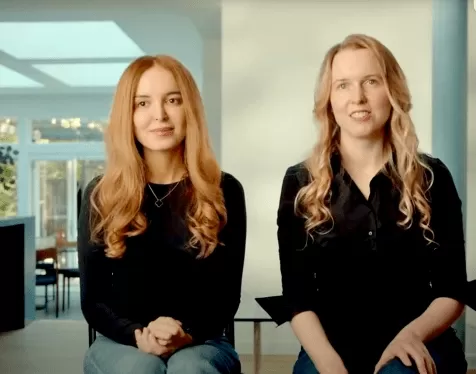 How Recursive Intelligence Raised $335M at $4B Valuation in 4 Months
The co-founders of startup Ricursive Intelligence seemed destined to be co-founders.Anna Goldie, CEO, and Azalia Mirhoseini, CTO, are so well-known in the AI community that they were among those AI engineers who “got those weird emails from Zuckerber
How Recursive Intelligence Raised $335M at $4B Valuation in 4 Months
The co-founders of startup Ricursive Intelligence seemed destined to be co-founders.Anna Goldie, CEO, and Azalia Mirhoseini, CTO, are so well-known in the AI community that they were among those AI engineers who “got those weird emails from Zuckerber
 AI race won’t wait, nor will this TechCrunch Disrupt 25% discount
Every founder building in AI right now is asking the same question: Are we moving fast enough, and effectively enough? TechCrunch Disrupt 2026 puts you in the same room as the people wrestling with that existential question at the highest levels. Fro
AI race won’t wait, nor will this TechCrunch Disrupt 25% discount
Every founder building in AI right now is asking the same question: Are we moving fast enough, and effectively enough? TechCrunch Disrupt 2026 puts you in the same room as the people wrestling with that existential question at the highest levels. Fro
2026 Latest Top-rated AI Illustration Tools: Our curated list features the best powerfully designed tools for creating stunning editorial scenes and eye-catching cover art quickly. Each option has gone through rigorous real-world tests, offering a free vs paid comparison to help you find the perfect match for your workflow. Try these must-try solutions today to unlock your AI edge and boost your creative productivity. Explore now at XIX.AI.
10 tools
xix.ai

2026 Latest Top-Rated Best AI Tutors for Exam Prep are here on XIX.AI! Our curated list features powerful game-changing tools that offer free vs paid comparison, real-world tests, and weekly updated rankings. They help boost your writing efficiency, simplify complex topic learning, and unlock your academic potential. Explore now to Discover your perfect exam prep tool and Start creating today to Unlock your AI edge!
10 tools
xix.ai

2026 Latest Best Top-Rated AI Budget Planning Tools for Personal Money Management are here on XIX.AI! This curated collection features powerful, game-changing solutions that help you conduct real-world tests, understand spending habits, and create personalized plans to boost productivity. Enjoy a free vs paid comparison along with detailed rankings. Must-try tools designed to simplify money management and unlock your AI edge. Explore now!
11 tools
xix.ai
2026 Latest Best Top-Rated AI Sleep Tracking Assistants curated for ultimate recovery. This fully updated weekly guide features powerful tools that deliver real-world tests, free vs paid comparison, and detailed rankings to help you find the must-try solution that boosts sleep quality and supports better bedtime habits. Explore now at XIX.AI to Unlock your AI edge.
10 tools
xix.ai
2026 Latest Best Top-Rated AI SQL Copilots for Product and Revenue Analytics! XIX.AI has curated a powerful, game-changing collection of must-try tools that undergo real-world tests through weekly updated rankings. These tools help users boost productivity significantly by accelerating data analysis, streamlining complex queries, and generating accurate insights to drive smarter business decisions. Explore now to Discover your perfect tool for unlocking your AI edge!
14 tools
xix.ai

2026 Latest Best Top-Rated AI Homework Helpers That Teach Core Concepts Not Just Answers Powerful Tools for Students Must-Try Curated List Weekly Updated Free vs Paid Comparison Real-World Tests Accurate Rankings to Help You Unlock Your Full Learning Potential Explore now to Discover your perfect tool for smarter studying.
10 tools
xix.ai

This AI-generated cover is wild — it totally nails Billie's whispery vibe but also feels kinda creepy. Makes you wonder if artists should be worried or excited about this tech. 🎤🤖












