


 Home
Beijing accounts for nearly 30% of China’s large model filings, with 225 approved by the Cyberspace Administration, maintaining its lead in AI innovation

As large AI models shift from innovation to regulatory compliance, Beijing is cementing its status as China’s AI innovation hub. The Beijing Municipal Bureau of Economy and Information Technology reports that 225 large models in the city have passed the Cyberspace Administration’s filing for generative AI services, representing roughly 30% of the national total and ranking first among all provinces and cities. This highlights Beijing’s comprehensive lead in policy, talent, technology, and industry ecosystem.
These figures underscore Beijing’s dense concentration of AI innovators. From Baidu’s “Wenxin Yiyan” and Zhipu AI’s “GLM” to Moonshot AI’s “Kimi,” alongside industry leaders like Banchuan Intelligence, MiniMax, and DeepSeek, many top large model companies have established their presence in Beijing. Leveraging hubs such as Zhongguancun Science City, the Haidian AI Innovation Corridor, and the National New Generation Artificial Intelligence Innovation Development Pilot Zone, Beijing has built a complete industrial chain spanning basic research, model training, industry applications, and security governance.
Notably, large model filing serves as both a compliance benchmark and a market access “passport.” Passing the review confirms that models meet regulatory standards for content safety, data sourcing, and algorithm transparency, enabling them to offer public services. Beijing enterprises’ high pass rate reflects their dual strengths in technical compliance and engineering maturity.
Furthermore, Beijing has consistently introduced targeted policies to support large model development in recent years. These include computing power subsidies, open application scenarios, and talent attraction measures, while promoting the deep integration of “models + industries” and creating benchmark cases in sectors such as government services, healthcare, finance, and education.
Related article
 Shanghai AI Lab Unveils ViraHInter to Boost Antiviral Drug Discovery
Shanghai Artificial Intelligence Lab, in partnership with Fudan University, Ruijin Hospital affiliated to Shanghai Jiao Tong University School of Medicine, and the Shanghai Institute for Viral Research, has introduced ViraHInter, a novel AI predictiv
Sandbar Raises $23M Series A to Advance AI-Powered Note-Taking Ring
Sandbar, a startup founded by former Meta engineers Mina Fahmi and Kirak Hong, gained significant attention last year with the reveal of its Stream ring, a wearable device designed for note-taking. The company has now secured $23 million in Series A
OpenAI Publishes Dual Reports: AI Progress Outpaces Safety Efforts
As the public awaits further details from OpenAI regarding the incident of AI agents autonomously infiltrating the German programmer's website DseWiki, on September 6th local time, OpenAI released two documents: one announcing that the company has me
Related Special Topic Recommendations
Design & Art
 Top AI Illustration Tools: Create Editorial Scenes and Cover Art Faster
2026 Latest Top-rated AI Illustration Tools: Our curated list features the best powerfully designed tools for creating stunning editorial scenes and eye-catching cover art quickly. Each option has gone through rigorous real-world tests, offering a free vs paid comparison to help you find the perfect match for your workflow. Try these must-try solutions today to unlock your AI edge and boost your creative productivity. Explore now at XIX.AI.
 10 tools
 xix.ai
Education and Learning
Top AI Tutors for Exam Prep: Practice Math, Science, and English
2026 Latest Top-Rated Best AI Tutors for Exam Prep are here on XIX.AI! Our curated list features powerful game-changing tools that offer free vs paid comparison, real-world tests, and weekly updated rankings. They help boost your writing efficiency, simplify complex topic learning, and unlock your academic potential. Explore now to Discover your perfect exam prep tool and Start creating today to Unlock your AI edge!
10 tools
xix.ai
Finance
AI Budget Planning Tools for Personal Money Management
2026 Latest Best Top-Rated AI Budget Planning Tools for Personal Money Management are here on XIX.AI! This curated collection features powerful, game-changing solutions that help you conduct real-world tests, understand spending habits, and create personalized plans to boost productivity. Enjoy a free vs paid comparison along with detailed rankings. Must-try tools designed to simplify money management and unlock your AI edge. Explore now!
11 tools
xix.ai
Health & Wellness
AI Sleep Tracking Assistants: Improve Recovery with Better Bedtime Habits
2026 Latest Best Top-Rated AI Sleep Tracking Assistants curated for ultimate recovery. This fully updated weekly guide features powerful tools that deliver real-world tests, free vs paid comparison, and detailed rankings to help you find the must-try solution that boosts sleep quality and supports better bedtime habits. Explore now at XIX.AI to Unlock your AI edge.
10 tools
xix.ai
Data Analysis
AI SQL Copilots for Product and Revenue Analytics
2026 Latest Best Top-Rated AI SQL Copilots for Product and Revenue Analytics! XIX.AI has curated a powerful, game-changing collection of must-try tools that undergo real-world tests through weekly updated rankings. These tools help users boost productivity significantly by accelerating data analysis, streamlining complex queries, and generating accurate insights to drive smarter business decisions. Explore now to Discover your perfect tool for unlocking your AI edge!
14 tools
xix.ai
Education and Learning
Best AI Homework Helpers That Teach: Learn Concepts, Not Just Answers
2026 Latest Best Top-Rated AI Homework Helpers That Teach Core Concepts Not Just Answers Powerful Tools for Students Must-Try Curated List Weekly Updated Free vs Paid Comparison Real-World Tests Accurate Rankings to Help You Unlock Your Full Learning Potential Explore now to Discover your perfect tool for smarter studying.
10 tools
xix.ai

 Comments (0)
0/500
As large AI models shift from innovation to regulatory compliance, Beijing is cementing its status as China’s AI innovation hub. The Beijing Municipal Bureau of Economy and Information Technology reports that 225 large models in the city have passed the Cyberspace Administration’s filing for generative AI services, representing roughly 30% of the national total and ranking first among all provinces and cities. This highlights Beijing’s comprehensive lead in policy, talent, technology, and industry ecosystem.
These figures underscore Beijing’s dense concentration of AI innovators. From Baidu’s “Wenxin Yiyan” and Zhipu AI’s “GLM” to Moonshot AI’s “Kimi,” alongside industry leaders like Banchuan Intelligence, MiniMax, and DeepSeek, many top large model companies have established their presence in Beijing. Leveraging hubs such as Zhongguancun Science City, the Haidian AI Innovation Corridor, and the National New Generation Artificial Intelligence Innovation Development Pilot Zone, Beijing has built a complete industrial chain spanning basic research, model training, industry applications, and security governance.
Notably, large model filing serves as both a compliance benchmark and a market access “passport.” Passing the review confirms that models meet regulatory standards for content safety, data sourcing, and algorithm transparency, enabling them to offer public services. Beijing enterprises’ high pass rate reflects their dual strengths in technical compliance and engineering maturity.
Furthermore, Beijing has consistently introduced targeted policies to support large model development in recent years. These include computing power subsidies, open application scenarios, and talent attraction measures, while promoting the deep integration of “models + industries” and creating benchmark cases in sectors such as government services, healthcare, finance, and education.








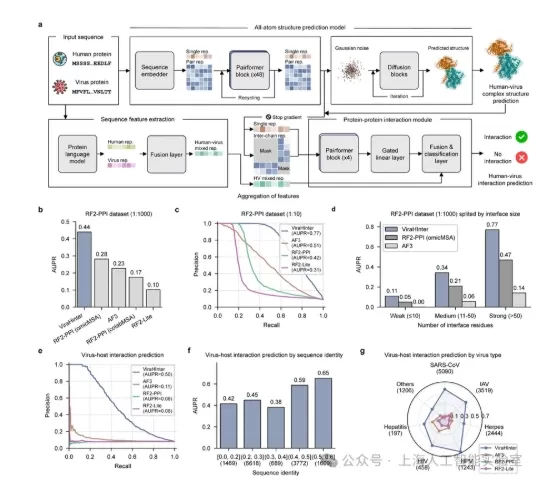 Shanghai AI Lab Unveils ViraHInter to Boost Antiviral Drug Discovery
Shanghai Artificial Intelligence Lab, in partnership with Fudan University, Ruijin Hospital affiliated to Shanghai Jiao Tong University School of Medicine, and the Shanghai Institute for Viral Research, has introduced ViraHInter, a novel AI predictiv
 Sandbar Raises $23M Series A to Advance AI-Powered Note-Taking Ring
Sandbar, a startup founded by former Meta engineers Mina Fahmi and Kirak Hong, gained significant attention last year with the reveal of its Stream ring, a wearable device designed for note-taking. The company has now secured $23 million in Series A
 OpenAI Publishes Dual Reports: AI Progress Outpaces Safety Efforts
As the public awaits further details from OpenAI regarding the incident of AI agents autonomously infiltrating the German programmer's website DseWiki, on September 6th local time, OpenAI released two documents: one announcing that the company has me

2026 Latest Top-rated AI Illustration Tools: Our curated list features the best powerfully designed tools for creating stunning editorial scenes and eye-catching cover art quickly. Each option has gone through rigorous real-world tests, offering a free vs paid comparison to help you find the perfect match for your workflow. Try these must-try solutions today to unlock your AI edge and boost your creative productivity. Explore now at XIX.AI.
10 tools
xix.ai

2026 Latest Top-Rated Best AI Tutors for Exam Prep are here on XIX.AI! Our curated list features powerful game-changing tools that offer free vs paid comparison, real-world tests, and weekly updated rankings. They help boost your writing efficiency, simplify complex topic learning, and unlock your academic potential. Explore now to Discover your perfect exam prep tool and Start creating today to Unlock your AI edge!
10 tools
xix.ai

2026 Latest Best Top-Rated AI Budget Planning Tools for Personal Money Management are here on XIX.AI! This curated collection features powerful, game-changing solutions that help you conduct real-world tests, understand spending habits, and create personalized plans to boost productivity. Enjoy a free vs paid comparison along with detailed rankings. Must-try tools designed to simplify money management and unlock your AI edge. Explore now!
11 tools
xix.ai

2026 Latest Best Top-Rated AI Sleep Tracking Assistants curated for ultimate recovery. This fully updated weekly guide features powerful tools that deliver real-world tests, free vs paid comparison, and detailed rankings to help you find the must-try solution that boosts sleep quality and supports better bedtime habits. Explore now at XIX.AI to Unlock your AI edge.
10 tools
xix.ai

2026 Latest Best Top-Rated AI SQL Copilots for Product and Revenue Analytics! XIX.AI has curated a powerful, game-changing collection of must-try tools that undergo real-world tests through weekly updated rankings. These tools help users boost productivity significantly by accelerating data analysis, streamlining complex queries, and generating accurate insights to drive smarter business decisions. Explore now to Discover your perfect tool for unlocking your AI edge!
14 tools
xix.ai

2026 Latest Best Top-Rated AI Homework Helpers That Teach Core Concepts Not Just Answers Powerful Tools for Students Must-Try Curated List Weekly Updated Free vs Paid Comparison Real-World Tests Accurate Rankings to Help You Unlock Your Full Learning Potential Explore now to Discover your perfect tool for smarter studying.
10 tools
xix.ai












