


 Home
HomeAlipay AI Pay Introduces One-Click Payment Activation for Websites
In the age of AI, individual developers can more easily access Alipay and bring their applications to market.
On May 13, Alipay introduced new features for "AI Collection," enhanced the "Alipay Payment Integration Skill" in partnership with the AI development platform Kuaizi, and launched a new "Alipay Merchant Onboarding Skill." Developers can now use natural language to complete the entire flow—from creating an application, to integrating Alipay payment, to merchant onboarding—all in one step while building AI programs. This turns development into a launch-ready process, giving them the ability to accept payments directly.
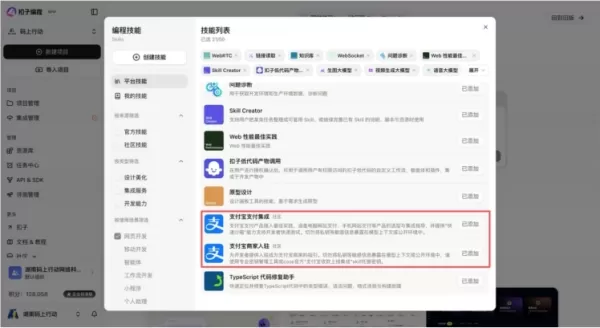
Figure: The Alipay Payment Integration Skill and Merchant Onboarding Skill are now live on Kuaizi.
Previously, the Alipay Payment Integration Skill packaged basic payment features into standardized components that developers could invoke using natural language in Vibe Coding mode. But developers still had to search multiple platforms for sandbox test account details—something that could be confusing or difficult to locate, especially for technical newcomers. If problems arose, they would need to spend considerable time troubleshooting.
After the upgrade, the Alipay Payment Integration Skill introduced a "Quick Sandbox" feature that lets developers automatically create isolated test environments without an account—no registration, no login, and real-time testing during development. It also comes with built-in payment integration troubleshooting, so developers can directly ask about payment failure reasons in Kuaizi coding sessions and receive solutions.
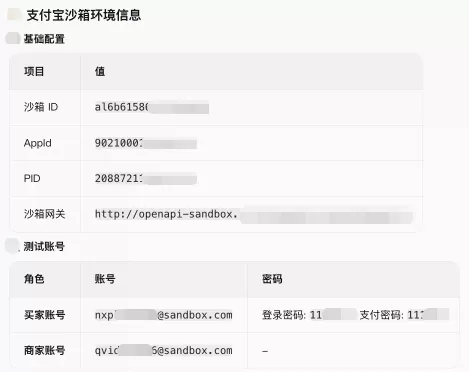
Figure: The Alipay Payment Integration Skill assists developers in automatically setting up a sandbox testing environment.
In addition to streamlining the development process, Alipay also introduced the "Alipay Merchant Onboarding Skill" on Kuaizi. After finishing a web application, developers can use this skill through conversation to plan their onboarding strategy. By submitting three screenshots of the app, they can pass merchant certification, giving individual developers an easy path to a commercialization "passport."
"If I hadn't figured out the payment system, I wouldn't have known how to sell my app. Now users can pay me directly when they open the product page—it's so much easier!" says "Sunshine Xiaowen," a graduate from just a year ago who built a web app on Kuaizi that helps users practice AI prompts. She integrated Alipay payment within 24 hours using Alipay's Skill.
"Sunshine Xiaowen," a teacher-education graduate with no prior coding or development experience, only recently began learning AI programming and is now earning income through her self-discovered AI prompt learning techniques. "AI isn't just for professionals—it lets ordinary people be seen and realize their creative value at a low cost," she said, capturing the spirit of countless AI entrepreneurs.
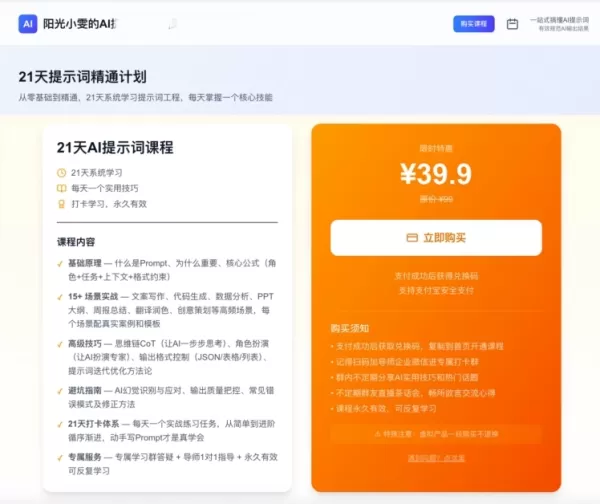
Figure: "Sunshine Xiaowen's" app successfully integrates Alipay payment.
Industry observers noted that Alipay is steadily building payment infrastructure for the AI era. By offering standardized, intelligent Skill tools, it systematically reduces the technical hurdles and commercialization costs of AI app development, drawing a wider range of developers into the AI innovation movement and further energizing the AI ecosystem.
Related article
 Stripe to Acquire OpenRouter as AI Model Routing Gains Momentum
Stripe has agreed to acquire OpenRouter, an AI model-routing platform that gives developers access to hundreds of models through a single interface. The deal adds model selection and routing to Stripe’s existing work around AI usage and token-based b
Former OpenAI Researcher Barrett Zoph Returns to Google to Support Gemini Development
Barret Zoph, who previously abruptly left and joined OpenAI due to a disagreement with Thinking Machines Lab CEO Miriam Mularati, has once again changed employers. Alphabet's Google announced that Zoph will return as Vice President of Research, bring
How Recursive Intelligence Raised $335M at $4B Valuation in 4 Months
The co-founders of startup Ricursive Intelligence seemed destined to be co-founders.Anna Goldie, CEO, and Azalia Mirhoseini, CTO, are so well-known in the AI community that they were among those AI engineers who “got those weird emails from Zuckerber
Related Special Topic Recommendations
Design & Art
Stripe to Acquire OpenRouter as AI Model Routing Gains Momentum
Stripe has agreed to acquire OpenRouter, an AI model-routing platform that gives developers access to hundreds of models through a single interface. The deal adds model selection and routing to Stripe’s existing work around AI usage and token-based b
Former OpenAI Researcher Barrett Zoph Returns to Google to Support Gemini Development
Barret Zoph, who previously abruptly left and joined OpenAI due to a disagreement with Thinking Machines Lab CEO Miriam Mularati, has once again changed employers. Alphabet's Google announced that Zoph will return as Vice President of Research, bring
How Recursive Intelligence Raised $335M at $4B Valuation in 4 Months
The co-founders of startup Ricursive Intelligence seemed destined to be co-founders.Anna Goldie, CEO, and Azalia Mirhoseini, CTO, are so well-known in the AI community that they were among those AI engineers who “got those weird emails from Zuckerber
Related Special Topic Recommendations
Design & Art
 Top AI Illustration Tools: Create Editorial Scenes and Cover Art Faster
2026 Latest Top-rated AI Illustration Tools: Our curated list features the best powerfully designed tools for creating stunning editorial scenes and eye-catching cover art quickly. Each option has gone through rigorous real-world tests, offering a free vs paid comparison to help you find the perfect match for your workflow. Try these must-try solutions today to unlock your AI edge and boost your creative productivity. Explore now at XIX.AI.
 10 tools
 xix.ai
Education and Learning
Top AI Tutors for Exam Prep: Practice Math, Science, and English
xix.ai
Education and Learning
Top AI Tutors for Exam Prep: Practice Math, Science, and English
2026 Latest Top-Rated Best AI Tutors for Exam Prep are here on XIX.AI! Our curated list features powerful game-changing tools that offer free vs paid comparison, real-world tests, and weekly updated rankings. They help boost your writing efficiency, simplify complex topic learning, and unlock your academic potential. Explore now to Discover your perfect exam prep tool and Start creating today to Unlock your AI edge!
10 tools
xix.ai
Finance
AI Budget Planning Tools for Personal Money Management
2026 Latest Best Top-Rated AI Budget Planning Tools for Personal Money Management are here on XIX.AI! This curated collection features powerful, game-changing solutions that help you conduct real-world tests, understand spending habits, and create personalized plans to boost productivity. Enjoy a free vs paid comparison along with detailed rankings. Must-try tools designed to simplify money management and unlock your AI edge. Explore now!
11 tools
xix.ai
Health & Wellness
AI Sleep Tracking Assistants: Improve Recovery with Better Bedtime Habits
2026 Latest Best Top-Rated AI Sleep Tracking Assistants curated for ultimate recovery. This fully updated weekly guide features powerful tools that deliver real-world tests, free vs paid comparison, and detailed rankings to help you find the must-try solution that boosts sleep quality and supports better bedtime habits. Explore now at XIX.AI to Unlock your AI edge.
10 tools
xix.ai
Data Analysis
AI SQL Copilots for Product and Revenue Analytics
2026 Latest Best Top-Rated AI SQL Copilots for Product and Revenue Analytics! XIX.AI has curated a powerful, game-changing collection of must-try tools that undergo real-world tests through weekly updated rankings. These tools help users boost productivity significantly by accelerating data analysis, streamlining complex queries, and generating accurate insights to drive smarter business decisions. Explore now to Discover your perfect tool for unlocking your AI edge!
14 tools
xix.ai
Education and Learning
Best AI Homework Helpers That Teach: Learn Concepts, Not Just Answers
2026 Latest Best Top-Rated AI Homework Helpers That Teach Core Concepts Not Just Answers Powerful Tools for Students Must-Try Curated List Weekly Updated Free vs Paid Comparison Real-World Tests Accurate Rankings to Help You Unlock Your Full Learning Potential Explore now to Discover your perfect tool for smarter studying.
10 tools
xix.ai

 Comments (1)
0/500
Comments (1)
0/500
![ChristopherDavis]()
C’est génial que les devs puissent intégrer ce paiement en un clic sur leurs sites web, ça va vraiment simplifier la vie des utilisateurs, j’espère que d’autres plateformes suivront bientôt cet exemple !
In the age of AI, individual developers can more easily access Alipay and bring their applications to market.
On May 13, Alipay introduced new features for "AI Collection," enhanced the "Alipay Payment Integration Skill" in partnership with the AI development platform Kuaizi, and launched a new "Alipay Merchant Onboarding Skill." Developers can now use natural language to complete the entire flow—from creating an application, to integrating Alipay payment, to merchant onboarding—all in one step while building AI programs. This turns development into a launch-ready process, giving them the ability to accept payments directly.
Figure: The Alipay Payment Integration Skill and Merchant Onboarding Skill are now live on Kuaizi.
Previously, the Alipay Payment Integration Skill packaged basic payment features into standardized components that developers could invoke using natural language in Vibe Coding mode. But developers still had to search multiple platforms for sandbox test account details—something that could be confusing or difficult to locate, especially for technical newcomers. If problems arose, they would need to spend considerable time troubleshooting.
After the upgrade, the Alipay Payment Integration Skill introduced a "Quick Sandbox" feature that lets developers automatically create isolated test environments without an account—no registration, no login, and real-time testing during development. It also comes with built-in payment integration troubleshooting, so developers can directly ask about payment failure reasons in Kuaizi coding sessions and receive solutions.
Figure: The Alipay Payment Integration Skill assists developers in automatically setting up a sandbox testing environment.
In addition to streamlining the development process, Alipay also introduced the "Alipay Merchant Onboarding Skill" on Kuaizi. After finishing a web application, developers can use this skill through conversation to plan their onboarding strategy. By submitting three screenshots of the app, they can pass merchant certification, giving individual developers an easy path to a commercialization "passport."
"If I hadn't figured out the payment system, I wouldn't have known how to sell my app. Now users can pay me directly when they open the product page—it's so much easier!" says "Sunshine Xiaowen," a graduate from just a year ago who built a web app on Kuaizi that helps users practice AI prompts. She integrated Alipay payment within 24 hours using Alipay's Skill.
"Sunshine Xiaowen," a teacher-education graduate with no prior coding or development experience, only recently began learning AI programming and is now earning income through her self-discovered AI prompt learning techniques. "AI isn't just for professionals—it lets ordinary people be seen and realize their creative value at a low cost," she said, capturing the spirit of countless AI entrepreneurs.
Figure: "Sunshine Xiaowen's" app successfully integrates Alipay payment.
Industry observers noted that Alipay is steadily building payment infrastructure for the AI era. By offering standardized, intelligent Skill tools, it systematically reduces the technical hurdles and commercialization costs of AI app development, drawing a wider range of developers into the AI innovation movement and further energizing the AI ecosystem.








 Stripe to Acquire OpenRouter as AI Model Routing Gains Momentum
Stripe has agreed to acquire OpenRouter, an AI model-routing platform that gives developers access to hundreds of models through a single interface. The deal adds model selection and routing to Stripe’s existing work around AI usage and token-based b
Stripe to Acquire OpenRouter as AI Model Routing Gains Momentum
Stripe has agreed to acquire OpenRouter, an AI model-routing platform that gives developers access to hundreds of models through a single interface. The deal adds model selection and routing to Stripe’s existing work around AI usage and token-based b
 Former OpenAI Researcher Barrett Zoph Returns to Google to Support Gemini Development
Barret Zoph, who previously abruptly left and joined OpenAI due to a disagreement with Thinking Machines Lab CEO Miriam Mularati, has once again changed employers. Alphabet's Google announced that Zoph will return as Vice President of Research, bring
Former OpenAI Researcher Barrett Zoph Returns to Google to Support Gemini Development
Barret Zoph, who previously abruptly left and joined OpenAI due to a disagreement with Thinking Machines Lab CEO Miriam Mularati, has once again changed employers. Alphabet's Google announced that Zoph will return as Vice President of Research, bring
 How Recursive Intelligence Raised $335M at $4B Valuation in 4 Months
The co-founders of startup Ricursive Intelligence seemed destined to be co-founders.Anna Goldie, CEO, and Azalia Mirhoseini, CTO, are so well-known in the AI community that they were among those AI engineers who “got those weird emails from Zuckerber
How Recursive Intelligence Raised $335M at $4B Valuation in 4 Months
The co-founders of startup Ricursive Intelligence seemed destined to be co-founders.Anna Goldie, CEO, and Azalia Mirhoseini, CTO, are so well-known in the AI community that they were among those AI engineers who “got those weird emails from Zuckerber

2026 Latest Top-rated AI Illustration Tools: Our curated list features the best powerfully designed tools for creating stunning editorial scenes and eye-catching cover art quickly. Each option has gone through rigorous real-world tests, offering a free vs paid comparison to help you find the perfect match for your workflow. Try these must-try solutions today to unlock your AI edge and boost your creative productivity. Explore now at XIX.AI.
10 tools
xix.ai

2026 Latest Top-Rated Best AI Tutors for Exam Prep are here on XIX.AI! Our curated list features powerful game-changing tools that offer free vs paid comparison, real-world tests, and weekly updated rankings. They help boost your writing efficiency, simplify complex topic learning, and unlock your academic potential. Explore now to Discover your perfect exam prep tool and Start creating today to Unlock your AI edge!
10 tools
xix.ai

2026 Latest Best Top-Rated AI Budget Planning Tools for Personal Money Management are here on XIX.AI! This curated collection features powerful, game-changing solutions that help you conduct real-world tests, understand spending habits, and create personalized plans to boost productivity. Enjoy a free vs paid comparison along with detailed rankings. Must-try tools designed to simplify money management and unlock your AI edge. Explore now!
11 tools
xix.ai

2026 Latest Best Top-Rated AI Sleep Tracking Assistants curated for ultimate recovery. This fully updated weekly guide features powerful tools that deliver real-world tests, free vs paid comparison, and detailed rankings to help you find the must-try solution that boosts sleep quality and supports better bedtime habits. Explore now at XIX.AI to Unlock your AI edge.
10 tools
xix.ai

2026 Latest Best Top-Rated AI SQL Copilots for Product and Revenue Analytics! XIX.AI has curated a powerful, game-changing collection of must-try tools that undergo real-world tests through weekly updated rankings. These tools help users boost productivity significantly by accelerating data analysis, streamlining complex queries, and generating accurate insights to drive smarter business decisions. Explore now to Discover your perfect tool for unlocking your AI edge!
14 tools
xix.ai

2026 Latest Best Top-Rated AI Homework Helpers That Teach Core Concepts Not Just Answers Powerful Tools for Students Must-Try Curated List Weekly Updated Free vs Paid Comparison Real-World Tests Accurate Rankings to Help You Unlock Your Full Learning Potential Explore now to Discover your perfect tool for smarter studying.
10 tools
xix.ai

C’est génial que les devs puissent intégrer ce paiement en un clic sur leurs sites web, ça va vraiment simplifier la vie des utilisateurs, j’espère que d’autres plateformes suivront bientôt cet exemple !












