


 Home
HomeAlibaba Consolidates AI Business Under Qwen Brand
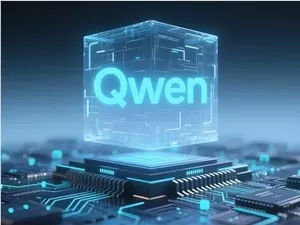
On March 2, Alibaba officially announced the unification of its AI business brand under the name "Qwen" (English name: Qwen), signifying a new strategic phase for the company in artificial intelligence. This consolidation encompasses both foundational models and specialized domain models, while also reinforcing the Qwen APP’s role as the flagship consumer-facing application.
The rebranding reflects Alibaba’s ongoing innovation and investment in AI. The Qwen large model will serve as the unified brand identity, representing Alibaba’s advanced capabilities in artificial intelligence technology. Notably, Alibaba open-sourced the Qwen 3.5 model on Chinese New Year’s Eve, along with several smaller-scale Qwen 3.5 variants. These models have been highly acclaimed on Hugging Face, currently holding the top four positions in global open-source large model rankings.
Market response has been strong—during the Spring Festival holiday, the Qwen APP processed close to 200 million single-command instructions, highlighting substantial user engagement and market traction. According to third-party data from QuestMobile, Qwen’s daily active users (DAU) reached 73.52 million during this period, surging by 940% and placing it among the leading domestic AI applications. This not only demonstrates Qwen’s significant potential in the consumer market but also underscores Alibaba’s expanding influence in the AI sector.
Simultaneously, the establishment of the Tongyi Lab has streamlined Alibaba’s organizational framework in AI, enabling more efficient technological exploration and innovation. This lab will focus on driving breakthroughs and expanding real-world applications, helping Alibaba maintain a competitive edge in the global AI landscape.
In summary, with the strategic rollout of the Qwen large model and the Tongyi Lab, Alibaba is infusing its AI business with renewed energy and creativity. The future outlook appears promising.
Related article
 Stripe to Acquire OpenRouter as AI Model Routing Gains Momentum
Stripe has agreed to acquire OpenRouter, an AI model-routing platform that gives developers access to hundreds of models through a single interface. The deal adds model selection and routing to Stripe’s existing work around AI usage and token-based b
Former OpenAI Researcher Barrett Zoph Returns to Google to Support Gemini Development
Barret Zoph, who previously abruptly left and joined OpenAI due to a disagreement with Thinking Machines Lab CEO Miriam Mularati, has once again changed employers. Alphabet's Google announced that Zoph will return as Vice President of Research, bring
How Recursive Intelligence Raised $335M at $4B Valuation in 4 Months
The co-founders of startup Ricursive Intelligence seemed destined to be co-founders.Anna Goldie, CEO, and Azalia Mirhoseini, CTO, are so well-known in the AI community that they were among those AI engineers who “got those weird emails from Zuckerber
Related Special Topic Recommendations
Design & Art
Stripe to Acquire OpenRouter as AI Model Routing Gains Momentum
Stripe has agreed to acquire OpenRouter, an AI model-routing platform that gives developers access to hundreds of models through a single interface. The deal adds model selection and routing to Stripe’s existing work around AI usage and token-based b
Former OpenAI Researcher Barrett Zoph Returns to Google to Support Gemini Development
Barret Zoph, who previously abruptly left and joined OpenAI due to a disagreement with Thinking Machines Lab CEO Miriam Mularati, has once again changed employers. Alphabet's Google announced that Zoph will return as Vice President of Research, bring
How Recursive Intelligence Raised $335M at $4B Valuation in 4 Months
The co-founders of startup Ricursive Intelligence seemed destined to be co-founders.Anna Goldie, CEO, and Azalia Mirhoseini, CTO, are so well-known in the AI community that they were among those AI engineers who “got those weird emails from Zuckerber
Related Special Topic Recommendations
Design & Art
 Top AI Illustration Tools: Create Editorial Scenes and Cover Art Faster
2026 Latest Top-rated AI Illustration Tools: Our curated list features the best powerfully designed tools for creating stunning editorial scenes and eye-catching cover art quickly. Each option has gone through rigorous real-world tests, offering a free vs paid comparison to help you find the perfect match for your workflow. Try these must-try solutions today to unlock your AI edge and boost your creative productivity. Explore now at XIX.AI.
 10 tools
 xix.ai
Education and Learning
Top AI Tutors for Exam Prep: Practice Math, Science, and English
xix.ai
Education and Learning
Top AI Tutors for Exam Prep: Practice Math, Science, and English
2026 Latest Top-Rated Best AI Tutors for Exam Prep are here on XIX.AI! Our curated list features powerful game-changing tools that offer free vs paid comparison, real-world tests, and weekly updated rankings. They help boost your writing efficiency, simplify complex topic learning, and unlock your academic potential. Explore now to Discover your perfect exam prep tool and Start creating today to Unlock your AI edge!
10 tools
xix.ai
Finance
AI Budget Planning Tools for Personal Money Management
2026 Latest Best Top-Rated AI Budget Planning Tools for Personal Money Management are here on XIX.AI! This curated collection features powerful, game-changing solutions that help you conduct real-world tests, understand spending habits, and create personalized plans to boost productivity. Enjoy a free vs paid comparison along with detailed rankings. Must-try tools designed to simplify money management and unlock your AI edge. Explore now!
11 tools
xix.ai
Health & Wellness
AI Sleep Tracking Assistants: Improve Recovery with Better Bedtime Habits
2026 Latest Best Top-Rated AI Sleep Tracking Assistants curated for ultimate recovery. This fully updated weekly guide features powerful tools that deliver real-world tests, free vs paid comparison, and detailed rankings to help you find the must-try solution that boosts sleep quality and supports better bedtime habits. Explore now at XIX.AI to Unlock your AI edge.
10 tools
xix.ai
Data Analysis
AI SQL Copilots for Product and Revenue Analytics
2026 Latest Best Top-Rated AI SQL Copilots for Product and Revenue Analytics! XIX.AI has curated a powerful, game-changing collection of must-try tools that undergo real-world tests through weekly updated rankings. These tools help users boost productivity significantly by accelerating data analysis, streamlining complex queries, and generating accurate insights to drive smarter business decisions. Explore now to Discover your perfect tool for unlocking your AI edge!
14 tools
xix.ai
Education and Learning
Best AI Homework Helpers That Teach: Learn Concepts, Not Just Answers
2026 Latest Best Top-Rated AI Homework Helpers That Teach Core Concepts Not Just Answers Powerful Tools for Students Must-Try Curated List Weekly Updated Free vs Paid Comparison Real-World Tests Accurate Rankings to Help You Unlock Your Full Learning Potential Explore now to Discover your perfect tool for smarter studying.
10 tools
xix.ai

 Comments (2)
0/500
Comments (2)
0/500
![RalphJackson]()
Alibaba's move to unify everything under Qwen makes sense for branding, but I wonder if it'll confuse developers who are used to the old model names like Baichuan or Tongyi. Still, a single strong identity could help them compete better globally against other big tech giants pushing their own AI ecosystems. Let's see how this plays out in the enterprise market.
![NicholasTaylor]()
阿里巴巴這次把AI業務都整合到「通義千問」品牌下,感覺是想集中火力打AI大戰?不過市場上模型那麼多,Qwen的特色到底在哪裡啊?🤔 希望不只是換個名字,而是真的能推出更實用的功能,不然消費者很難買單啦。
On March 2, Alibaba officially announced the unification of its AI business brand under the name "Qwen" (English name: Qwen), signifying a new strategic phase for the company in artificial intelligence. This consolidation encompasses both foundational models and specialized domain models, while also reinforcing the Qwen APP’s role as the flagship consumer-facing application.
The rebranding reflects Alibaba’s ongoing innovation and investment in AI. The Qwen large model will serve as the unified brand identity, representing Alibaba’s advanced capabilities in artificial intelligence technology. Notably, Alibaba open-sourced the Qwen 3.5 model on Chinese New Year’s Eve, along with several smaller-scale Qwen 3.5 variants. These models have been highly acclaimed on Hugging Face, currently holding the top four positions in global open-source large model rankings.
Market response has been strong—during the Spring Festival holiday, the Qwen APP processed close to 200 million single-command instructions, highlighting substantial user engagement and market traction. According to third-party data from QuestMobile, Qwen’s daily active users (DAU) reached 73.52 million during this period, surging by 940% and placing it among the leading domestic AI applications. This not only demonstrates Qwen’s significant potential in the consumer market but also underscores Alibaba’s expanding influence in the AI sector.
Simultaneously, the establishment of the Tongyi Lab has streamlined Alibaba’s organizational framework in AI, enabling more efficient technological exploration and innovation. This lab will focus on driving breakthroughs and expanding real-world applications, helping Alibaba maintain a competitive edge in the global AI landscape.
In summary, with the strategic rollout of the Qwen large model and the Tongyi Lab, Alibaba is infusing its AI business with renewed energy and creativity. The future outlook appears promising.








 Stripe to Acquire OpenRouter as AI Model Routing Gains Momentum
Stripe has agreed to acquire OpenRouter, an AI model-routing platform that gives developers access to hundreds of models through a single interface. The deal adds model selection and routing to Stripe’s existing work around AI usage and token-based b
Stripe to Acquire OpenRouter as AI Model Routing Gains Momentum
Stripe has agreed to acquire OpenRouter, an AI model-routing platform that gives developers access to hundreds of models through a single interface. The deal adds model selection and routing to Stripe’s existing work around AI usage and token-based b
 Former OpenAI Researcher Barrett Zoph Returns to Google to Support Gemini Development
Barret Zoph, who previously abruptly left and joined OpenAI due to a disagreement with Thinking Machines Lab CEO Miriam Mularati, has once again changed employers. Alphabet's Google announced that Zoph will return as Vice President of Research, bring
Former OpenAI Researcher Barrett Zoph Returns to Google to Support Gemini Development
Barret Zoph, who previously abruptly left and joined OpenAI due to a disagreement with Thinking Machines Lab CEO Miriam Mularati, has once again changed employers. Alphabet's Google announced that Zoph will return as Vice President of Research, bring
 How Recursive Intelligence Raised $335M at $4B Valuation in 4 Months
The co-founders of startup Ricursive Intelligence seemed destined to be co-founders.Anna Goldie, CEO, and Azalia Mirhoseini, CTO, are so well-known in the AI community that they were among those AI engineers who “got those weird emails from Zuckerber
How Recursive Intelligence Raised $335M at $4B Valuation in 4 Months
The co-founders of startup Ricursive Intelligence seemed destined to be co-founders.Anna Goldie, CEO, and Azalia Mirhoseini, CTO, are so well-known in the AI community that they were among those AI engineers who “got those weird emails from Zuckerber

2026 Latest Top-rated AI Illustration Tools: Our curated list features the best powerfully designed tools for creating stunning editorial scenes and eye-catching cover art quickly. Each option has gone through rigorous real-world tests, offering a free vs paid comparison to help you find the perfect match for your workflow. Try these must-try solutions today to unlock your AI edge and boost your creative productivity. Explore now at XIX.AI.
10 tools
xix.ai

2026 Latest Top-Rated Best AI Tutors for Exam Prep are here on XIX.AI! Our curated list features powerful game-changing tools that offer free vs paid comparison, real-world tests, and weekly updated rankings. They help boost your writing efficiency, simplify complex topic learning, and unlock your academic potential. Explore now to Discover your perfect exam prep tool and Start creating today to Unlock your AI edge!
10 tools
xix.ai

2026 Latest Best Top-Rated AI Budget Planning Tools for Personal Money Management are here on XIX.AI! This curated collection features powerful, game-changing solutions that help you conduct real-world tests, understand spending habits, and create personalized plans to boost productivity. Enjoy a free vs paid comparison along with detailed rankings. Must-try tools designed to simplify money management and unlock your AI edge. Explore now!
11 tools
xix.ai

2026 Latest Best Top-Rated AI Sleep Tracking Assistants curated for ultimate recovery. This fully updated weekly guide features powerful tools that deliver real-world tests, free vs paid comparison, and detailed rankings to help you find the must-try solution that boosts sleep quality and supports better bedtime habits. Explore now at XIX.AI to Unlock your AI edge.
10 tools
xix.ai

2026 Latest Best Top-Rated AI SQL Copilots for Product and Revenue Analytics! XIX.AI has curated a powerful, game-changing collection of must-try tools that undergo real-world tests through weekly updated rankings. These tools help users boost productivity significantly by accelerating data analysis, streamlining complex queries, and generating accurate insights to drive smarter business decisions. Explore now to Discover your perfect tool for unlocking your AI edge!
14 tools
xix.ai

2026 Latest Best Top-Rated AI Homework Helpers That Teach Core Concepts Not Just Answers Powerful Tools for Students Must-Try Curated List Weekly Updated Free vs Paid Comparison Real-World Tests Accurate Rankings to Help You Unlock Your Full Learning Potential Explore now to Discover your perfect tool for smarter studying.
10 tools
xix.ai

Alibaba's move to unify everything under Qwen makes sense for branding, but I wonder if it'll confuse developers who are used to the old model names like Baichuan or Tongyi. Still, a single strong identity could help them compete better globally against other big tech giants pushing their own AI ecosystems. Let's see how this plays out in the enterprise market.
阿里巴巴這次把AI業務都整合到「通義千問」品牌下,感覺是想集中火力打AI大戰?不過市場上模型那麼多,Qwen的特色到底在哪裡啊?🤔 希望不只是換個名字,而是真的能推出更實用的功能,不然消費者很難買單啦。












