


 Home
Home
Alibaba Confirms Plans for Shrimp Farming Hardware, Positions Devices as Cloud Computers Over Traditional PCs
In response to recent market speculation about Alibaba launching specialized hardware for ‘shrimp raising,’ the company officially clarified today. While confirming plans to adapt existing products, Alibaba stated there is currently no definitive timeline for a release. An informed source further emphasized that this product line is positioned as a "cloud computer," distinct from traditional standalone PC architectures.
This clarification follows an industry report earlier today. The leak indicated that the Alibaba Cloud Yunding team is leading the development of hardware under the names JVS Book (a laptop terminal) and JVS Box (a mini desktop). The JVS Book is designed for mobile office use, featuring deep integration with the JVS Claw platform, while the JVS Box serves as a desktop-level AI Agent workstation. Both devices are built on the OpenClaw architecture, an open-source AI execution framework internally referred to as "shrimp raising." The goal is to deliver a seamless intelligent ecosystem through a tightly integrated software-hardware approach.
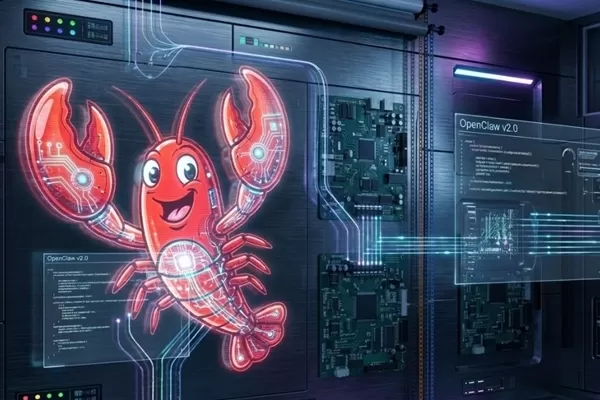
The domestic large model landscape has recently seen a surge in ‘shrimp raising’ initiatives. On March 13, Alibaba rebranded "Yunding JVS" as JVS Claw for its official launch. The same day, ByteDance's Volcano Engine and Baidu Intelligent Cloud introduced the ArkClaw SaaS version and a one-click deployment image, respectively. By March 22, WeChat had entered this ecosystem with its ClawBot plugin.
While Baidu concentrates on underlying computing power, and ByteDance and Tencent focus on platform gateways, Alibaba is taking a different path. It is extending from its software platform to hardware terminals, aiming to define the next generation of human-computer interaction through cloud-edge collaboration. Although the hardware direction is now confirmed, a key question remains: how will AI Agent hardware carve out a differentiated value proposition against existing terminal devices? This continues to be a major point of industry focus.
Related article
 Stripe to Acquire OpenRouter as AI Model Routing Gains Momentum
Stripe has agreed to acquire OpenRouter, an AI model-routing platform that gives developers access to hundreds of models through a single interface. The deal adds model selection and routing to Stripe’s existing work around AI usage and token-based b
Former OpenAI Researcher Barrett Zoph Returns to Google to Support Gemini Development
Barret Zoph, who previously abruptly left and joined OpenAI due to a disagreement with Thinking Machines Lab CEO Miriam Mularati, has once again changed employers. Alphabet's Google announced that Zoph will return as Vice President of Research, bring
How Recursive Intelligence Raised $335M at $4B Valuation in 4 Months
The co-founders of startup Ricursive Intelligence seemed destined to be co-founders.Anna Goldie, CEO, and Azalia Mirhoseini, CTO, are so well-known in the AI community that they were among those AI engineers who “got those weird emails from Zuckerber
Related Special Topic Recommendations
Design & Art
Stripe to Acquire OpenRouter as AI Model Routing Gains Momentum
Stripe has agreed to acquire OpenRouter, an AI model-routing platform that gives developers access to hundreds of models through a single interface. The deal adds model selection and routing to Stripe’s existing work around AI usage and token-based b
Former OpenAI Researcher Barrett Zoph Returns to Google to Support Gemini Development
Barret Zoph, who previously abruptly left and joined OpenAI due to a disagreement with Thinking Machines Lab CEO Miriam Mularati, has once again changed employers. Alphabet's Google announced that Zoph will return as Vice President of Research, bring
How Recursive Intelligence Raised $335M at $4B Valuation in 4 Months
The co-founders of startup Ricursive Intelligence seemed destined to be co-founders.Anna Goldie, CEO, and Azalia Mirhoseini, CTO, are so well-known in the AI community that they were among those AI engineers who “got those weird emails from Zuckerber
Related Special Topic Recommendations
Design & Art
 Top AI Illustration Tools: Create Editorial Scenes and Cover Art Faster
2026 Latest Top-rated AI Illustration Tools: Our curated list features the best powerfully designed tools for creating stunning editorial scenes and eye-catching cover art quickly. Each option has gone through rigorous real-world tests, offering a free vs paid comparison to help you find the perfect match for your workflow. Try these must-try solutions today to unlock your AI edge and boost your creative productivity. Explore now at XIX.AI.
 10 tools
 xix.ai
Education and Learning
Top AI Tutors for Exam Prep: Practice Math, Science, and English
xix.ai
Education and Learning
Top AI Tutors for Exam Prep: Practice Math, Science, and English
2026 Latest Top-Rated Best AI Tutors for Exam Prep are here on XIX.AI! Our curated list features powerful game-changing tools that offer free vs paid comparison, real-world tests, and weekly updated rankings. They help boost your writing efficiency, simplify complex topic learning, and unlock your academic potential. Explore now to Discover your perfect exam prep tool and Start creating today to Unlock your AI edge!
10 tools
xix.ai
Finance
AI Budget Planning Tools for Personal Money Management
2026 Latest Best Top-Rated AI Budget Planning Tools for Personal Money Management are here on XIX.AI! This curated collection features powerful, game-changing solutions that help you conduct real-world tests, understand spending habits, and create personalized plans to boost productivity. Enjoy a free vs paid comparison along with detailed rankings. Must-try tools designed to simplify money management and unlock your AI edge. Explore now!
11 tools
xix.ai
Health & Wellness
AI Sleep Tracking Assistants: Improve Recovery with Better Bedtime Habits
2026 Latest Best Top-Rated AI Sleep Tracking Assistants curated for ultimate recovery. This fully updated weekly guide features powerful tools that deliver real-world tests, free vs paid comparison, and detailed rankings to help you find the must-try solution that boosts sleep quality and supports better bedtime habits. Explore now at XIX.AI to Unlock your AI edge.
10 tools
xix.ai
Data Analysis
AI SQL Copilots for Product and Revenue Analytics
2026 Latest Best Top-Rated AI SQL Copilots for Product and Revenue Analytics! XIX.AI has curated a powerful, game-changing collection of must-try tools that undergo real-world tests through weekly updated rankings. These tools help users boost productivity significantly by accelerating data analysis, streamlining complex queries, and generating accurate insights to drive smarter business decisions. Explore now to Discover your perfect tool for unlocking your AI edge!
14 tools
xix.ai
Education and Learning
Best AI Homework Helpers That Teach: Learn Concepts, Not Just Answers
2026 Latest Best Top-Rated AI Homework Helpers That Teach Core Concepts Not Just Answers Powerful Tools for Students Must-Try Curated List Weekly Updated Free vs Paid Comparison Real-World Tests Accurate Rankings to Help You Unlock Your Full Learning Potential Explore now to Discover your perfect tool for smarter studying.
10 tools
xix.ai

 Comments (1)
0/500
Comments (1)
0/500
![AveryThomas]()
阿里这是要搞‘云养虾’?😂 把算力当虾饲料喂给服务器,这脑洞我服了。不过说正经的,如果真能把闲置算力变成类似‘生物电池’的东西,那对边缘计算确实是新路子。就是不知道这硬件长啥样,别到时候虾没养肥,服务器先烧了🔥 期待后续实测!
In response to recent market speculation about Alibaba launching specialized hardware for ‘shrimp raising,’ the company officially clarified today. While confirming plans to adapt existing products, Alibaba stated there is currently no definitive timeline for a release. An informed source further emphasized that this product line is positioned as a "cloud computer," distinct from traditional standalone PC architectures.
This clarification follows an industry report earlier today. The leak indicated that the Alibaba Cloud Yunding team is leading the development of hardware under the names JVS Book (a laptop terminal) and JVS Box (a mini desktop). The JVS Book is designed for mobile office use, featuring deep integration with the JVS Claw platform, while the JVS Box serves as a desktop-level AI Agent workstation. Both devices are built on the OpenClaw architecture, an open-source AI execution framework internally referred to as "shrimp raising." The goal is to deliver a seamless intelligent ecosystem through a tightly integrated software-hardware approach.
The domestic large model landscape has recently seen a surge in ‘shrimp raising’ initiatives. On March 13, Alibaba rebranded "Yunding JVS" as JVS Claw for its official launch. The same day, ByteDance's Volcano Engine and Baidu Intelligent Cloud introduced the ArkClaw SaaS version and a one-click deployment image, respectively. By March 22, WeChat had entered this ecosystem with its ClawBot plugin.
While Baidu concentrates on underlying computing power, and ByteDance and Tencent focus on platform gateways, Alibaba is taking a different path. It is extending from its software platform to hardware terminals, aiming to define the next generation of human-computer interaction through cloud-edge collaboration. Although the hardware direction is now confirmed, a key question remains: how will AI Agent hardware carve out a differentiated value proposition against existing terminal devices? This continues to be a major point of industry focus.








 Stripe to Acquire OpenRouter as AI Model Routing Gains Momentum
Stripe has agreed to acquire OpenRouter, an AI model-routing platform that gives developers access to hundreds of models through a single interface. The deal adds model selection and routing to Stripe’s existing work around AI usage and token-based b
Stripe to Acquire OpenRouter as AI Model Routing Gains Momentum
Stripe has agreed to acquire OpenRouter, an AI model-routing platform that gives developers access to hundreds of models through a single interface. The deal adds model selection and routing to Stripe’s existing work around AI usage and token-based b
 Former OpenAI Researcher Barrett Zoph Returns to Google to Support Gemini Development
Barret Zoph, who previously abruptly left and joined OpenAI due to a disagreement with Thinking Machines Lab CEO Miriam Mularati, has once again changed employers. Alphabet's Google announced that Zoph will return as Vice President of Research, bring
Former OpenAI Researcher Barrett Zoph Returns to Google to Support Gemini Development
Barret Zoph, who previously abruptly left and joined OpenAI due to a disagreement with Thinking Machines Lab CEO Miriam Mularati, has once again changed employers. Alphabet's Google announced that Zoph will return as Vice President of Research, bring
 How Recursive Intelligence Raised $335M at $4B Valuation in 4 Months
The co-founders of startup Ricursive Intelligence seemed destined to be co-founders.Anna Goldie, CEO, and Azalia Mirhoseini, CTO, are so well-known in the AI community that they were among those AI engineers who “got those weird emails from Zuckerber
How Recursive Intelligence Raised $335M at $4B Valuation in 4 Months
The co-founders of startup Ricursive Intelligence seemed destined to be co-founders.Anna Goldie, CEO, and Azalia Mirhoseini, CTO, are so well-known in the AI community that they were among those AI engineers who “got those weird emails from Zuckerber

2026 Latest Top-rated AI Illustration Tools: Our curated list features the best powerfully designed tools for creating stunning editorial scenes and eye-catching cover art quickly. Each option has gone through rigorous real-world tests, offering a free vs paid comparison to help you find the perfect match for your workflow. Try these must-try solutions today to unlock your AI edge and boost your creative productivity. Explore now at XIX.AI.
10 tools
xix.ai

2026 Latest Top-Rated Best AI Tutors for Exam Prep are here on XIX.AI! Our curated list features powerful game-changing tools that offer free vs paid comparison, real-world tests, and weekly updated rankings. They help boost your writing efficiency, simplify complex topic learning, and unlock your academic potential. Explore now to Discover your perfect exam prep tool and Start creating today to Unlock your AI edge!
10 tools
xix.ai

2026 Latest Best Top-Rated AI Budget Planning Tools for Personal Money Management are here on XIX.AI! This curated collection features powerful, game-changing solutions that help you conduct real-world tests, understand spending habits, and create personalized plans to boost productivity. Enjoy a free vs paid comparison along with detailed rankings. Must-try tools designed to simplify money management and unlock your AI edge. Explore now!
11 tools
xix.ai

2026 Latest Best Top-Rated AI Sleep Tracking Assistants curated for ultimate recovery. This fully updated weekly guide features powerful tools that deliver real-world tests, free vs paid comparison, and detailed rankings to help you find the must-try solution that boosts sleep quality and supports better bedtime habits. Explore now at XIX.AI to Unlock your AI edge.
10 tools
xix.ai

2026 Latest Best Top-Rated AI SQL Copilots for Product and Revenue Analytics! XIX.AI has curated a powerful, game-changing collection of must-try tools that undergo real-world tests through weekly updated rankings. These tools help users boost productivity significantly by accelerating data analysis, streamlining complex queries, and generating accurate insights to drive smarter business decisions. Explore now to Discover your perfect tool for unlocking your AI edge!
14 tools
xix.ai

2026 Latest Best Top-Rated AI Homework Helpers That Teach Core Concepts Not Just Answers Powerful Tools for Students Must-Try Curated List Weekly Updated Free vs Paid Comparison Real-World Tests Accurate Rankings to Help You Unlock Your Full Learning Potential Explore now to Discover your perfect tool for smarter studying.
10 tools
xix.ai

阿里这是要搞‘云养虾’?😂 把算力当虾饲料喂给服务器,这脑洞我服了。不过说正经的,如果真能把闲置算力变成类似‘生物电池’的东西,那对边缘计算确实是新路子。就是不知道这硬件长啥样,别到时候虾没养肥,服务器先烧了🔥 期待后续实测!












