


 Home
HomeAI Voice Cloning Guide: Using Suno and Jammable for Music Creation
In today's dynamic music industry, artificial intelligence (AI) empowers artists with innovative tools. This guide explores how to clone your voice using AI, enabling creative experimentation and streamlined music production. We’ll dive into platforms like Suno and Jammable, offering a step-by-step approach to crafting AI-driven vocal tracks.
Key Points
Mastering AI voice cloning technology.
Generating instrumentals and vocals with Suno.
Training an AI voice model on Jammable.
Blending AI vocals in FL Studio.
Optimizing AI voice cloning quality.
Introduction to AI Voice Cloning for Music Production
What is AI Voice Cloning?
AI voice cloning uses artificial intelligence to replicate a person’s voice digitally. By analyzing recordings, it captures unique traits like tone, pitch, and accent, enabling the AI to produce new speech or singing in the original voice’s style. This technology allows musicians to explore diverse vocal styles without re-recording every line.
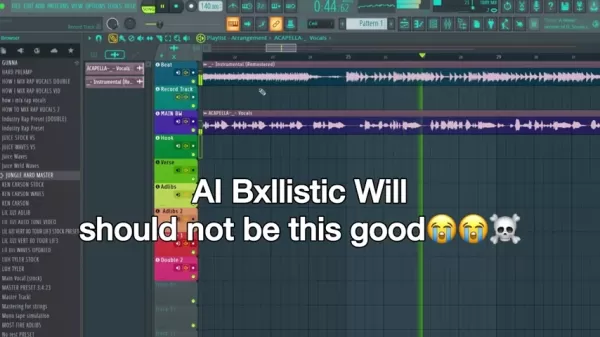
AI voice cloning offers various applications in music, such as:
- Producing backing vocals: Create harmonies and vocal layers effortlessly.
- Testing vocal styles: Experiment with lyrics or melodies in your voice without extensive recording.
- Enhancing vocal range: Overcome limitations or refine imperfections with AI adjustments.
- Creating custom content: Produce personalized songs or messages for fans using your AI voice.
Advancements in AI have greatly improved voice clone realism, making it a powerful tool for modern music production.
Why Use AI for Voice Cloning?
Musicians are adopting AI voice cloning for several reasons:
Efficiency: AI reduces vocal production time, generating variations quickly without multiple takes.
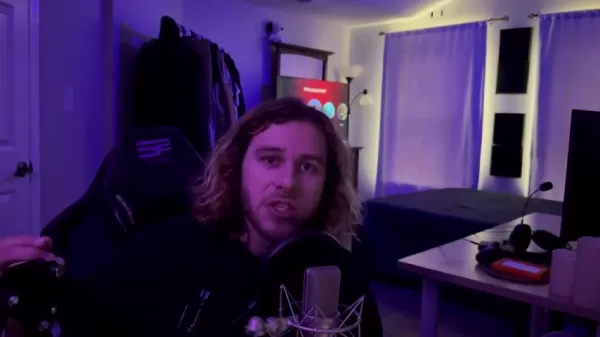
Creative flexibility: Experiment with diverse vocal styles and harmonies without performance pressure.
Accessibility: AI tools make advanced vocal techniques available to musicians of all levels.
Cost savings: Minimize studio time and recording expenses with AI-generated vocals.
However, ethical use is crucial. Respect copyright laws and secure permissions when cloning another person’s voice.
Tools for AI Voice Cloning: Suno and Jammable
Suno: AI-Driven Music Creation
Suno is an AI platform that generates complete songs, including instrumentals and vocals, from text prompts. User-friendly and requiring no technical skills, Suno supports diverse musical styles and allows customization of lyrics and arrangements.
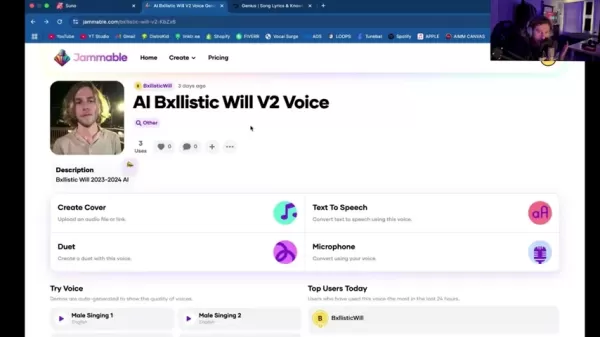
It offers features like instrumental track creation, style exclusion, and reference track uploads, making it ideal for building base tracks for vocal experiments.
Jammable: Training Your AI Voice
Jammable enables you to train an AI model with your voice recordings. The more varied the data, the better the AI captures your vocal traits. Once trained, your AI voice can sing or speak any input text.
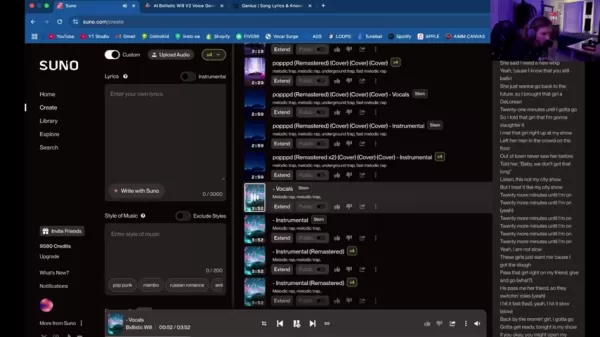
Options include creating covers, text-to-speech, or duets, adding a personal touch to your music.
Note that Jammable often requires payment, typically $1.99 for 25 credits.
Step-by-Step Tutorial: Cloning Your Voice
Step 1: Generating Base Tracks with Suno
- Register on Suno: Sign up on the Suno website.
- Input lyrics:
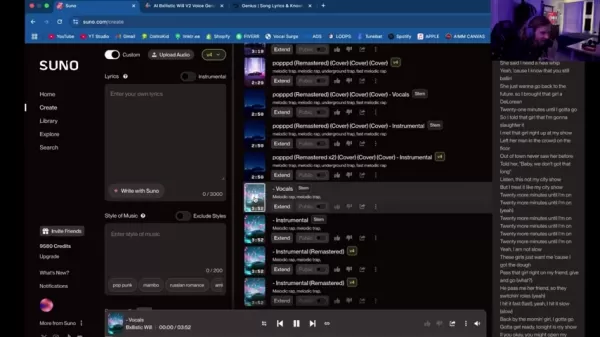
Enter lyrics into Suno’s interface or use its AI lyric generator.
- Customize music style: Choose genre, tempo, and mood, or exclude specific styles.
- Create your song: Let Suno’s AI generate a full track with instrumentals and vocals.
- Download stems: Extract separate vocal and instrumental tracks for editing.
Step 2: Training Your AI Voice with Jammable
Create a Jammable account: Sign up on the Jammable website.
Gather voice recordings: Collect diverse samples of your voice.
Upload recordings: Submit them to Jammable for voice training.
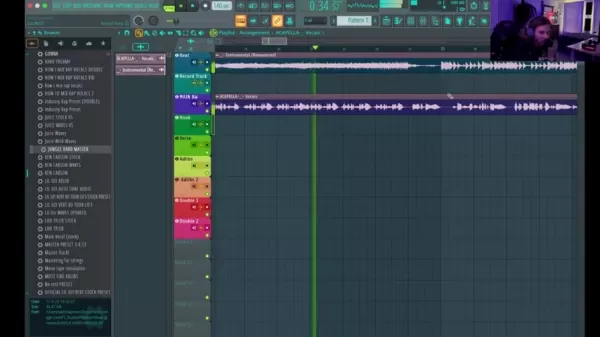
Test your AI voice: Try singing or speaking new text with your AI model.
Step 3: Mixing AI Vocals in FL Studio
Import stems: Load AI-generated vocal and instrumental tracks into FL Studio.
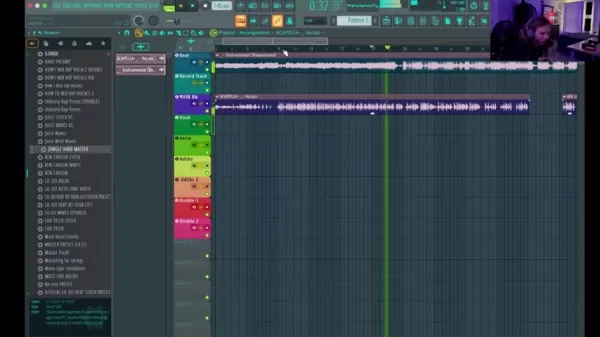
Process vocals: Apply plugins like Auto-Tune Pro, RCompressor Stereo, and H-Delay Stereo for refinement.
Adjust levels and EQ: Balance volume and EQ for seamless vocal integration.
Add effects: Use reverb, delay, or other effects for a polished sound.
Master the track: Apply mastering techniques for a professional finish.
Evaluating Suno: Advantages and Disadvantages
Pros
Intuitive, user-friendly interface.
Rapid song generation from text prompts.
Extensive customization options.
Cons
AI-generated tracks may lack originality.
Quality varies with prompt complexity.
Challenging to achieve specific sounds.
Frequently Asked Questions
Is AI voice cloning ethical?
AI voice cloning involves ethical concerns, particularly around copyright and consent. Always respect legal guidelines and obtain permission for cloning someone else’s voice. Using your own voice is generally ethical.
How much do Suno and Jammable cost?
Suno offers free and paid plans. Jammable requires payment for extended use. Check their pricing pages for details.
Can I use AI voice cloning commercially?
Yes, but ensure you have rights and permissions for commercial use. Review platform terms for compliance.
Related Questions
What other AI tools enhance music production?
Beyond Suno and Jammable, consider these AI tools: Amper Music for royalty-free tracks, LANDR for automated mastering, and WavTool for comprehensive song creation. These tools expand creative possibilities and streamline workflows.
Related article
 Stripe to Acquire OpenRouter as AI Model Routing Gains Momentum
Stripe has agreed to acquire OpenRouter, an AI model-routing platform that gives developers access to hundreds of models through a single interface. The deal adds model selection and routing to Stripe’s existing work around AI usage and token-based b
Former OpenAI Researcher Barrett Zoph Returns to Google to Support Gemini Development
Barret Zoph, who previously abruptly left and joined OpenAI due to a disagreement with Thinking Machines Lab CEO Miriam Mularati, has once again changed employers. Alphabet's Google announced that Zoph will return as Vice President of Research, bring
How Recursive Intelligence Raised $335M at $4B Valuation in 4 Months
The co-founders of startup Ricursive Intelligence seemed destined to be co-founders.Anna Goldie, CEO, and Azalia Mirhoseini, CTO, are so well-known in the AI community that they were among those AI engineers who “got those weird emails from Zuckerber
Related Special Topic Recommendations
Design & Art
Stripe to Acquire OpenRouter as AI Model Routing Gains Momentum
Stripe has agreed to acquire OpenRouter, an AI model-routing platform that gives developers access to hundreds of models through a single interface. The deal adds model selection and routing to Stripe’s existing work around AI usage and token-based b
Former OpenAI Researcher Barrett Zoph Returns to Google to Support Gemini Development
Barret Zoph, who previously abruptly left and joined OpenAI due to a disagreement with Thinking Machines Lab CEO Miriam Mularati, has once again changed employers. Alphabet's Google announced that Zoph will return as Vice President of Research, bring
How Recursive Intelligence Raised $335M at $4B Valuation in 4 Months
The co-founders of startup Ricursive Intelligence seemed destined to be co-founders.Anna Goldie, CEO, and Azalia Mirhoseini, CTO, are so well-known in the AI community that they were among those AI engineers who “got those weird emails from Zuckerber
Related Special Topic Recommendations
Design & Art
 Top AI Illustration Tools: Create Editorial Scenes and Cover Art Faster
2026 Latest Top-rated AI Illustration Tools: Our curated list features the best powerfully designed tools for creating stunning editorial scenes and eye-catching cover art quickly. Each option has gone through rigorous real-world tests, offering a free vs paid comparison to help you find the perfect match for your workflow. Try these must-try solutions today to unlock your AI edge and boost your creative productivity. Explore now at XIX.AI.
 10 tools
 xix.ai
Education and Learning
Top AI Tutors for Exam Prep: Practice Math, Science, and English
xix.ai
Education and Learning
Top AI Tutors for Exam Prep: Practice Math, Science, and English
2026 Latest Top-Rated Best AI Tutors for Exam Prep are here on XIX.AI! Our curated list features powerful game-changing tools that offer free vs paid comparison, real-world tests, and weekly updated rankings. They help boost your writing efficiency, simplify complex topic learning, and unlock your academic potential. Explore now to Discover your perfect exam prep tool and Start creating today to Unlock your AI edge!
10 tools
xix.ai
Finance
AI Budget Planning Tools for Personal Money Management
2026 Latest Best Top-Rated AI Budget Planning Tools for Personal Money Management are here on XIX.AI! This curated collection features powerful, game-changing solutions that help you conduct real-world tests, understand spending habits, and create personalized plans to boost productivity. Enjoy a free vs paid comparison along with detailed rankings. Must-try tools designed to simplify money management and unlock your AI edge. Explore now!
11 tools
xix.ai
Health & Wellness
AI Sleep Tracking Assistants: Improve Recovery with Better Bedtime Habits
2026 Latest Best Top-Rated AI Sleep Tracking Assistants curated for ultimate recovery. This fully updated weekly guide features powerful tools that deliver real-world tests, free vs paid comparison, and detailed rankings to help you find the must-try solution that boosts sleep quality and supports better bedtime habits. Explore now at XIX.AI to Unlock your AI edge.
10 tools
xix.ai
Data Analysis
AI SQL Copilots for Product and Revenue Analytics
2026 Latest Best Top-Rated AI SQL Copilots for Product and Revenue Analytics! XIX.AI has curated a powerful, game-changing collection of must-try tools that undergo real-world tests through weekly updated rankings. These tools help users boost productivity significantly by accelerating data analysis, streamlining complex queries, and generating accurate insights to drive smarter business decisions. Explore now to Discover your perfect tool for unlocking your AI edge!
14 tools
xix.ai
Education and Learning
Best AI Homework Helpers That Teach: Learn Concepts, Not Just Answers
2026 Latest Best Top-Rated AI Homework Helpers That Teach Core Concepts Not Just Answers Powerful Tools for Students Must-Try Curated List Weekly Updated Free vs Paid Comparison Real-World Tests Accurate Rankings to Help You Unlock Your Full Learning Potential Explore now to Discover your perfect tool for smarter studying.
10 tools
xix.ai

 Comments (14)
0/500
Comments (14)
0/500
![PaulRoberts]()
Usar o Suno para clonar voz é loucura! 🎤 Mas e os direitos autorais? Estou preocupado com os artistas reais. 🤔
![BruceSmith]()
¡Clonar voz con Suno es increíble! 🎤 Pero, ¿qué pasa con los derechos de autor? Me preocupa que los artistas reales pierdan. 🤔
![DouglasAnderson]()
Suno für Stimmklone? Wahnsinn! 🎤 Aber was ist mit Urheberrechten? Ich bin gespannt, wie sich das auf echte Künstler auswirkt. 🤔
![MateoAdams]()
Suno로 목소리 복제? 너무 신기해! 🎤 하지만 저작권 문제는 어떻게 해결할까? 예술가들이 피해를 볼까 봐 걱정돼. 🤔
![GregoryCarter]()
Suno позволяет клонировать голос? Это революция! 🎤 Но как быть с авторскими правами? Боюсь, что оригинальные артисты пострадают. 🤔
![ThomasMiller]()
Cloner sa voix avec Suno, c'est incroyable ! 🎶 Mais est-ce que ça va tuer l'authenticité de la musique ? Je suis à la fois fasciné et inquiet. 🤔
In today's dynamic music industry, artificial intelligence (AI) empowers artists with innovative tools. This guide explores how to clone your voice using AI, enabling creative experimentation and streamlined music production. We’ll dive into platforms like Suno and Jammable, offering a step-by-step approach to crafting AI-driven vocal tracks.
Key Points
Mastering AI voice cloning technology.
Generating instrumentals and vocals with Suno.
Training an AI voice model on Jammable.
Blending AI vocals in FL Studio.
Optimizing AI voice cloning quality.
Introduction to AI Voice Cloning for Music Production
What is AI Voice Cloning?
AI voice cloning uses artificial intelligence to replicate a person’s voice digitally. By analyzing recordings, it captures unique traits like tone, pitch, and accent, enabling the AI to produce new speech or singing in the original voice’s style. This technology allows musicians to explore diverse vocal styles without re-recording every line.
AI voice cloning offers various applications in music, such as:
- Producing backing vocals: Create harmonies and vocal layers effortlessly.
- Testing vocal styles: Experiment with lyrics or melodies in your voice without extensive recording.
- Enhancing vocal range: Overcome limitations or refine imperfections with AI adjustments.
- Creating custom content: Produce personalized songs or messages for fans using your AI voice.
Advancements in AI have greatly improved voice clone realism, making it a powerful tool for modern music production.
Why Use AI for Voice Cloning?
Musicians are adopting AI voice cloning for several reasons:
Efficiency: AI reduces vocal production time, generating variations quickly without multiple takes.
Creative flexibility: Experiment with diverse vocal styles and harmonies without performance pressure.
Accessibility: AI tools make advanced vocal techniques available to musicians of all levels.
Cost savings: Minimize studio time and recording expenses with AI-generated vocals.
However, ethical use is crucial. Respect copyright laws and secure permissions when cloning another person’s voice.
Tools for AI Voice Cloning: Suno and Jammable
Suno: AI-Driven Music Creation
Suno is an AI platform that generates complete songs, including instrumentals and vocals, from text prompts. User-friendly and requiring no technical skills, Suno supports diverse musical styles and allows customization of lyrics and arrangements.
It offers features like instrumental track creation, style exclusion, and reference track uploads, making it ideal for building base tracks for vocal experiments.
Jammable: Training Your AI Voice
Jammable enables you to train an AI model with your voice recordings. The more varied the data, the better the AI captures your vocal traits. Once trained, your AI voice can sing or speak any input text.
Options include creating covers, text-to-speech, or duets, adding a personal touch to your music.
Note that Jammable often requires payment, typically $1.99 for 25 credits.
Step-by-Step Tutorial: Cloning Your Voice
Step 1: Generating Base Tracks with Suno
- Register on Suno: Sign up on the Suno website.
- Input lyrics:
Enter lyrics into Suno’s interface or use its AI lyric generator.
- Customize music style: Choose genre, tempo, and mood, or exclude specific styles.
- Create your song: Let Suno’s AI generate a full track with instrumentals and vocals.
- Download stems: Extract separate vocal and instrumental tracks for editing.
Step 2: Training Your AI Voice with Jammable
Create a Jammable account: Sign up on the Jammable website.
Gather voice recordings: Collect diverse samples of your voice.
Upload recordings: Submit them to Jammable for voice training.
Test your AI voice: Try singing or speaking new text with your AI model.
Step 3: Mixing AI Vocals in FL Studio
Import stems: Load AI-generated vocal and instrumental tracks into FL Studio.
Process vocals: Apply plugins like Auto-Tune Pro, RCompressor Stereo, and H-Delay Stereo for refinement.
Adjust levels and EQ: Balance volume and EQ for seamless vocal integration.
Add effects: Use reverb, delay, or other effects for a polished sound.
Master the track: Apply mastering techniques for a professional finish.
Evaluating Suno: Advantages and Disadvantages
Pros
Intuitive, user-friendly interface.
Rapid song generation from text prompts.
Extensive customization options.
Cons
AI-generated tracks may lack originality.
Quality varies with prompt complexity.
Challenging to achieve specific sounds.
Frequently Asked Questions
Is AI voice cloning ethical?
AI voice cloning involves ethical concerns, particularly around copyright and consent. Always respect legal guidelines and obtain permission for cloning someone else’s voice. Using your own voice is generally ethical.
How much do Suno and Jammable cost?
Suno offers free and paid plans. Jammable requires payment for extended use. Check their pricing pages for details.
Can I use AI voice cloning commercially?
Yes, but ensure you have rights and permissions for commercial use. Review platform terms for compliance.
Related Questions
What other AI tools enhance music production?
Beyond Suno and Jammable, consider these AI tools: Amper Music for royalty-free tracks, LANDR for automated mastering, and WavTool for comprehensive song creation. These tools expand creative possibilities and streamline workflows.








 Stripe to Acquire OpenRouter as AI Model Routing Gains Momentum
Stripe has agreed to acquire OpenRouter, an AI model-routing platform that gives developers access to hundreds of models through a single interface. The deal adds model selection and routing to Stripe’s existing work around AI usage and token-based b
Stripe to Acquire OpenRouter as AI Model Routing Gains Momentum
Stripe has agreed to acquire OpenRouter, an AI model-routing platform that gives developers access to hundreds of models through a single interface. The deal adds model selection and routing to Stripe’s existing work around AI usage and token-based b
 Former OpenAI Researcher Barrett Zoph Returns to Google to Support Gemini Development
Barret Zoph, who previously abruptly left and joined OpenAI due to a disagreement with Thinking Machines Lab CEO Miriam Mularati, has once again changed employers. Alphabet's Google announced that Zoph will return as Vice President of Research, bring
Former OpenAI Researcher Barrett Zoph Returns to Google to Support Gemini Development
Barret Zoph, who previously abruptly left and joined OpenAI due to a disagreement with Thinking Machines Lab CEO Miriam Mularati, has once again changed employers. Alphabet's Google announced that Zoph will return as Vice President of Research, bring
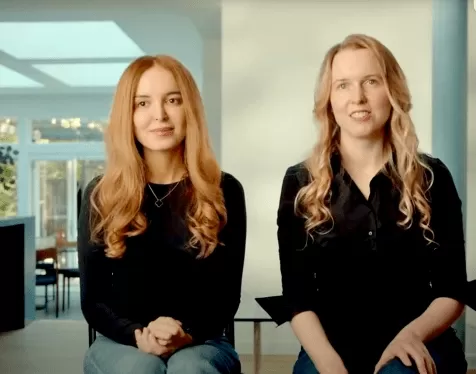 How Recursive Intelligence Raised $335M at $4B Valuation in 4 Months
The co-founders of startup Ricursive Intelligence seemed destined to be co-founders.Anna Goldie, CEO, and Azalia Mirhoseini, CTO, are so well-known in the AI community that they were among those AI engineers who “got those weird emails from Zuckerber
How Recursive Intelligence Raised $335M at $4B Valuation in 4 Months
The co-founders of startup Ricursive Intelligence seemed destined to be co-founders.Anna Goldie, CEO, and Azalia Mirhoseini, CTO, are so well-known in the AI community that they were among those AI engineers who “got those weird emails from Zuckerber

2026 Latest Top-rated AI Illustration Tools: Our curated list features the best powerfully designed tools for creating stunning editorial scenes and eye-catching cover art quickly. Each option has gone through rigorous real-world tests, offering a free vs paid comparison to help you find the perfect match for your workflow. Try these must-try solutions today to unlock your AI edge and boost your creative productivity. Explore now at XIX.AI.
10 tools
xix.ai
2026 Latest Top-Rated Best AI Tutors for Exam Prep are here on XIX.AI! Our curated list features powerful game-changing tools that offer free vs paid comparison, real-world tests, and weekly updated rankings. They help boost your writing efficiency, simplify complex topic learning, and unlock your academic potential. Explore now to Discover your perfect exam prep tool and Start creating today to Unlock your AI edge!
10 tools
xix.ai

2026 Latest Best Top-Rated AI Budget Planning Tools for Personal Money Management are here on XIX.AI! This curated collection features powerful, game-changing solutions that help you conduct real-world tests, understand spending habits, and create personalized plans to boost productivity. Enjoy a free vs paid comparison along with detailed rankings. Must-try tools designed to simplify money management and unlock your AI edge. Explore now!
11 tools
xix.ai

2026 Latest Best Top-Rated AI Sleep Tracking Assistants curated for ultimate recovery. This fully updated weekly guide features powerful tools that deliver real-world tests, free vs paid comparison, and detailed rankings to help you find the must-try solution that boosts sleep quality and supports better bedtime habits. Explore now at XIX.AI to Unlock your AI edge.
10 tools
xix.ai
2026 Latest Best Top-Rated AI SQL Copilots for Product and Revenue Analytics! XIX.AI has curated a powerful, game-changing collection of must-try tools that undergo real-world tests through weekly updated rankings. These tools help users boost productivity significantly by accelerating data analysis, streamlining complex queries, and generating accurate insights to drive smarter business decisions. Explore now to Discover your perfect tool for unlocking your AI edge!
14 tools
xix.ai

2026 Latest Best Top-Rated AI Homework Helpers That Teach Core Concepts Not Just Answers Powerful Tools for Students Must-Try Curated List Weekly Updated Free vs Paid Comparison Real-World Tests Accurate Rankings to Help You Unlock Your Full Learning Potential Explore now to Discover your perfect tool for smarter studying.
10 tools
xix.ai

Usar o Suno para clonar voz é loucura! 🎤 Mas e os direitos autorais? Estou preocupado com os artistas reais. 🤔
¡Clonar voz con Suno es increíble! 🎤 Pero, ¿qué pasa con los derechos de autor? Me preocupa que los artistas reales pierdan. 🤔
Suno für Stimmklone? Wahnsinn! 🎤 Aber was ist mit Urheberrechten? Ich bin gespannt, wie sich das auf echte Künstler auswirkt. 🤔
Suno로 목소리 복제? 너무 신기해! 🎤 하지만 저작권 문제는 어떻게 해결할까? 예술가들이 피해를 볼까 봐 걱정돼. 🤔
Suno позволяет клонировать голос? Это революция! 🎤 Но как быть с авторскими правами? Боюсь, что оригинальные артисты пострадают. 🤔
Cloner sa voix avec Suno, c'est incroyable ! 🎶 Mais est-ce que ça va tuer l'authenticité de la musique ? Je suis à la fois fasciné et inquiet. 🤔












