


 Home
HomeAI Recreates Legend of Zelda's Link in Voice Cloning Breakthrough
Have you ever imagined what Link from The Legend of Zelda might sound like if he could speak? Thanks to artificial intelligence, particularly AI voice cloning, this intriguing idea can now be explored. This article dives into the captivating realm of AI voice replication, examining how it can approximate the voices of iconic characters like Link, alongside a discussion of the important ethical questions this technology raises. By learning about the available tools and methods, both fans and creators can experiment with AI voice cloning to bring beloved characters to life in fresh and engaging ways.
Key Points
AI voice cloning uses machine learning to reproduce vocal characteristics.
Ethical considerations are paramount, focusing on consent and preventing misuse.
Platforms like Kits.AI enable the creation and customization of AI voice models.
High-quality voice datasets are crucial for training accurate AI models.
AI voice cloning can elevate creative projects by introducing unique character voices.
Understanding AI Voice Cloning
What is AI Voice Cloning?
AI Voice Cloning is a technology that employs artificial intelligence, especially machine learning, to analyze and mimic a person's voice. This involves building a digital model of a voice, which can then produce new speech in that voice. The fundamental process requires training an AI algorithm on a collection of audio recordings from the target speaker. A larger and more diverse dataset allows the AI to more accurately capture the voice's subtleties, such as tone, pitch, accent, and speaking style.
AI Voice Cloning has many uses. In the entertainment industry, it can generate voiceovers for animated characters or replace an actor's dialogue during post-production. It also serves accessibility needs, providing synthesized speech for people who have lost their ability to speak. Still, it's vital to use this technology with a clear awareness of its potential ethical consequences.
A central component of AI voice cloning is the development of a voice model. This model serves as a digital blueprint of the voice, enabling the AI to produce new speech that closely resembles the original speaker. Contemporary AI algorithms, like deep learning models, can capture fine vocal details that were once very difficult to replicate. This high level of precision unlocks numerous creative opportunities but also demands careful attention to privacy and consent issues.
Beyond the technical side, AI voice cloning brings up important questions about voice authenticity and ownership. It's critical to ensure that any application of this technology adheres to legal and ethical norms, especially when replicating a real person's voice. As AI voice cloning grows more advanced, the demand for clear regulations and guidelines will continue to rise.
The Ethical Considerations of Voice Replication
The ability to replicate voices with AI carries significant ethical obligations. A primary concern is consent. Using someone's voice to train an AI model without their explicit permission can violate their privacy and lead to misuse, such as creating deepfakes or spreading false information. Securing clear consent from individuals before utilizing their voice is essential.
Another ethical issue is the potential for deception. Cloned voices can be used to impersonate people in audio or video content, making it hard to tell the difference between the real person and the AI-generated copy. This can have serious repercussions, particularly if the cloned voice is employed to disseminate misinformation or carry out fraudulent acts. To reduce this risk, it's important to establish safeguards, like adding watermarks to AI-generated content to identify its origin.
Copyright and ownership are also major concerns. Voices can be viewed as intellectual property, and unauthorized replication might infringe on the original speaker's rights. Clear legal structures are necessary to define who owns a cloned voice and to control its use. This involves resolving questions about who may profit from cloned voices and what limitations should govern their application.
Furthermore, the effect on voice actors deserves attention. As AI voice cloning becomes more sophisticated, it could potentially displace human voice actors in some jobs, resulting in employment loss and economic strain. Finding ways to assist voice actors and ensure they benefit from the possibilities created by AI, rather than being replaced by it, is important.
Ultimately, responsible use of AI voice cloning demands a comprehensive strategy that includes technical protections, legal frameworks, and ethical standards. By confronting these issues, we can leverage the creative power of this technology while reducing the dangers of misuse and harm.
Replicating Link's Voice: A Case Study
Finding Voice Datasets
The initial step in replicating Link's voice, or any character's voice, is locating appropriate voice datasets. For Link, who mainly expresses himself through grunts, shouts, and brief sounds, this can be difficult. An ideal dataset would contain all of Link's vocal expressions from different Zelda games.
This might mean extracting audio files from game ROMs or utilizing recordings from gameplay videos.
However, the quality of these recordings can differ. Background noise, music, and other sound effects may obscure the clarity of Link's sounds. Therefore, cleaning the audio with noise reduction methods is important. This can include using audio editing software to eliminate background noise, balance sound levels, and separate Link's voice from other audio components.
Another method is to produce a synthetic dataset. This entails hiring a voice actor to mimic Link's vocal mannerisms. While not an exact duplicate, this can offer a more uniform and manageable dataset for training the AI model. It's also vital to account for the emotional spectrum in Link's voice. From resolute battle cries to sounds of surprise or pain, Link conveys various emotions through his vocalizations. Capturing this emotional range is key to developing a convincing AI voice clone.
The dataset's size matters as well. The more data the AI model has for learning, the more precise it will be at imitating Link's voice. Strive for a dataset that includes at least several hours of audio, if feasible. This might demand considerable time and resource investment, but it will lead to a more realistic and expressive AI voice clone.
Using Kits.AI for Voice Cloning
Kits.AI is a platform that lets users create and customize AI voice models. It offers an intuitive interface for uploading voice datasets, training AI models, and producing speech with the cloned voice. Kits.AI includes a variety of tools and functionalities that make it a useful resource for voice cloning endeavors.
To use Kits.AI for replicating Link's voice, begin by setting up an account and uploading your voice dataset. Kits.AI accepts multiple audio formats, such as WAV, MP3, and FLAC. After the dataset is uploaded, you can train an AI model with Kits.AI's integrated training tools. This process includes choosing a training algorithm and configuring various parameters, like the number of training epochs and the learning rate.
Kits.AI also lets you adjust the cloned voice to more closely align with the target speaker. This can involve fine-tuning the voice's pitch, tone, and accent. You can also incorporate effects, like reverb or echo, to produce a more immersive sound. Once you're happy with the cloned voice, you can use it to generate speech in numerous languages. Kits.AI supports many languages, including English, Spanish, French, German, and Japanese.
It's worth noting that Kits.AI provides both free and paid plans. The free plan has some restrictions, such as a limited amount of training minutes and characters per month. The paid plans offer more features and greater flexibility, making them a better choice for substantial voice cloning projects. Whether you're a Zelda fan aiming to animate Link's voice or a content creator seeking to incorporate distinctive character voices into your work, Kits.AI delivers a powerful and user-friendly platform for AI voice cloning.
Enhancing Creative Projects with AI-Generated Voices
AI-generated voices can greatly improve creative projects by introducing unique character voices. Whether you're developing a video game, animated film, or audio drama, AI voices can help animate your characters in ways traditional voice acting may not allow. With AI voice cloning, you can replicate the voices of famous characters like Link or invent completely new voices that fit your character's personality and history perfectly.
In video games, AI voices can generate dialogue for non-player characters (NPCs), adding richness and immersion to the gaming experience. You can also employ AI voices for custom voiceovers in tutorials, cutscenes, and other in-game elements. In animated films, AI voices can substitute for an actor's voice during post-production or provide voiceovers for characters with minimal speaking parts. This can reduce time and expenses while still delivering a high-quality vocal performance.
AI voices are also applicable in audio dramas, podcasts, and other audio content. With AI voice cloning, you can assemble a cast of characters with unique voices, making your audio content more captivating and immersive. You can also use AI voices to produce narration, sound effects, and additional audio components. A major benefit of using AI voices in creative projects is the degree of control it affords. With AI voice cloning, you can meticulously adjust your characters' vocal traits to fit your creative vision exactly. You can also effortlessly create new dialogue or alter existing lines. This adaptability is especially valuable when working on intricate or dynamic projects.
Step-by-Step Guide to Cloning a Voice with Kits.AI
Step 1: Gathering Audio Samples
The first and possibly most important step in AI voice cloning is gathering high-quality audio samples of the person or character whose voice you wish to replicate. For the best outcomes, the audio should be clear, with little background noise and steady audio levels. Longer samples generally produce better results, as they provide the AI with more data to learn from.
This could involve recording the individual speaking, pulling audio from existing videos or recordings, or, for fictional characters, engaging a voice actor to supply the base audio. For Link, considering the sparse dialogue, you would want to collect every occurrence of his grunts, shouts, and short sounds from the Zelda games you are focusing on for the voice clone.
Always respect copyright and usage rights when obtaining audio. Only utilize material that you are legally permitted to use for voice cloning. This might involve securing explicit permission from the copyright holder or only using samples from sources published under a creative commons license.
Step 2: Preparing Your Audio
Once you have your audio samples, you might need to preprocess them to make sure they are appropriate for training an AI model. This can involve reducing noise, trimming silent portions, and ensuring all audio has a consistent volume level. You can use free tools like Audacity or commercial software like Adobe Audition for these tasks.
Think about transcribing the audio into text. Although Kits.AI can function with audio alone, having transcriptions provides more control and refinement later on. It lets you correct any AI misinterpretations and enhance the voice clone's accuracy.
Step 3: Training Your Voice Model
With your audio cleaned and ready, upload it to Kits.AI. The platform will then lead you through training your voice model. This includes selecting the kind of AI model you want to use and modifying various training parameters.
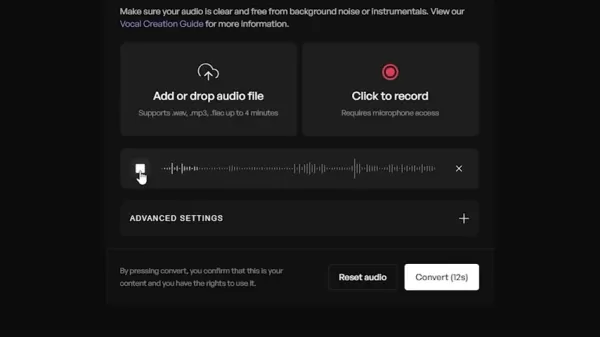
The optimal settings will vary based on your audio's characteristics and the type of voice you are cloning. Test different settings and models to determine what suits your specific needs best. Training a voice model can be time-consuming, depending on your dataset's size and the model's complexity. Be patient and don't hesitate to experiment!
Step 4: Testing and Refining
After your voice model is trained, it's time to test it. Kits.AI lets you input text and create speech using your cloned voice. Listen closely to the output and note any shortcomings. These might include mispronunciations, awkward intonation, or insufficient emotional expression.
Modify your training parameters or preprocess your audio differently and retrain to fix these problems. This cycle of testing and refining is essential for attaining a high-quality voice clone.
Pricing and Plans on Kits.AI
Understanding Kits.AI's Subscription Model
Kits.AI operates on a tiered subscription model, offering varying levels of access and features for a monthly fee. A free tier with limited access is available for new users to try the platform. For substantial use of Kits.AI's voice cloning, their Creator or Pro plans will be required. Higher tiers permit longer voice generation. Each ascending tier includes unlimited access to the features of lower tiers, so if you have the Pro level, you don't need to separately purchase the Creator level features.
Here is a summary of the main tiers, as of the end of 2025:
- Free: Includes a restricted number of characters, training minutes, and conversions per month. Allows for one free starter voice clone.
- Creator: Provides higher limits on characters, training minutes, and conversions. Adds a few more slots for voice clones, enabling you to save different voices. Grants entry to the royalty-free voice library.
- Pro: Offers even greater limits and provides advanced features like commercial usage rights and collaboration tools.
Exact pricing and available limits can change over time, so it's advisable to visit their website for the latest details. Their pricing reflects either monthly or annual payments, with annual payments typically offering a lower overall cost.
Plan Monthly Minutes Free Tier Voices Commercial Rights Free 15 Yes Starter Voices No Creator 120 No Starter & Basic No Pro 600 No All Yes
AI Voice Cloning Pros and Cons
Pros
More cost-effective than hiring voice actors.
Allows for voice creation when original recordings are unavailable.
Provides great flexibility for adapting voices to various projects.
Drives innovation in entertainment, accessibility, and education.
Cons
Poses significant ethical issues regarding privacy and consent.
Potential for misuse in deception and spreading false information.
Possible copyright conflicts over voice ownership.
Could reduce job prospects for professional voice actors.
Key Capabilities of Kits.AI
Core Features That Enhance Voice Cloning
Kits.AI distinguishes itself in the competitive AI voice tools market through its combination of flexibility and user-friendliness. Here’s a detailed look at the features that make this tool so attractive:
- Voice Training: Kits.AI enables you to train AI models on your personal audio datasets. This offers complete control over the voice cloning process and supports the creation of highly customized voices.
- Voice Modification: You can tweak cloned voices to better resemble the target speaker. This covers adjustments to pitch, tone, accent, and the addition of effects.
- Text-to-Speech: Produce speech in many languages using your cloned voice. This simplifies the creation of localized content for international audiences.
- Royalty-Free Voice Library: Gain access to a collection of royalty-free voices for use in your creative projects.
- Commercial Usage Rights: Specific subscription levels unlock commercial usage rights, allowing you to earn revenue from your AI-generated content.
- Collaboration Tools: Some plans include tools for team collaboration, a valuable feature for larger organizations.
Diverse Applications of Kits.AI's Voice Cloning
Unlocking Creative Potential
Kits.AI's voice cloning technology has numerous potential uses, spanning from entertainment to accessibility. Some of the most frequent applications are:
- Video Games: Create dialogue for NPCs, produce custom voiceovers for tutorials, and enhance the depth and immersion of the gaming experience.
- Animated Films: Replace an actor's voice in post-production or generate voiceovers for characters with few speaking lines.
- Audio Dramas and Podcasts: Build a cast of characters with distinctive voices and generate narration, sound effects, and other audio features.
- Accessibility: Create speech for individuals who have lost their ability to talk. Use their past recordings to produce natural-sounding speech, allowing them to communicate effectively in their own 'voice'.
- Content Creation: Produce voiceovers for YouTube videos, social media content, and other online platforms.
- Personalization: Craft personalized messages, greetings, and responses using your own voice.
- Education: Generate audio textbooks, language learning resources, and other educational materials.
Frequently Asked Questions About AI Voice Cloning
Is AI voice cloning ethical?
AI voice cloning is ethical when used with consent, respect for privacy, and in line with copyright regulations. However, it becomes unethical if used to deceive, impersonate, or cause harm. Always evaluate the ethical aspects of your voice cloning project and implement measures to reduce potential risks.
Can I use AI voice cloning for commercial purposes?
Commercial use of AI voice cloning could be limited by legal and ethical constraints. Review the terms of service of your voice cloning platform and seek legal advice to ensure you follow all relevant laws and regulations. Always get consent from the original speaker before using their voice commercially.
How can I ensure the quality of my AI voice clone?
The quality of your AI voice clone relies on several factors, including the quality of your audio samples, the training parameters selected, and the post-processing methods applied. Adhere to the best practices described in this guide and test different settings to achieve optimal results.
Explore More About AI Voice Cloning
How does AI voice cloning compare to traditional voice acting?
AI voice cloning has several benefits over traditional voice acting. It can be quicker, less expensive, and more adaptable. It also allows for the replication of iconic character voices or the invention of entirely new voices that align perfectly with your creative concept. Nonetheless, AI voice cloning has some drawbacks. It might not fully capture the depth of human emotion, and it can be constrained by legal and ethical boundaries. Generally, AI voice cloning is most suitable for projects needing unique character voices or those requiring fast, budget-friendly production.
Related article
 Ilya Sutskever Testifies: Ultraman Built OpenAI Network on Lies
Recent court filings reveal that Ilya Sutskever, OpenAI’s former Chief Scientist, testified as a central figure in Elon Musk’s lawsuit against the company. His statements confirmed that the 2023 leadership upheaval was not an impulsive move, but rath
Gemini faces branding challenges, as does the wider AI industry
Google’s Wednesday announcement regarding new Gemini Live voice features makes a valid point: “You shouldn’t have to guess whether a task requires Spark, a Daily Brief, or a quick inbox search.” While Google presents this as a commitment to handling
Claude Adds Multilingual Voice Support, Bringing Real Phone Calls Closer
The voice interaction experience of artificial intelligence is about to undergo a major update. According to the latest news from tech media Android Authority, Anthropic is preparing a significant upgrade for its AI assistant Claude, focusing on brea
Related Special Topic Recommendations
Design & Art
Ilya Sutskever Testifies: Ultraman Built OpenAI Network on Lies
Recent court filings reveal that Ilya Sutskever, OpenAI’s former Chief Scientist, testified as a central figure in Elon Musk’s lawsuit against the company. His statements confirmed that the 2023 leadership upheaval was not an impulsive move, but rath
Gemini faces branding challenges, as does the wider AI industry
Google’s Wednesday announcement regarding new Gemini Live voice features makes a valid point: “You shouldn’t have to guess whether a task requires Spark, a Daily Brief, or a quick inbox search.” While Google presents this as a commitment to handling
Claude Adds Multilingual Voice Support, Bringing Real Phone Calls Closer
The voice interaction experience of artificial intelligence is about to undergo a major update. According to the latest news from tech media Android Authority, Anthropic is preparing a significant upgrade for its AI assistant Claude, focusing on brea
Related Special Topic Recommendations
Design & Art
 Top AI Illustration Tools: Create Editorial Scenes and Cover Art Faster
2026 Latest Top-rated AI Illustration Tools: Our curated list features the best powerfully designed tools for creating stunning editorial scenes and eye-catching cover art quickly. Each option has gone through rigorous real-world tests, offering a free vs paid comparison to help you find the perfect match for your workflow. Try these must-try solutions today to unlock your AI edge and boost your creative productivity. Explore now at XIX.AI.
 10 tools
 xix.ai
Education and Learning
Top AI Tutors for Exam Prep: Practice Math, Science, and English
xix.ai
Education and Learning
Top AI Tutors for Exam Prep: Practice Math, Science, and English
2026 Latest Top-Rated Best AI Tutors for Exam Prep are here on XIX.AI! Our curated list features powerful game-changing tools that offer free vs paid comparison, real-world tests, and weekly updated rankings. They help boost your writing efficiency, simplify complex topic learning, and unlock your academic potential. Explore now to Discover your perfect exam prep tool and Start creating today to Unlock your AI edge!
10 tools
xix.ai
Finance
AI Budget Planning Tools for Personal Money Management
2026 Latest Best Top-Rated AI Budget Planning Tools for Personal Money Management are here on XIX.AI! This curated collection features powerful, game-changing solutions that help you conduct real-world tests, understand spending habits, and create personalized plans to boost productivity. Enjoy a free vs paid comparison along with detailed rankings. Must-try tools designed to simplify money management and unlock your AI edge. Explore now!
11 tools
xix.ai
Health & Wellness
AI Sleep Tracking Assistants: Improve Recovery with Better Bedtime Habits
2026 Latest Best Top-Rated AI Sleep Tracking Assistants curated for ultimate recovery. This fully updated weekly guide features powerful tools that deliver real-world tests, free vs paid comparison, and detailed rankings to help you find the must-try solution that boosts sleep quality and supports better bedtime habits. Explore now at XIX.AI to Unlock your AI edge.
10 tools
xix.ai
Data Analysis
AI SQL Copilots for Product and Revenue Analytics
2026 Latest Best Top-Rated AI SQL Copilots for Product and Revenue Analytics! XIX.AI has curated a powerful, game-changing collection of must-try tools that undergo real-world tests through weekly updated rankings. These tools help users boost productivity significantly by accelerating data analysis, streamlining complex queries, and generating accurate insights to drive smarter business decisions. Explore now to Discover your perfect tool for unlocking your AI edge!
14 tools
xix.ai
Education and Learning
Best AI Homework Helpers That Teach: Learn Concepts, Not Just Answers
2026 Latest Best Top-Rated AI Homework Helpers That Teach Core Concepts Not Just Answers Powerful Tools for Students Must-Try Curated List Weekly Updated Free vs Paid Comparison Real-World Tests Accurate Rankings to Help You Unlock Your Full Learning Potential Explore now to Discover your perfect tool for smarter studying.
10 tools
xix.ai

 Comments (1)
0/500
Comments (1)
0/500
![PatrickSmith]()
This is wild! I've always wondered what Link's voice would be like, and now AI is making it happen. Kinda surreal to think we can clone fictional characters' voices. Makes me wonder about the future of voice acting and copyright issues though. 🤔
Have you ever imagined what Link from The Legend of Zelda might sound like if he could speak? Thanks to artificial intelligence, particularly AI voice cloning, this intriguing idea can now be explored. This article dives into the captivating realm of AI voice replication, examining how it can approximate the voices of iconic characters like Link, alongside a discussion of the important ethical questions this technology raises. By learning about the available tools and methods, both fans and creators can experiment with AI voice cloning to bring beloved characters to life in fresh and engaging ways.
Key Points
AI voice cloning uses machine learning to reproduce vocal characteristics.
Ethical considerations are paramount, focusing on consent and preventing misuse.
Platforms like Kits.AI enable the creation and customization of AI voice models.
High-quality voice datasets are crucial for training accurate AI models.
AI voice cloning can elevate creative projects by introducing unique character voices.
Understanding AI Voice Cloning
What is AI Voice Cloning?
AI Voice Cloning is a technology that employs artificial intelligence, especially machine learning, to analyze and mimic a person's voice. This involves building a digital model of a voice, which can then produce new speech in that voice. The fundamental process requires training an AI algorithm on a collection of audio recordings from the target speaker. A larger and more diverse dataset allows the AI to more accurately capture the voice's subtleties, such as tone, pitch, accent, and speaking style.
AI Voice Cloning has many uses. In the entertainment industry, it can generate voiceovers for animated characters or replace an actor's dialogue during post-production. It also serves accessibility needs, providing synthesized speech for people who have lost their ability to speak. Still, it's vital to use this technology with a clear awareness of its potential ethical consequences.
A central component of AI voice cloning is the development of a voice model. This model serves as a digital blueprint of the voice, enabling the AI to produce new speech that closely resembles the original speaker. Contemporary AI algorithms, like deep learning models, can capture fine vocal details that were once very difficult to replicate. This high level of precision unlocks numerous creative opportunities but also demands careful attention to privacy and consent issues.
Beyond the technical side, AI voice cloning brings up important questions about voice authenticity and ownership. It's critical to ensure that any application of this technology adheres to legal and ethical norms, especially when replicating a real person's voice. As AI voice cloning grows more advanced, the demand for clear regulations and guidelines will continue to rise.
The Ethical Considerations of Voice Replication
The ability to replicate voices with AI carries significant ethical obligations. A primary concern is consent. Using someone's voice to train an AI model without their explicit permission can violate their privacy and lead to misuse, such as creating deepfakes or spreading false information. Securing clear consent from individuals before utilizing their voice is essential.
Another ethical issue is the potential for deception. Cloned voices can be used to impersonate people in audio or video content, making it hard to tell the difference between the real person and the AI-generated copy. This can have serious repercussions, particularly if the cloned voice is employed to disseminate misinformation or carry out fraudulent acts. To reduce this risk, it's important to establish safeguards, like adding watermarks to AI-generated content to identify its origin.
Copyright and ownership are also major concerns. Voices can be viewed as intellectual property, and unauthorized replication might infringe on the original speaker's rights. Clear legal structures are necessary to define who owns a cloned voice and to control its use. This involves resolving questions about who may profit from cloned voices and what limitations should govern their application.
Furthermore, the effect on voice actors deserves attention. As AI voice cloning becomes more sophisticated, it could potentially displace human voice actors in some jobs, resulting in employment loss and economic strain. Finding ways to assist voice actors and ensure they benefit from the possibilities created by AI, rather than being replaced by it, is important.
Ultimately, responsible use of AI voice cloning demands a comprehensive strategy that includes technical protections, legal frameworks, and ethical standards. By confronting these issues, we can leverage the creative power of this technology while reducing the dangers of misuse and harm.
Replicating Link's Voice: A Case Study
Finding Voice Datasets
The initial step in replicating Link's voice, or any character's voice, is locating appropriate voice datasets. For Link, who mainly expresses himself through grunts, shouts, and brief sounds, this can be difficult. An ideal dataset would contain all of Link's vocal expressions from different Zelda games.
This might mean extracting audio files from game ROMs or utilizing recordings from gameplay videos.
However, the quality of these recordings can differ. Background noise, music, and other sound effects may obscure the clarity of Link's sounds. Therefore, cleaning the audio with noise reduction methods is important. This can include using audio editing software to eliminate background noise, balance sound levels, and separate Link's voice from other audio components.
Another method is to produce a synthetic dataset. This entails hiring a voice actor to mimic Link's vocal mannerisms. While not an exact duplicate, this can offer a more uniform and manageable dataset for training the AI model. It's also vital to account for the emotional spectrum in Link's voice. From resolute battle cries to sounds of surprise or pain, Link conveys various emotions through his vocalizations. Capturing this emotional range is key to developing a convincing AI voice clone.
The dataset's size matters as well. The more data the AI model has for learning, the more precise it will be at imitating Link's voice. Strive for a dataset that includes at least several hours of audio, if feasible. This might demand considerable time and resource investment, but it will lead to a more realistic and expressive AI voice clone.
Using Kits.AI for Voice Cloning
Kits.AI is a platform that lets users create and customize AI voice models. It offers an intuitive interface for uploading voice datasets, training AI models, and producing speech with the cloned voice. Kits.AI includes a variety of tools and functionalities that make it a useful resource for voice cloning endeavors.
To use Kits.AI for replicating Link's voice, begin by setting up an account and uploading your voice dataset. Kits.AI accepts multiple audio formats, such as WAV, MP3, and FLAC. After the dataset is uploaded, you can train an AI model with Kits.AI's integrated training tools. This process includes choosing a training algorithm and configuring various parameters, like the number of training epochs and the learning rate.
Kits.AI also lets you adjust the cloned voice to more closely align with the target speaker. This can involve fine-tuning the voice's pitch, tone, and accent. You can also incorporate effects, like reverb or echo, to produce a more immersive sound. Once you're happy with the cloned voice, you can use it to generate speech in numerous languages. Kits.AI supports many languages, including English, Spanish, French, German, and Japanese.
It's worth noting that Kits.AI provides both free and paid plans. The free plan has some restrictions, such as a limited amount of training minutes and characters per month. The paid plans offer more features and greater flexibility, making them a better choice for substantial voice cloning projects. Whether you're a Zelda fan aiming to animate Link's voice or a content creator seeking to incorporate distinctive character voices into your work, Kits.AI delivers a powerful and user-friendly platform for AI voice cloning.
Enhancing Creative Projects with AI-Generated Voices
AI-generated voices can greatly improve creative projects by introducing unique character voices. Whether you're developing a video game, animated film, or audio drama, AI voices can help animate your characters in ways traditional voice acting may not allow. With AI voice cloning, you can replicate the voices of famous characters like Link or invent completely new voices that fit your character's personality and history perfectly.
In video games, AI voices can generate dialogue for non-player characters (NPCs), adding richness and immersion to the gaming experience. You can also employ AI voices for custom voiceovers in tutorials, cutscenes, and other in-game elements. In animated films, AI voices can substitute for an actor's voice during post-production or provide voiceovers for characters with minimal speaking parts. This can reduce time and expenses while still delivering a high-quality vocal performance.
AI voices are also applicable in audio dramas, podcasts, and other audio content. With AI voice cloning, you can assemble a cast of characters with unique voices, making your audio content more captivating and immersive. You can also use AI voices to produce narration, sound effects, and additional audio components. A major benefit of using AI voices in creative projects is the degree of control it affords. With AI voice cloning, you can meticulously adjust your characters' vocal traits to fit your creative vision exactly. You can also effortlessly create new dialogue or alter existing lines. This adaptability is especially valuable when working on intricate or dynamic projects.
Step-by-Step Guide to Cloning a Voice with Kits.AI
Step 1: Gathering Audio Samples
The first and possibly most important step in AI voice cloning is gathering high-quality audio samples of the person or character whose voice you wish to replicate. For the best outcomes, the audio should be clear, with little background noise and steady audio levels. Longer samples generally produce better results, as they provide the AI with more data to learn from.
This could involve recording the individual speaking, pulling audio from existing videos or recordings, or, for fictional characters, engaging a voice actor to supply the base audio. For Link, considering the sparse dialogue, you would want to collect every occurrence of his grunts, shouts, and short sounds from the Zelda games you are focusing on for the voice clone.
Always respect copyright and usage rights when obtaining audio. Only utilize material that you are legally permitted to use for voice cloning. This might involve securing explicit permission from the copyright holder or only using samples from sources published under a creative commons license.
Step 2: Preparing Your Audio
Once you have your audio samples, you might need to preprocess them to make sure they are appropriate for training an AI model. This can involve reducing noise, trimming silent portions, and ensuring all audio has a consistent volume level. You can use free tools like Audacity or commercial software like Adobe Audition for these tasks.
Think about transcribing the audio into text. Although Kits.AI can function with audio alone, having transcriptions provides more control and refinement later on. It lets you correct any AI misinterpretations and enhance the voice clone's accuracy.
Step 3: Training Your Voice Model
With your audio cleaned and ready, upload it to Kits.AI. The platform will then lead you through training your voice model. This includes selecting the kind of AI model you want to use and modifying various training parameters.
The optimal settings will vary based on your audio's characteristics and the type of voice you are cloning. Test different settings and models to determine what suits your specific needs best. Training a voice model can be time-consuming, depending on your dataset's size and the model's complexity. Be patient and don't hesitate to experiment!
Step 4: Testing and Refining
After your voice model is trained, it's time to test it. Kits.AI lets you input text and create speech using your cloned voice. Listen closely to the output and note any shortcomings. These might include mispronunciations, awkward intonation, or insufficient emotional expression.
Modify your training parameters or preprocess your audio differently and retrain to fix these problems. This cycle of testing and refining is essential for attaining a high-quality voice clone.
Pricing and Plans on Kits.AI
Understanding Kits.AI's Subscription Model
Kits.AI operates on a tiered subscription model, offering varying levels of access and features for a monthly fee. A free tier with limited access is available for new users to try the platform. For substantial use of Kits.AI's voice cloning, their Creator or Pro plans will be required. Higher tiers permit longer voice generation. Each ascending tier includes unlimited access to the features of lower tiers, so if you have the Pro level, you don't need to separately purchase the Creator level features.
Here is a summary of the main tiers, as of the end of 2025:
- Free: Includes a restricted number of characters, training minutes, and conversions per month. Allows for one free starter voice clone.
- Creator: Provides higher limits on characters, training minutes, and conversions. Adds a few more slots for voice clones, enabling you to save different voices. Grants entry to the royalty-free voice library.
- Pro: Offers even greater limits and provides advanced features like commercial usage rights and collaboration tools.
Exact pricing and available limits can change over time, so it's advisable to visit their website for the latest details. Their pricing reflects either monthly or annual payments, with annual payments typically offering a lower overall cost.
| Plan | Monthly Minutes | Free Tier | Voices | Commercial Rights |
|---|---|---|---|---|
| Free | 15 | Yes | Starter Voices | No |
| Creator | 120 | No | Starter & Basic | No |
| Pro | 600 | No | All | Yes |
AI Voice Cloning Pros and Cons
Pros
More cost-effective than hiring voice actors.
Allows for voice creation when original recordings are unavailable.
Provides great flexibility for adapting voices to various projects.
Drives innovation in entertainment, accessibility, and education.
Cons
Poses significant ethical issues regarding privacy and consent.
Potential for misuse in deception and spreading false information.
Possible copyright conflicts over voice ownership.
Could reduce job prospects for professional voice actors.
Key Capabilities of Kits.AI
Core Features That Enhance Voice Cloning
Kits.AI distinguishes itself in the competitive AI voice tools market through its combination of flexibility and user-friendliness. Here’s a detailed look at the features that make this tool so attractive:
- Voice Training: Kits.AI enables you to train AI models on your personal audio datasets. This offers complete control over the voice cloning process and supports the creation of highly customized voices.
- Voice Modification: You can tweak cloned voices to better resemble the target speaker. This covers adjustments to pitch, tone, accent, and the addition of effects.
- Text-to-Speech: Produce speech in many languages using your cloned voice. This simplifies the creation of localized content for international audiences.
- Royalty-Free Voice Library: Gain access to a collection of royalty-free voices for use in your creative projects.
- Commercial Usage Rights: Specific subscription levels unlock commercial usage rights, allowing you to earn revenue from your AI-generated content.
- Collaboration Tools: Some plans include tools for team collaboration, a valuable feature for larger organizations.
Diverse Applications of Kits.AI's Voice Cloning
Unlocking Creative Potential
Kits.AI's voice cloning technology has numerous potential uses, spanning from entertainment to accessibility. Some of the most frequent applications are:
- Video Games: Create dialogue for NPCs, produce custom voiceovers for tutorials, and enhance the depth and immersion of the gaming experience.
- Animated Films: Replace an actor's voice in post-production or generate voiceovers for characters with few speaking lines.
- Audio Dramas and Podcasts: Build a cast of characters with distinctive voices and generate narration, sound effects, and other audio features.
- Accessibility: Create speech for individuals who have lost their ability to talk. Use their past recordings to produce natural-sounding speech, allowing them to communicate effectively in their own 'voice'.
- Content Creation: Produce voiceovers for YouTube videos, social media content, and other online platforms.
- Personalization: Craft personalized messages, greetings, and responses using your own voice.
- Education: Generate audio textbooks, language learning resources, and other educational materials.
Frequently Asked Questions About AI Voice Cloning
Is AI voice cloning ethical?
AI voice cloning is ethical when used with consent, respect for privacy, and in line with copyright regulations. However, it becomes unethical if used to deceive, impersonate, or cause harm. Always evaluate the ethical aspects of your voice cloning project and implement measures to reduce potential risks.
Can I use AI voice cloning for commercial purposes?
Commercial use of AI voice cloning could be limited by legal and ethical constraints. Review the terms of service of your voice cloning platform and seek legal advice to ensure you follow all relevant laws and regulations. Always get consent from the original speaker before using their voice commercially.
How can I ensure the quality of my AI voice clone?
The quality of your AI voice clone relies on several factors, including the quality of your audio samples, the training parameters selected, and the post-processing methods applied. Adhere to the best practices described in this guide and test different settings to achieve optimal results.
Explore More About AI Voice Cloning
How does AI voice cloning compare to traditional voice acting?
AI voice cloning has several benefits over traditional voice acting. It can be quicker, less expensive, and more adaptable. It also allows for the replication of iconic character voices or the invention of entirely new voices that align perfectly with your creative concept. Nonetheless, AI voice cloning has some drawbacks. It might not fully capture the depth of human emotion, and it can be constrained by legal and ethical boundaries. Generally, AI voice cloning is most suitable for projects needing unique character voices or those requiring fast, budget-friendly production.








 Ilya Sutskever Testifies: Ultraman Built OpenAI Network on Lies
Recent court filings reveal that Ilya Sutskever, OpenAI’s former Chief Scientist, testified as a central figure in Elon Musk’s lawsuit against the company. His statements confirmed that the 2023 leadership upheaval was not an impulsive move, but rath
Ilya Sutskever Testifies: Ultraman Built OpenAI Network on Lies
Recent court filings reveal that Ilya Sutskever, OpenAI’s former Chief Scientist, testified as a central figure in Elon Musk’s lawsuit against the company. His statements confirmed that the 2023 leadership upheaval was not an impulsive move, but rath
 Gemini faces branding challenges, as does the wider AI industry
Google’s Wednesday announcement regarding new Gemini Live voice features makes a valid point: “You shouldn’t have to guess whether a task requires Spark, a Daily Brief, or a quick inbox search.” While Google presents this as a commitment to handling
Gemini faces branding challenges, as does the wider AI industry
Google’s Wednesday announcement regarding new Gemini Live voice features makes a valid point: “You shouldn’t have to guess whether a task requires Spark, a Daily Brief, or a quick inbox search.” While Google presents this as a commitment to handling
 Claude Adds Multilingual Voice Support, Bringing Real Phone Calls Closer
The voice interaction experience of artificial intelligence is about to undergo a major update. According to the latest news from tech media Android Authority, Anthropic is preparing a significant upgrade for its AI assistant Claude, focusing on brea
Claude Adds Multilingual Voice Support, Bringing Real Phone Calls Closer
The voice interaction experience of artificial intelligence is about to undergo a major update. According to the latest news from tech media Android Authority, Anthropic is preparing a significant upgrade for its AI assistant Claude, focusing on brea

2026 Latest Top-rated AI Illustration Tools: Our curated list features the best powerfully designed tools for creating stunning editorial scenes and eye-catching cover art quickly. Each option has gone through rigorous real-world tests, offering a free vs paid comparison to help you find the perfect match for your workflow. Try these must-try solutions today to unlock your AI edge and boost your creative productivity. Explore now at XIX.AI.
10 tools
xix.ai

2026 Latest Top-Rated Best AI Tutors for Exam Prep are here on XIX.AI! Our curated list features powerful game-changing tools that offer free vs paid comparison, real-world tests, and weekly updated rankings. They help boost your writing efficiency, simplify complex topic learning, and unlock your academic potential. Explore now to Discover your perfect exam prep tool and Start creating today to Unlock your AI edge!
10 tools
xix.ai

2026 Latest Best Top-Rated AI Budget Planning Tools for Personal Money Management are here on XIX.AI! This curated collection features powerful, game-changing solutions that help you conduct real-world tests, understand spending habits, and create personalized plans to boost productivity. Enjoy a free vs paid comparison along with detailed rankings. Must-try tools designed to simplify money management and unlock your AI edge. Explore now!
11 tools
xix.ai

2026 Latest Best Top-Rated AI Sleep Tracking Assistants curated for ultimate recovery. This fully updated weekly guide features powerful tools that deliver real-world tests, free vs paid comparison, and detailed rankings to help you find the must-try solution that boosts sleep quality and supports better bedtime habits. Explore now at XIX.AI to Unlock your AI edge.
10 tools
xix.ai

2026 Latest Best Top-Rated AI SQL Copilots for Product and Revenue Analytics! XIX.AI has curated a powerful, game-changing collection of must-try tools that undergo real-world tests through weekly updated rankings. These tools help users boost productivity significantly by accelerating data analysis, streamlining complex queries, and generating accurate insights to drive smarter business decisions. Explore now to Discover your perfect tool for unlocking your AI edge!
14 tools
xix.ai

2026 Latest Best Top-Rated AI Homework Helpers That Teach Core Concepts Not Just Answers Powerful Tools for Students Must-Try Curated List Weekly Updated Free vs Paid Comparison Real-World Tests Accurate Rankings to Help You Unlock Your Full Learning Potential Explore now to Discover your perfect tool for smarter studying.
10 tools
xix.ai

This is wild! I've always wondered what Link's voice would be like, and now AI is making it happen. Kinda surreal to think we can clone fictional characters' voices. Makes me wonder about the future of voice acting and copyright issues though. 🤔












