


 Home
HomeHow to master languages with AI translation tools like ChatGPT in 2025?
AI-powered translation is transforming our interaction with languages. From translating documents and managing translation projects to acting as a personalized language tutor and even converting programming code, AI unlocks a world of possibilities. This guide explores how AI translation tools can help you achieve language mastery with greater efficiency and precision.
Key Points
AI translation tools deliver exceptional accuracy and speed.
ChatGPT can be configured to manage standardized translation projects.
AI provides a compelling alternative to traditional language apps like Duolingo.
AI is capable of translating between different programming languages.
Wise Owl Training provides comprehensive courses on AI and various software applications.
Exploring AI Translation Capabilities
The Accuracy of AI Text Translation
AI translation technology has advanced tremendously, now offering remarkably precise text conversion. By leveraging vast datasets and sophisticated algorithms, these tools capture not just literal meanings but also linguistic subtleties and context. Whether for a simple phrase or a complex document, AI provides a reliable and efficient translation solution.
Its capabilities go far beyond direct word substitution. Modern AI understands context, idioms, and cultural references, resulting in translations that sound natural and appropriate. This sophistication makes AI tools essential for businesses, travelers, and anyone needing to communicate across language barriers.
AI does more than convert words; it builds bridges of cultural understanding. Leveraging AI for translation is a strategic advantage in our interconnected world, not merely a convenience. As shown in demonstration videos, this high accuracy can be verified by translating text through multiple languages and back to English with minimal loss of original meaning.
Creating a Generic Translation Project with ChatGPT
A powerful application of AI is setting up reusable translation projects within tools like ChatGPT.
This involves creating a consistent framework for handling multiple translation requests efficiently. While the steps may be tailored to ChatGPT, the core principles apply to other AI platforms as well.
These standardized translation projects are ideal for businesses that regularly translate large volumes of content. A defined process ensures all translations maintain a consistent style, tone, and terminology, which is crucial for preserving brand identity and clarity across languages.
Establishing such a project requires providing the AI with clear instructions, specifying source and target languages, and offering examples for guidance. This customization tailors the AI to specific needs, ensuring output meets expectations.
This structured approach promotes consistent, high-quality results. More detailed instructions typically yield more accurate translations. Utilizing project management features within platforms like ChatGPT adds further organization and efficiency to the workflow.
AI as a Duolingo Substitute: Personalized Language Learning
For language learners, AI presents a unique and flexible alternative to conventional platforms. It can act as a personal tutor, delivering customized lessons and interactive conversations that adapt to your pace and learning style. Imagine having a conversation partner available anytime to practice your new language skills.
As illustrated, you can configure an AI conversationalist to chat with you and politely correct mistakes. This personalized feedback is highly effective, allowing learners to focus on their specific areas for improvement.
Unlike static app exercises, AI generates dynamic, responsive content based on your questions and interests, creating a more engaging learning experience. Language acquisition becomes an interactive journey rather than a monotonous task. Using voice features to converse further enhances this immersive learning, offering a novel approach outside the constraints of traditional software.
Translating Programming Languages with AI
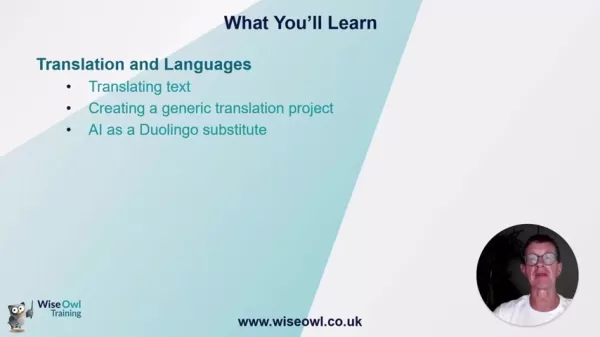
AI's translation prowess extends beyond human languages to include programming code. This is invaluable for developers migrating codebases or working in multi-language environments.
For developers, this means greater efficiency and less manual effort. AI automates the tedious process of code conversion, freeing up time for more creative and strategic work.
From updating legacy systems to modern languages to integrating disparate technologies, AI simplifies complex coding tasks. This not only saves time but also reduces error risks associated with manual conversion, significantly boosting development team productivity.
While this aspect may not interest non-coders, it highlights AI's versatility. It demonstrates AI's potential to bridge different technological ecosystems, facilitating smoother integration. As shown, AI's role extends beyond simple translation to actively enhancing the coding process itself.
Creating Your Own Chatbot in Another Language
Setting Up the Framework
One of the most engaging uses of AI translation is building your own chatbot in a foreign language. Imagine a personal AI assistant that converses with you in French, Spanish, or any language you choose! This is a practical application you can implement today using available AI tools.
The process involves instructing the AI to converse in a specific language, defining its response rules, and specifying a desired tone or style—whether formal and polite or casual and friendly. The AI adapts to your preferences, creating a tailored language practice environment.
This method offers a dynamic and engaging way to improve fluency, allowing for real-time interaction where you can ask questions, make errors, and receive instant feedback. The AI serves as a patient, knowledgeable partner, providing the support needed for success. As demonstrated, a well-configured chatbot can offer remarks and tactfully point out mistakes, showcasing the expanding educational potential of translation technology.
Crafting a Generic Translation Prompt: A How-To Guide
Step-by-Step Instructions for Creating a Custom Prompt
Creating a reusable translation prompt streamlines tasks within AI platforms like ChatGPT.
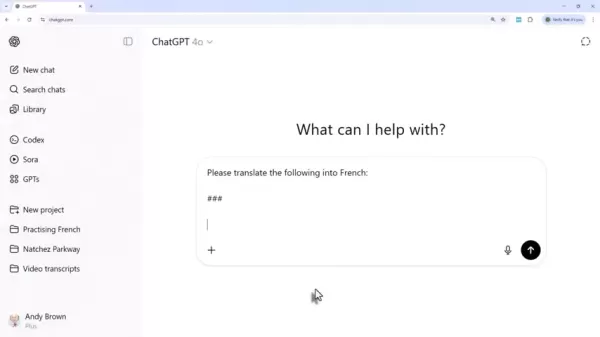
This prompt acts as a template for quick, consistent translations. Here's how to build one:
Step 1: Define the Prompt Structure
Begin by crafting a prompt with placeholders for the text and target language. For example:
Please translate {text_passage} into {language_name}. Do not include any explanatory text – just the translated passage of text.
This structure lets you quickly insert necessary information without rewriting instructions each time.
Step 2: Set Up Variables
Clearly define variables within the prompt for the text passage and target language. This guides the AI to the correct information. For example:
{language_name} = 'Spanish'{text_passage} = 'The curfew tolls the knell of parting day.'
Assigning values provides the AI with the necessary context for an accurate translation.
Step 3: Customize the Instructions
Tailor instructions to your needs. You may want to specify a particular style or tone:
Translate the text in a formal tone.
Ensure the translation is accurate and culturally relevant.
Step 4: Test the Prompt
Test your prompt with different texts and languages to ensure consistent, accurate performance. Refine it as needed to achieve optimal results.
Step 5: Utilize Project Features for Organization
To maximize efficiency, especially on platforms like ChatGPT, use project features to keep all custom instructions and related files neatly organized.
Pricing Cons
iderations for AI Tools
Understanding the Cost of AI Translation
The cost of AI translation tools varies significantly based on the platform and usage volume. Some offer free tiers with limited features, while others charge per character translated or API call made.
Businesses must consider the total cost of ownership, including initial investment, ongoing maintenance, and employee training costs. While AI can reduce expenses compared to traditional human translation, factoring in all costs is essential for a positive return on investment.
For individual learners, many AI tools offer affordable subscription plans providing access to personalized lessons and conversations, representing a cost-effective alternative to traditional classes or private tutors.
Evaluating AI Translation: Pros
and Cons
Pros
Significantly faster translation speed and increased efficiency.
High accuracy with strong contextual understanding.
Customizable, personalized language learning experiences.
Broad support for numerous languages.
Often more cost-effective than traditional translation services.
Cons
Potential for errors or cultural misinterpretations.
Dependence on training data, which can contain biases.
Sometimes struggles with very subtle linguistic nuances.
Requires a degree of technical knowledge to set up and customize effectively.
May not be ideal for highly creative or specialized subject matter.
Key Features of AI Translation Tools
Exploring the Essential Functionalities
AI translation tools are equipped with features that boost their effectiveness and user-friendliness:
- Real-time Translation: Enables instantaneous text or speech conversion for seamless, live communication.
- Contextual Understanding: Algorithms grasp text context to ensure translations are accurate and relevant.
- Customization: Users can tailor the AI to specific needs regarding style, tone, and terminology.
- Voice Mode: Allows for spoken translations and interactive voice conversations.
- Multi-Language Support: Supports a vast array of languages, enabling versatile global communication.
Unlocking the Potential: Use Cases for AI Translation
Real-World Applications of AI Translation
AI translation tools have diverse applications across multiple sectors:
- Business: Enabling global communication, translating marketing content, and localizing products and services.
- Travel: Facilitating communication with locals, translating signs and menus, and accessing foreign-language information.
- Education: Offering personalized language learning, translating educational materials, and assisting with multilingual research.
- Software Development: Translating code between languages, automating code migration, and simplifying complex development tasks.
These examples illustrate just a few ways AI is reshaping how we work with languages and access global information.
Frequently Asked Questions
How accurate are AI translation tools?
AI translation tools have achieved remarkable accuracy due to advanced algorithms and extensive datasets. They frequently capture not just literal meanings but also linguistic nuances and cultural context effectively.
Can AI replace traditional language learning methods?
While AI offers a unique, personalized learning pathway, it is best viewed as a powerful supplement rather than a complete replacement for traditional methods. It excels in providing interactive practice and tailored lessons.
What are the main applications of AI translation in business?
In business, AI translation facilitates international communication, translates marketing and product materials, localizes services, and can automate multilingual customer support.
Is AI translation suitable for translating creative or highly specialized content?
For creative or highly specialized content, human oversight remains crucial to ensure translations are appropriate, nuanced, and effective.
Related Questions
What other AI tools are available from Wise Owl Training?
Wise Owl Training offers a wide range of courses and resources covering AI and various software applications. This includes training on business intelligence tools like Power BI, Excel, and more. They provide professional IT training for businesses and host a variety of free learning resources on their website. The demonstrations highlight how AI can master different aspects of communication and coding, underscoring its vast potential across fields. The courses from Wise Owl Training provide a solid foundation for ongoing education in this dynamic space.
Related article
 Stripe to Acquire OpenRouter as AI Model Routing Gains Momentum
Stripe has agreed to acquire OpenRouter, an AI model-routing platform that gives developers access to hundreds of models through a single interface. The deal adds model selection and routing to Stripe’s existing work around AI usage and token-based b
Former OpenAI Researcher Barrett Zoph Returns to Google to Support Gemini Development
Barret Zoph, who previously abruptly left and joined OpenAI due to a disagreement with Thinking Machines Lab CEO Miriam Mularati, has once again changed employers. Alphabet's Google announced that Zoph will return as Vice President of Research, bring
How Recursive Intelligence Raised $335M at $4B Valuation in 4 Months
The co-founders of startup Ricursive Intelligence seemed destined to be co-founders.Anna Goldie, CEO, and Azalia Mirhoseini, CTO, are so well-known in the AI community that they were among those AI engineers who “got those weird emails from Zuckerber
Related Special Topic Recommendations
Design & Art
Stripe to Acquire OpenRouter as AI Model Routing Gains Momentum
Stripe has agreed to acquire OpenRouter, an AI model-routing platform that gives developers access to hundreds of models through a single interface. The deal adds model selection and routing to Stripe’s existing work around AI usage and token-based b
Former OpenAI Researcher Barrett Zoph Returns to Google to Support Gemini Development
Barret Zoph, who previously abruptly left and joined OpenAI due to a disagreement with Thinking Machines Lab CEO Miriam Mularati, has once again changed employers. Alphabet's Google announced that Zoph will return as Vice President of Research, bring
How Recursive Intelligence Raised $335M at $4B Valuation in 4 Months
The co-founders of startup Ricursive Intelligence seemed destined to be co-founders.Anna Goldie, CEO, and Azalia Mirhoseini, CTO, are so well-known in the AI community that they were among those AI engineers who “got those weird emails from Zuckerber
Related Special Topic Recommendations
Design & Art
 Top AI Illustration Tools: Create Editorial Scenes and Cover Art Faster
2026 Latest Top-rated AI Illustration Tools: Our curated list features the best powerfully designed tools for creating stunning editorial scenes and eye-catching cover art quickly. Each option has gone through rigorous real-world tests, offering a free vs paid comparison to help you find the perfect match for your workflow. Try these must-try solutions today to unlock your AI edge and boost your creative productivity. Explore now at XIX.AI.
 10 tools
 xix.ai
Education and Learning
Top AI Tutors for Exam Prep: Practice Math, Science, and English
xix.ai
Education and Learning
Top AI Tutors for Exam Prep: Practice Math, Science, and English
2026 Latest Top-Rated Best AI Tutors for Exam Prep are here on XIX.AI! Our curated list features powerful game-changing tools that offer free vs paid comparison, real-world tests, and weekly updated rankings. They help boost your writing efficiency, simplify complex topic learning, and unlock your academic potential. Explore now to Discover your perfect exam prep tool and Start creating today to Unlock your AI edge!
10 tools
xix.ai
Finance
AI Budget Planning Tools for Personal Money Management
2026 Latest Best Top-Rated AI Budget Planning Tools for Personal Money Management are here on XIX.AI! This curated collection features powerful, game-changing solutions that help you conduct real-world tests, understand spending habits, and create personalized plans to boost productivity. Enjoy a free vs paid comparison along with detailed rankings. Must-try tools designed to simplify money management and unlock your AI edge. Explore now!
11 tools
xix.ai
Health & Wellness
AI Sleep Tracking Assistants: Improve Recovery with Better Bedtime Habits
2026 Latest Best Top-Rated AI Sleep Tracking Assistants curated for ultimate recovery. This fully updated weekly guide features powerful tools that deliver real-world tests, free vs paid comparison, and detailed rankings to help you find the must-try solution that boosts sleep quality and supports better bedtime habits. Explore now at XIX.AI to Unlock your AI edge.
10 tools
xix.ai
Data Analysis
AI SQL Copilots for Product and Revenue Analytics
2026 Latest Best Top-Rated AI SQL Copilots for Product and Revenue Analytics! XIX.AI has curated a powerful, game-changing collection of must-try tools that undergo real-world tests through weekly updated rankings. These tools help users boost productivity significantly by accelerating data analysis, streamlining complex queries, and generating accurate insights to drive smarter business decisions. Explore now to Discover your perfect tool for unlocking your AI edge!
14 tools
xix.ai
Education and Learning
Best AI Homework Helpers That Teach: Learn Concepts, Not Just Answers
2026 Latest Best Top-Rated AI Homework Helpers That Teach Core Concepts Not Just Answers Powerful Tools for Students Must-Try Curated List Weekly Updated Free vs Paid Comparison Real-World Tests Accurate Rankings to Help You Unlock Your Full Learning Potential Explore now to Discover your perfect tool for smarter studying.
10 tools
xix.ai

 Comments (4)
0/500
Comments (4)
0/500
![CarlLewis]()
Honestly, I'm skeptical about AI replacing real language immersion. Can a chatbot really teach me the nuances of slang? 😅 But the idea of translating code is cool though.
![AnthonyJohnson]()
¿Será que en 2025 ya no necesitaremos estudiar idiomas? Me preocupa un poco perder esa conexión cultural si todo lo traduce una máquina. Aunque la idea de que me ayude con código suena útil, la verdad.
![HarperJones]()
와...언어 학습에서 이렇게까지 AI가 활용될 줄 몰랐어요. 2025년엔 번역 앱 없이도 자유롭게 외국어로 대화할 수 있겠네요! 혹시 AI 튜터가 사람의 억양을 완벽하게 흉내낼 수 있을까요? 🤔
![SamuelRoberts]()
Querida, isso tá meio assustador? Eu adoro usar essas ferramentas no trabalho, mas pensar que em 2025 meu emprego de intérprete pode virar pó 😅. O artigo fala em tutor personalizado... será que um IA realmente entende nuance cultural? Só de pensar em código de programação sendo 'traduzido' já me dá calafrios - isso tem que dar certo, né?
AI-powered translation is transforming our interaction with languages. From translating documents and managing translation projects to acting as a personalized language tutor and even converting programming code, AI unlocks a world of possibilities. This guide explores how AI translation tools can help you achieve language mastery with greater efficiency and precision.
Key Points
AI translation tools deliver exceptional accuracy and speed.
ChatGPT can be configured to manage standardized translation projects.
AI provides a compelling alternative to traditional language apps like Duolingo.
AI is capable of translating between different programming languages.
Wise Owl Training provides comprehensive courses on AI and various software applications.
Exploring AI Translation Capabilities
The Accuracy of AI Text Translation
AI translation technology has advanced tremendously, now offering remarkably precise text conversion. By leveraging vast datasets and sophisticated algorithms, these tools capture not just literal meanings but also linguistic subtleties and context. Whether for a simple phrase or a complex document, AI provides a reliable and efficient translation solution.
Its capabilities go far beyond direct word substitution. Modern AI understands context, idioms, and cultural references, resulting in translations that sound natural and appropriate. This sophistication makes AI tools essential for businesses, travelers, and anyone needing to communicate across language barriers.
AI does more than convert words; it builds bridges of cultural understanding. Leveraging AI for translation is a strategic advantage in our interconnected world, not merely a convenience. As shown in demonstration videos, this high accuracy can be verified by translating text through multiple languages and back to English with minimal loss of original meaning.
Creating a Generic Translation Project with ChatGPT
A powerful application of AI is setting up reusable translation projects within tools like ChatGPT.
This involves creating a consistent framework for handling multiple translation requests efficiently. While the steps may be tailored to ChatGPT, the core principles apply to other AI platforms as well.
These standardized translation projects are ideal for businesses that regularly translate large volumes of content. A defined process ensures all translations maintain a consistent style, tone, and terminology, which is crucial for preserving brand identity and clarity across languages.
Establishing such a project requires providing the AI with clear instructions, specifying source and target languages, and offering examples for guidance. This customization tailors the AI to specific needs, ensuring output meets expectations.
This structured approach promotes consistent, high-quality results. More detailed instructions typically yield more accurate translations. Utilizing project management features within platforms like ChatGPT adds further organization and efficiency to the workflow.
AI as a Duolingo Substitute: Personalized Language Learning
For language learners, AI presents a unique and flexible alternative to conventional platforms. It can act as a personal tutor, delivering customized lessons and interactive conversations that adapt to your pace and learning style. Imagine having a conversation partner available anytime to practice your new language skills.
As illustrated, you can configure an AI conversationalist to chat with you and politely correct mistakes. This personalized feedback is highly effective, allowing learners to focus on their specific areas for improvement.
Unlike static app exercises, AI generates dynamic, responsive content based on your questions and interests, creating a more engaging learning experience. Language acquisition becomes an interactive journey rather than a monotonous task. Using voice features to converse further enhances this immersive learning, offering a novel approach outside the constraints of traditional software.
Translating Programming Languages with AI
AI's translation prowess extends beyond human languages to include programming code. This is invaluable for developers migrating codebases or working in multi-language environments.
For developers, this means greater efficiency and less manual effort. AI automates the tedious process of code conversion, freeing up time for more creative and strategic work.
From updating legacy systems to modern languages to integrating disparate technologies, AI simplifies complex coding tasks. This not only saves time but also reduces error risks associated with manual conversion, significantly boosting development team productivity.
While this aspect may not interest non-coders, it highlights AI's versatility. It demonstrates AI's potential to bridge different technological ecosystems, facilitating smoother integration. As shown, AI's role extends beyond simple translation to actively enhancing the coding process itself.
Creating Your Own Chatbot in Another Language
Setting Up the Framework
One of the most engaging uses of AI translation is building your own chatbot in a foreign language. Imagine a personal AI assistant that converses with you in French, Spanish, or any language you choose! This is a practical application you can implement today using available AI tools.
The process involves instructing the AI to converse in a specific language, defining its response rules, and specifying a desired tone or style—whether formal and polite or casual and friendly. The AI adapts to your preferences, creating a tailored language practice environment.
This method offers a dynamic and engaging way to improve fluency, allowing for real-time interaction where you can ask questions, make errors, and receive instant feedback. The AI serves as a patient, knowledgeable partner, providing the support needed for success. As demonstrated, a well-configured chatbot can offer remarks and tactfully point out mistakes, showcasing the expanding educational potential of translation technology.
Crafting a Generic Translation Prompt: A How-To Guide
Step-by-Step Instructions for Creating a Custom Prompt
Creating a reusable translation prompt streamlines tasks within AI platforms like ChatGPT.
This prompt acts as a template for quick, consistent translations. Here's how to build one:
Step 1: Define the Prompt Structure
Begin by crafting a prompt with placeholders for the text and target language. For example:
Please translate {text_passage} into {language_name}. Do not include any explanatory text – just the translated passage of text.
This structure lets you quickly insert necessary information without rewriting instructions each time.
Step 2: Set Up Variables
Clearly define variables within the prompt for the text passage and target language. This guides the AI to the correct information. For example:
{language_name} = 'Spanish'{text_passage} = 'The curfew tolls the knell of parting day.'
Assigning values provides the AI with the necessary context for an accurate translation.
Step 3: Customize the Instructions
Tailor instructions to your needs. You may want to specify a particular style or tone:
Translate the text in a formal tone.
Ensure the translation is accurate and culturally relevant.
Step 4: Test the Prompt
Test your prompt with different texts and languages to ensure consistent, accurate performance. Refine it as needed to achieve optimal results.
Step 5: Utilize Project Features for Organization
To maximize efficiency, especially on platforms like ChatGPT, use project features to keep all custom instructions and related files neatly organized.
Pricing Cons
iderations for AI Tools
Understanding the Cost of AI Translation
The cost of AI translation tools varies significantly based on the platform and usage volume. Some offer free tiers with limited features, while others charge per character translated or API call made.
Businesses must consider the total cost of ownership, including initial investment, ongoing maintenance, and employee training costs. While AI can reduce expenses compared to traditional human translation, factoring in all costs is essential for a positive return on investment.
For individual learners, many AI tools offer affordable subscription plans providing access to personalized lessons and conversations, representing a cost-effective alternative to traditional classes or private tutors.
Evaluating AI Translation: Pros
and Cons
Pros
Significantly faster translation speed and increased efficiency.
High accuracy with strong contextual understanding.
Customizable, personalized language learning experiences.
Broad support for numerous languages.
Often more cost-effective than traditional translation services.
Cons
Potential for errors or cultural misinterpretations.
Dependence on training data, which can contain biases.
Sometimes struggles with very subtle linguistic nuances.
Requires a degree of technical knowledge to set up and customize effectively.
May not be ideal for highly creative or specialized subject matter.
Key Features of AI Translation Tools
Exploring the Essential Functionalities
AI translation tools are equipped with features that boost their effectiveness and user-friendliness:
- Real-time Translation: Enables instantaneous text or speech conversion for seamless, live communication.
- Contextual Understanding: Algorithms grasp text context to ensure translations are accurate and relevant.
- Customization: Users can tailor the AI to specific needs regarding style, tone, and terminology.
- Voice Mode: Allows for spoken translations and interactive voice conversations.
- Multi-Language Support: Supports a vast array of languages, enabling versatile global communication.
Unlocking the Potential: Use Cases for AI Translation
Real-World Applications of AI Translation
AI translation tools have diverse applications across multiple sectors:
- Business: Enabling global communication, translating marketing content, and localizing products and services.
- Travel: Facilitating communication with locals, translating signs and menus, and accessing foreign-language information.
- Education: Offering personalized language learning, translating educational materials, and assisting with multilingual research.
- Software Development: Translating code between languages, automating code migration, and simplifying complex development tasks.
These examples illustrate just a few ways AI is reshaping how we work with languages and access global information.
Frequently Asked Questions
How accurate are AI translation tools?
AI translation tools have achieved remarkable accuracy due to advanced algorithms and extensive datasets. They frequently capture not just literal meanings but also linguistic nuances and cultural context effectively.
Can AI replace traditional language learning methods?
While AI offers a unique, personalized learning pathway, it is best viewed as a powerful supplement rather than a complete replacement for traditional methods. It excels in providing interactive practice and tailored lessons.
What are the main applications of AI translation in business?
In business, AI translation facilitates international communication, translates marketing and product materials, localizes services, and can automate multilingual customer support.
Is AI translation suitable for translating creative or highly specialized content?
For creative or highly specialized content, human oversight remains crucial to ensure translations are appropriate, nuanced, and effective.
Related Questions
What other AI tools are available from Wise Owl Training?
Wise Owl Training offers a wide range of courses and resources covering AI and various software applications. This includes training on business intelligence tools like Power BI, Excel, and more. They provide professional IT training for businesses and host a variety of free learning resources on their website. The demonstrations highlight how AI can master different aspects of communication and coding, underscoring its vast potential across fields. The courses from Wise Owl Training provide a solid foundation for ongoing education in this dynamic space.








 Stripe to Acquire OpenRouter as AI Model Routing Gains Momentum
Stripe has agreed to acquire OpenRouter, an AI model-routing platform that gives developers access to hundreds of models through a single interface. The deal adds model selection and routing to Stripe’s existing work around AI usage and token-based b
Stripe to Acquire OpenRouter as AI Model Routing Gains Momentum
Stripe has agreed to acquire OpenRouter, an AI model-routing platform that gives developers access to hundreds of models through a single interface. The deal adds model selection and routing to Stripe’s existing work around AI usage and token-based b
 Former OpenAI Researcher Barrett Zoph Returns to Google to Support Gemini Development
Barret Zoph, who previously abruptly left and joined OpenAI due to a disagreement with Thinking Machines Lab CEO Miriam Mularati, has once again changed employers. Alphabet's Google announced that Zoph will return as Vice President of Research, bring
Former OpenAI Researcher Barrett Zoph Returns to Google to Support Gemini Development
Barret Zoph, who previously abruptly left and joined OpenAI due to a disagreement with Thinking Machines Lab CEO Miriam Mularati, has once again changed employers. Alphabet's Google announced that Zoph will return as Vice President of Research, bring
 How Recursive Intelligence Raised $335M at $4B Valuation in 4 Months
The co-founders of startup Ricursive Intelligence seemed destined to be co-founders.Anna Goldie, CEO, and Azalia Mirhoseini, CTO, are so well-known in the AI community that they were among those AI engineers who “got those weird emails from Zuckerber
How Recursive Intelligence Raised $335M at $4B Valuation in 4 Months
The co-founders of startup Ricursive Intelligence seemed destined to be co-founders.Anna Goldie, CEO, and Azalia Mirhoseini, CTO, are so well-known in the AI community that they were among those AI engineers who “got those weird emails from Zuckerber

2026 Latest Top-rated AI Illustration Tools: Our curated list features the best powerfully designed tools for creating stunning editorial scenes and eye-catching cover art quickly. Each option has gone through rigorous real-world tests, offering a free vs paid comparison to help you find the perfect match for your workflow. Try these must-try solutions today to unlock your AI edge and boost your creative productivity. Explore now at XIX.AI.
10 tools
xix.ai
2026 Latest Top-Rated Best AI Tutors for Exam Prep are here on XIX.AI! Our curated list features powerful game-changing tools that offer free vs paid comparison, real-world tests, and weekly updated rankings. They help boost your writing efficiency, simplify complex topic learning, and unlock your academic potential. Explore now to Discover your perfect exam prep tool and Start creating today to Unlock your AI edge!
10 tools
xix.ai
2026 Latest Best Top-Rated AI Budget Planning Tools for Personal Money Management are here on XIX.AI! This curated collection features powerful, game-changing solutions that help you conduct real-world tests, understand spending habits, and create personalized plans to boost productivity. Enjoy a free vs paid comparison along with detailed rankings. Must-try tools designed to simplify money management and unlock your AI edge. Explore now!
11 tools
xix.ai
2026 Latest Best Top-Rated AI Sleep Tracking Assistants curated for ultimate recovery. This fully updated weekly guide features powerful tools that deliver real-world tests, free vs paid comparison, and detailed rankings to help you find the must-try solution that boosts sleep quality and supports better bedtime habits. Explore now at XIX.AI to Unlock your AI edge.
10 tools
xix.ai
2026 Latest Best Top-Rated AI SQL Copilots for Product and Revenue Analytics! XIX.AI has curated a powerful, game-changing collection of must-try tools that undergo real-world tests through weekly updated rankings. These tools help users boost productivity significantly by accelerating data analysis, streamlining complex queries, and generating accurate insights to drive smarter business decisions. Explore now to Discover your perfect tool for unlocking your AI edge!
14 tools
xix.ai
2026 Latest Best Top-Rated AI Homework Helpers That Teach Core Concepts Not Just Answers Powerful Tools for Students Must-Try Curated List Weekly Updated Free vs Paid Comparison Real-World Tests Accurate Rankings to Help You Unlock Your Full Learning Potential Explore now to Discover your perfect tool for smarter studying.
10 tools
xix.ai

Honestly, I'm skeptical about AI replacing real language immersion. Can a chatbot really teach me the nuances of slang? 😅 But the idea of translating code is cool though.
¿Será que en 2025 ya no necesitaremos estudiar idiomas? Me preocupa un poco perder esa conexión cultural si todo lo traduce una máquina. Aunque la idea de que me ayude con código suena útil, la verdad.
와...언어 학습에서 이렇게까지 AI가 활용될 줄 몰랐어요. 2025년엔 번역 앱 없이도 자유롭게 외국어로 대화할 수 있겠네요! 혹시 AI 튜터가 사람의 억양을 완벽하게 흉내낼 수 있을까요? 🤔
Querida, isso tá meio assustador? Eu adoro usar essas ferramentas no trabalho, mas pensar que em 2025 meu emprego de intérprete pode virar pó 😅. O artigo fala em tutor personalizado... será que um IA realmente entende nuance cultural? Só de pensar em código de programação sendo 'traduzido' já me dá calafrios - isso tem que dar certo, né?












