


 Home
HomeAI Summarization Tools Streamline Content in 2025
In the fast-paced world of 2025, quickly digesting information is more crucial than ever. Artificial intelligence (AI) is transforming how we consume content, offering powerful tools that save time and boost efficiency. Leading this change are AI summarizing tools, which condense lengthy articles and reports into manageable overviews. This article explores the power of AI summarization, specifically how platforms like Steve.AI simplify content consumption and enhance productivity across professional settings. We will examine the underlying assumptions, capabilities, and practical applications of these tools, providing a comprehensive guide for anyone looking to streamline their information intake.
Key Points
AI summarizing tools enable efficient content consumption, saving time and enhancing productivity.
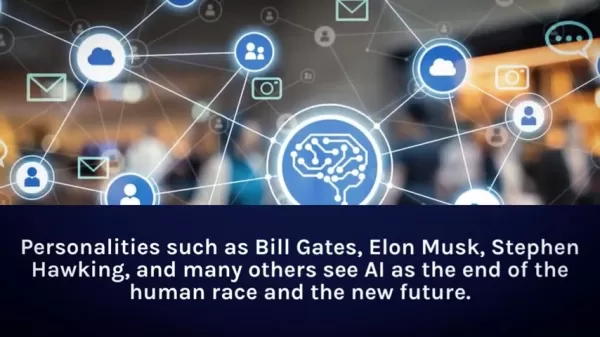
The idea that AI will overtake humans is debated, with a focus on AI's current limitations in creativity and emotional intelligence.
Steve.AI is a platform that provides a tool to summarize blogs and convert them into concise videos.
Ethical and legal guidelines heavily regulate the development and use of AI.
AI is designed to augment, not replace, human capabilities.
These tools can transform lengthy content into manageable summaries.
Steve.AI also offers voiceover features in multiple languages and accents for video content.
AI applications in healthcare, such as diagnosing breast cancer, highlight its potential to save lives.
The critical question of whether AI is taking jobs or saving lives is discussed, emphasizing its role as a human assistant.
Understanding AI Summarization
What is AI Summarization?
AI summarization is the process of using artificial intelligence to condense long texts into shorter, digestible summaries. This technology uses natural language processing (NLP) and machine learning (ML) algorithms to identify key information and present it concisely. The goal is to provide a thorough overview of the original content without requiring the reader to go through the entire text.
Key techniques used in AI summarization include:
- Extraction-based summarization: This method identifies and combines key sentences or phrases from the original text without altering them to form a summary.
- Abstraction-based summarization: This approach generates new sentences to summarize the content, similar to a human-written summary. It often produces more readable results but is technically more complex.
The growing volume of online content and the need for efficient information processing are driving the popularity of AI summarizing tools. They help professionals, students, and researchers quickly grasp the core ideas of documents, improving productivity and decision-making. These tools have wide-ranging applications and will significantly impact SEO and content creation for years to come.
The Assumptions Behind AI Taking Over
The notion of AI taking over the world is a common theme in science fiction, but is it realistic?
Much of this fear stems from the assumption that machines will surpass human intelligence. However, it's crucial to examine this assumption critically and understand AI's current limitations. Despite significant progress, AI still lacks essential human attributes such as:
- Advanced problem-solving: Humans use creativity and critical thinking to tackle complex problems, abilities AI is still developing.
- Creativity: Generating truly original ideas and innovative solutions remains a human forte. AI can support creative processes but lacks genuine emotional understanding and intuition.
- Emotional intelligence: Recognizing and responding appropriately to emotions is fundamental to human interaction, an area where AI lacks depth.
It's also vital to remember that machines are not sentient. They lack self-awareness, emotions, and any inherent motive or desire to dominate. AI development is heavily regulated by strict ethical and legal guidelines to ensure it enhances human life. Therefore, while AI can perform specific tasks with great efficiency, it remains a tool designed to assist and augment human capabilities.
Introducing Steve.AI Summarizing Tool
Converting Blogs to Videos with Steve.AI
Steve.AI is a powerful platform that enables users to quickly create engaging videos from blog content.
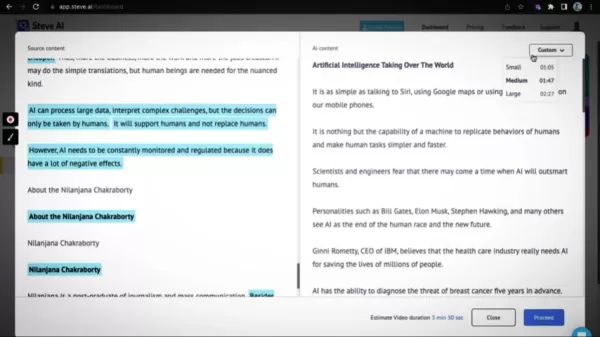
Its summarizing tool converts lengthy articles into concise videos, making information more accessible and shareable. Here’s how it works:
- Input the blog link: Paste the URL of your blog post into the Steve.AI platform.
- Automatic summarization: The AI algorithms extract the key points and create a summary.
- Customization: Review and edit the summarized content for accuracy and relevance.
- Template selection: Choose a video template that fits your content's style. Steve.AI offers a variety of options.
- Voiceover options: Add a voiceover to boost engagement. Choose from different languages, accents, and genders for a customized result.
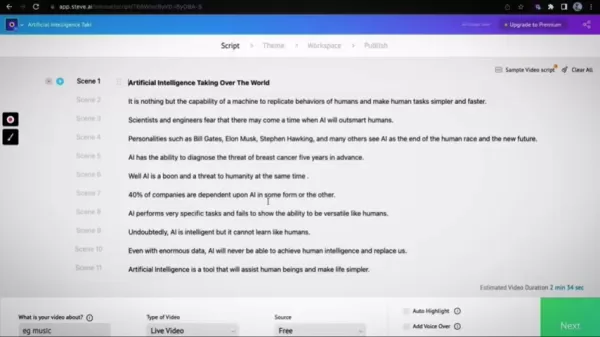
- Final touches: Make additional edits, such as adding music or adjusting scene timing, for a polished video.
- Publish and share: Once complete, publish the video to platforms like YouTube, LinkedIn, or your website.
Steve.AI simplifies blog-to-video conversion, making it an excellent tool for content creators, marketers, and businesses looking to enhance their online presence.
Step-by-Step Guide: Converting Blogs to Videos with Steve.AI
Accessing Steve.AI
First, access the Steve.AI platform.
Visit the Steve.AI website. You'll find a user-friendly interface designed to make video creation straightforward.
Logging In and Exploring Use Cases
Log in to your Steve.AI account. If you don't have one, you can sign up for free. After logging in, explore the available use cases. Select the 'Blog to Video' option.
This feature allows you to easily convert blog posts into engaging video content.
Pasting the Blog Link
Paste the link of the blog post you want to convert into the provided field. Ensure the link is accurate so the AI can extract the content correctly.

Then, click 'Proceed' to begin the summarization process.
Reviewing and Customizing AI Content
The AI will automatically highlight key parts of the blog.

Review the extracted content to ensure it aligns with your video's goals. You can choose to keep or delete sentences to tailor the summary. This step lets you fine-tune the video's message and focus on the most relevant information.
Selecting Video Length and Additional Edits
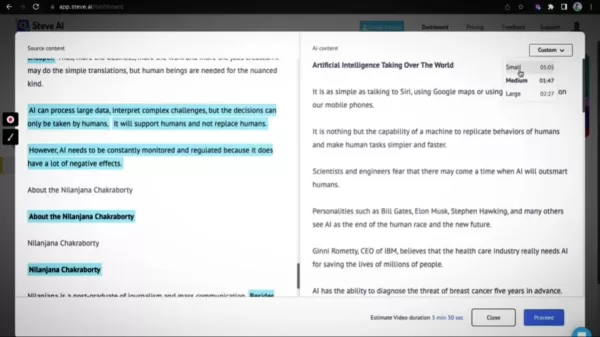
Decide on the video length.
Choose between short, medium, or large to control the content amount. You can also delete any bits you find unnecessary. Ensure the final video is concise and engaging for your audience.
Choosing a Template
Select a template with minimal text and a strong focus on visuals.

This keeps the video visually appealing and the audience engaged. Pick a template that complements your blog's content and style.
Adding Voiceover
Click on the audio option and choose 'Voiceover'.

Select the language, accent, gender, and voice type for a customized experience. This adds an extra layer of engagement and professionalism. Multiple language options are available.
Making Final Edits and Publishing
Make any final edits, such as adding filters and adjusting scene durations. Preview the video to ensure everything looks and sounds great. Once satisfied, publish it to various platforms and share it with your audience.
Benefits and Drawbacks of Steve.AI
Pros
User-friendly interface
Automatic summarization capabilities
Customization options
Multiple language and accent choices
Wide range of video templates
Excellent for various industries
Cons
May require additional editing
Customization can be time-consuming
Premium features require a subscription
FAQ
What are the benefits of using AI summarizing tools?
AI summarizing tools offer several benefits: Time-saving: Quickly condense lengthy content into manageable summaries. Enhanced productivity: Grasp the essence of articles and reports more efficiently. Improved decision-making: Base informed decisions on concise, relevant information. Increased content accessibility: Convert blogs and articles into engaging videos for wider audiences.
Is AI capable of replacing human intelligence?
While AI has advanced significantly, it cannot replace human intelligence. AI lacks key human attributes like advanced problem-solving, creativity, and emotional intelligence. Its purpose is to enhance human capabilities, not replace them.
Are there ethical concerns associated with AI development?
Yes, ethical concerns exist in AI development. The use of AI is heavily regulated by strict ethical and legal guidelines. These rules ensure AI is designed to enhance human life and is applied responsibly.
How does Steve.AI simplify content consumption?
Steve.AI simplifies content consumption by converting lengthy articles and reports into concise videos. This makes information more accessible and shareable, boosting engagement and productivity.
Is it possible to customize the video output with Steve.AI?
Yes, Steve.AI offers extensive customization. Users can choose from various video templates, add voiceovers in multiple languages, and make additional edits to create a polished, professional video.
Does AI have any real-world applications?
AI has numerous real-world applications across industries. In healthcare, for example, it can assist in diagnosing diseases like breast cancer. The potential applications for AI are vast and continually expanding.
Related Questions
How can AI be used in education?
AI can transform education by: Personalizing learning: AI algorithms analyze student data to create customized learning paths and content. Automating administrative tasks: AI can handle grading and scheduling, freeing educators for more meaningful student interaction. Providing intelligent tutoring: AI-powered tutors offer personalized feedback and support to help students master difficult concepts. Enhancing accessibility: AI can translate content and provide assistive technologies for students with disabilities.
What is the impact of AI on the job market?
The impact of AI on the job market is widely debated. While AI may automate certain tasks and displace some roles, it also creates new opportunities and transforms existing jobs. To thrive, individuals should develop skills like critical thinking, creativity, and emotional intelligence. Businesses must invest in training and upskilling their workforce to adapt to these changes.
How is AI used in healthcare?
AI is revolutionizing healthcare by: Improving diagnostics: AI algorithms analyze medical images and patient data for earlier, more accurate disease detection. Personalizing treatment: AI uses patient characteristics to develop more effective, customized treatment plans. Automating administrative tasks: AI streamlines appointment scheduling and claims processing, reducing costs and improving efficiency. Accelerating drug discovery: AI analyzes vast datasets to identify promising new drug candidates faster.
Related article
 Former OpenAI Chief Scientist Ilya’s SSI Unveils First Model
AI has achieved another major milestone. Following his departure from OpenAI, former chief scientist Ilya Sutskever established Safe Superintelligence Inc. (SSI), which has recently unveiled details regarding its inaugural model. Reports from oversea
Lovable Leads Atech's Seed Round as AI Ambient Coding Officially Enters the Hardware Field
On May 14, 2026, AI application development platform Lovable announced its participation in the $800,000 seed funding round for Danish hardware startup Atech. Led by Lovable, the round attracted top-tier venture capital firms including the a16z Scout
Anthropic Expands Claude AI Coding Tools to Japan in Push for Overseas Growth
Anthropic, a prominent U.S. artificial intelligence firm, is intensifying its global outreach. On Wednesday, the company hosted a major developer gathering, "Code with Claude," in Tokyo, drawing close to 500 software engineers. This initiative seeks
Related Special Topic Recommendations
chatbot
Former OpenAI Chief Scientist Ilya’s SSI Unveils First Model
AI has achieved another major milestone. Following his departure from OpenAI, former chief scientist Ilya Sutskever established Safe Superintelligence Inc. (SSI), which has recently unveiled details regarding its inaugural model. Reports from oversea
Lovable Leads Atech's Seed Round as AI Ambient Coding Officially Enters the Hardware Field
On May 14, 2026, AI application development platform Lovable announced its participation in the $800,000 seed funding round for Danish hardware startup Atech. Led by Lovable, the round attracted top-tier venture capital firms including the a16z Scout
Anthropic Expands Claude AI Coding Tools to Japan in Push for Overseas Growth
Anthropic, a prominent U.S. artificial intelligence firm, is intensifying its global outreach. On Wednesday, the company hosted a major developer gathering, "Code with Claude," in Tokyo, drawing close to 500 software engineers. This initiative seeks
Related Special Topic Recommendations
chatbot
 Best AI Conversation Trainer Tools for Interview Practice
2026 Latest Best Top-rated AI Conversation Trainer Tools for Interview Practice are here on XIX.AI! This curated collection features powerful, game-changing tools that go through rigorous real-world tests to deliver accurate feedback. You’ll find a free vs paid comparison and detailed rankings to help you choose the must-try option that boosts your confidence and skills. Explore now to Discover your perfect tool for interview success!
 12 tools
 xix.ai
Design & Art
Best AI Style Transfer Tools for Creative Experiments
xix.ai
Design & Art
Best AI Style Transfer Tools for Creative Experiments
2026 Latest Best Top-rated AI Style Transfer Tools for Creative Experiments! XIX.AI has curated a powerful, game-changing collection of must-try tools that deliver exceptional results through real-world tests and rigorous rankings. These top solutions help creatives boost productivity significantly by accelerating content creation and unlocking endless creative possibilities. Explore now to discover your perfect tool and start creating today!
9 tools
xix.ai
Comic Creation
Best AI Dialogue Bubble Tools for Visual Storytelling
2026 Latest Best Top-Rated AI Dialogue Bubble Tools for Visual Storytelling are here on XIX.AI! This curated collection features powerful, game-changing tools that help creators boost productivity and overcome creative bottlenecks. Get a free vs paid comparison, see real-world tests, and check the latest rankings to find the must-try solutions perfect for crafting engaging visual narratives. Explore now to discover your ideal tool!
10 tools
xix.ai
Meeting Assistant
Top AI Meeting Summary Tools: Track Decisions and Follow-Ups Clearly
2026 Latest Top-Rated Best AI Meeting Summary Tools for Clear Decision Tracking and Effortless Follow-Ups. This curated list showcases powerful, game-changing solutions that boost productivity dramatically by automating meeting notes, identifying key action items, and streamlining team coordination across all projects. Get a free vs paid comparison along with real-world tests and weekly updated rankings to help you find the perfect tool. Explore now to unlock your AI edge!
9 tools
xix.ai
Data Analysis
Best AI Data Cleaning Tools: Fix Missing Values and Duplicates Fast
2026 Latest Best Top-rated AI Data Cleaning Tools for quick fixing of missing values and duplicates. This curated list showcases powerful, game-changing solutions that boost productivity significantly. Each option has undergone rigorous real-world tests to ensure reliability. Get a free vs paid comparison and discover the must-try tool that fits your needs best. Explore now at XIX.AI to Unlock your AI edge.
11 tools
xix.ai
Design & Art
Best AI Creative Ideation Tools for Artists: Break Through Visual Blocks
2026 Latest Best Top-Rated AI Creative Ideation Tools for Artists are curated by XIX.AI to help creators break through visual blocks and boost creativity instantly. These powerful game-changing tools offer real-world tests, detailed free vs paid comparison, and weekly updated rankings. Discover your perfect tool to accelerate content creation and unlock your AI edge today. Explore now!
14 tools
xix.ai

 Comments (0)
0/500
Comments (0)
0/500
In the fast-paced world of 2025, quickly digesting information is more crucial than ever. Artificial intelligence (AI) is transforming how we consume content, offering powerful tools that save time and boost efficiency. Leading this change are AI summarizing tools, which condense lengthy articles and reports into manageable overviews. This article explores the power of AI summarization, specifically how platforms like Steve.AI simplify content consumption and enhance productivity across professional settings. We will examine the underlying assumptions, capabilities, and practical applications of these tools, providing a comprehensive guide for anyone looking to streamline their information intake.
Key Points
AI summarizing tools enable efficient content consumption, saving time and enhancing productivity.
The idea that AI will overtake humans is debated, with a focus on AI's current limitations in creativity and emotional intelligence.
Steve.AI is a platform that provides a tool to summarize blogs and convert them into concise videos.
Ethical and legal guidelines heavily regulate the development and use of AI.
AI is designed to augment, not replace, human capabilities.
These tools can transform lengthy content into manageable summaries.
Steve.AI also offers voiceover features in multiple languages and accents for video content.
AI applications in healthcare, such as diagnosing breast cancer, highlight its potential to save lives.
The critical question of whether AI is taking jobs or saving lives is discussed, emphasizing its role as a human assistant.
Understanding AI Summarization
What is AI Summarization?
AI summarization is the process of using artificial intelligence to condense long texts into shorter, digestible summaries. This technology uses natural language processing (NLP) and machine learning (ML) algorithms to identify key information and present it concisely. The goal is to provide a thorough overview of the original content without requiring the reader to go through the entire text.
Key techniques used in AI summarization include:
- Extraction-based summarization: This method identifies and combines key sentences or phrases from the original text without altering them to form a summary.
- Abstraction-based summarization: This approach generates new sentences to summarize the content, similar to a human-written summary. It often produces more readable results but is technically more complex.
The growing volume of online content and the need for efficient information processing are driving the popularity of AI summarizing tools. They help professionals, students, and researchers quickly grasp the core ideas of documents, improving productivity and decision-making. These tools have wide-ranging applications and will significantly impact SEO and content creation for years to come.
The Assumptions Behind AI Taking Over
The notion of AI taking over the world is a common theme in science fiction, but is it realistic?
Much of this fear stems from the assumption that machines will surpass human intelligence. However, it's crucial to examine this assumption critically and understand AI's current limitations. Despite significant progress, AI still lacks essential human attributes such as:
- Advanced problem-solving: Humans use creativity and critical thinking to tackle complex problems, abilities AI is still developing.
- Creativity: Generating truly original ideas and innovative solutions remains a human forte. AI can support creative processes but lacks genuine emotional understanding and intuition.
- Emotional intelligence: Recognizing and responding appropriately to emotions is fundamental to human interaction, an area where AI lacks depth.
It's also vital to remember that machines are not sentient. They lack self-awareness, emotions, and any inherent motive or desire to dominate. AI development is heavily regulated by strict ethical and legal guidelines to ensure it enhances human life. Therefore, while AI can perform specific tasks with great efficiency, it remains a tool designed to assist and augment human capabilities.
Introducing Steve.AI Summarizing Tool
Converting Blogs to Videos with Steve.AI
Steve.AI is a powerful platform that enables users to quickly create engaging videos from blog content.
Its summarizing tool converts lengthy articles into concise videos, making information more accessible and shareable. Here’s how it works:
- Input the blog link: Paste the URL of your blog post into the Steve.AI platform.
- Automatic summarization: The AI algorithms extract the key points and create a summary.
- Customization: Review and edit the summarized content for accuracy and relevance.
- Template selection: Choose a video template that fits your content's style. Steve.AI offers a variety of options.
- Voiceover options: Add a voiceover to boost engagement. Choose from different languages, accents, and genders for a customized result.
- Final touches: Make additional edits, such as adding music or adjusting scene timing, for a polished video.
- Publish and share: Once complete, publish the video to platforms like YouTube, LinkedIn, or your website.
Steve.AI simplifies blog-to-video conversion, making it an excellent tool for content creators, marketers, and businesses looking to enhance their online presence.
Step-by-Step Guide: Converting Blogs to Videos with Steve.AI
Accessing Steve.AI
First, access the Steve.AI platform.
Visit the Steve.AI website. You'll find a user-friendly interface designed to make video creation straightforward.
Logging In and Exploring Use Cases
Log in to your Steve.AI account. If you don't have one, you can sign up for free. After logging in, explore the available use cases. Select the 'Blog to Video' option.
This feature allows you to easily convert blog posts into engaging video content.
Pasting the Blog Link
Paste the link of the blog post you want to convert into the provided field. Ensure the link is accurate so the AI can extract the content correctly.
Then, click 'Proceed' to begin the summarization process.
Reviewing and Customizing AI Content
The AI will automatically highlight key parts of the blog.
Review the extracted content to ensure it aligns with your video's goals. You can choose to keep or delete sentences to tailor the summary. This step lets you fine-tune the video's message and focus on the most relevant information.
Selecting Video Length and Additional Edits
Decide on the video length.
Choose between short, medium, or large to control the content amount. You can also delete any bits you find unnecessary. Ensure the final video is concise and engaging for your audience.
Choosing a Template
Select a template with minimal text and a strong focus on visuals.
This keeps the video visually appealing and the audience engaged. Pick a template that complements your blog's content and style.
Adding Voiceover
Click on the audio option and choose 'Voiceover'.
Select the language, accent, gender, and voice type for a customized experience. This adds an extra layer of engagement and professionalism. Multiple language options are available.
Making Final Edits and Publishing
Make any final edits, such as adding filters and adjusting scene durations. Preview the video to ensure everything looks and sounds great. Once satisfied, publish it to various platforms and share it with your audience.
Benefits and Drawbacks of Steve.AI
Pros
User-friendly interface
Automatic summarization capabilities
Customization options
Multiple language and accent choices
Wide range of video templates
Excellent for various industries
Cons
May require additional editing
Customization can be time-consuming
Premium features require a subscription
FAQ
What are the benefits of using AI summarizing tools?
AI summarizing tools offer several benefits: Time-saving: Quickly condense lengthy content into manageable summaries. Enhanced productivity: Grasp the essence of articles and reports more efficiently. Improved decision-making: Base informed decisions on concise, relevant information. Increased content accessibility: Convert blogs and articles into engaging videos for wider audiences.
Is AI capable of replacing human intelligence?
While AI has advanced significantly, it cannot replace human intelligence. AI lacks key human attributes like advanced problem-solving, creativity, and emotional intelligence. Its purpose is to enhance human capabilities, not replace them.
Are there ethical concerns associated with AI development?
Yes, ethical concerns exist in AI development. The use of AI is heavily regulated by strict ethical and legal guidelines. These rules ensure AI is designed to enhance human life and is applied responsibly.
How does Steve.AI simplify content consumption?
Steve.AI simplifies content consumption by converting lengthy articles and reports into concise videos. This makes information more accessible and shareable, boosting engagement and productivity.
Is it possible to customize the video output with Steve.AI?
Yes, Steve.AI offers extensive customization. Users can choose from various video templates, add voiceovers in multiple languages, and make additional edits to create a polished, professional video.
Does AI have any real-world applications?
AI has numerous real-world applications across industries. In healthcare, for example, it can assist in diagnosing diseases like breast cancer. The potential applications for AI are vast and continually expanding.
Related Questions
How can AI be used in education?
AI can transform education by: Personalizing learning: AI algorithms analyze student data to create customized learning paths and content. Automating administrative tasks: AI can handle grading and scheduling, freeing educators for more meaningful student interaction. Providing intelligent tutoring: AI-powered tutors offer personalized feedback and support to help students master difficult concepts. Enhancing accessibility: AI can translate content and provide assistive technologies for students with disabilities.
What is the impact of AI on the job market?
The impact of AI on the job market is widely debated. While AI may automate certain tasks and displace some roles, it also creates new opportunities and transforms existing jobs. To thrive, individuals should develop skills like critical thinking, creativity, and emotional intelligence. Businesses must invest in training and upskilling their workforce to adapt to these changes.
How is AI used in healthcare?
AI is revolutionizing healthcare by: Improving diagnostics: AI algorithms analyze medical images and patient data for earlier, more accurate disease detection. Personalizing treatment: AI uses patient characteristics to develop more effective, customized treatment plans. Automating administrative tasks: AI streamlines appointment scheduling and claims processing, reducing costs and improving efficiency. Accelerating drug discovery: AI analyzes vast datasets to identify promising new drug candidates faster.








 Former OpenAI Chief Scientist Ilya’s SSI Unveils First Model
AI has achieved another major milestone. Following his departure from OpenAI, former chief scientist Ilya Sutskever established Safe Superintelligence Inc. (SSI), which has recently unveiled details regarding its inaugural model. Reports from oversea
Former OpenAI Chief Scientist Ilya’s SSI Unveils First Model
AI has achieved another major milestone. Following his departure from OpenAI, former chief scientist Ilya Sutskever established Safe Superintelligence Inc. (SSI), which has recently unveiled details regarding its inaugural model. Reports from oversea
 Lovable Leads Atech's Seed Round as AI Ambient Coding Officially Enters the Hardware Field
On May 14, 2026, AI application development platform Lovable announced its participation in the $800,000 seed funding round for Danish hardware startup Atech. Led by Lovable, the round attracted top-tier venture capital firms including the a16z Scout
Lovable Leads Atech's Seed Round as AI Ambient Coding Officially Enters the Hardware Field
On May 14, 2026, AI application development platform Lovable announced its participation in the $800,000 seed funding round for Danish hardware startup Atech. Led by Lovable, the round attracted top-tier venture capital firms including the a16z Scout
 Anthropic Expands Claude AI Coding Tools to Japan in Push for Overseas Growth
Anthropic, a prominent U.S. artificial intelligence firm, is intensifying its global outreach. On Wednesday, the company hosted a major developer gathering, "Code with Claude," in Tokyo, drawing close to 500 software engineers. This initiative seeks
Anthropic Expands Claude AI Coding Tools to Japan in Push for Overseas Growth
Anthropic, a prominent U.S. artificial intelligence firm, is intensifying its global outreach. On Wednesday, the company hosted a major developer gathering, "Code with Claude," in Tokyo, drawing close to 500 software engineers. This initiative seeks

2026 Latest Best Top-rated AI Conversation Trainer Tools for Interview Practice are here on XIX.AI! This curated collection features powerful, game-changing tools that go through rigorous real-world tests to deliver accurate feedback. You’ll find a free vs paid comparison and detailed rankings to help you choose the must-try option that boosts your confidence and skills. Explore now to Discover your perfect tool for interview success!
12 tools
xix.ai

2026 Latest Best Top-rated AI Style Transfer Tools for Creative Experiments! XIX.AI has curated a powerful, game-changing collection of must-try tools that deliver exceptional results through real-world tests and rigorous rankings. These top solutions help creatives boost productivity significantly by accelerating content creation and unlocking endless creative possibilities. Explore now to discover your perfect tool and start creating today!
9 tools
xix.ai

2026 Latest Best Top-Rated AI Dialogue Bubble Tools for Visual Storytelling are here on XIX.AI! This curated collection features powerful, game-changing tools that help creators boost productivity and overcome creative bottlenecks. Get a free vs paid comparison, see real-world tests, and check the latest rankings to find the must-try solutions perfect for crafting engaging visual narratives. Explore now to discover your ideal tool!
10 tools
xix.ai
2026 Latest Top-Rated Best AI Meeting Summary Tools for Clear Decision Tracking and Effortless Follow-Ups. This curated list showcases powerful, game-changing solutions that boost productivity dramatically by automating meeting notes, identifying key action items, and streamlining team coordination across all projects. Get a free vs paid comparison along with real-world tests and weekly updated rankings to help you find the perfect tool. Explore now to unlock your AI edge!
9 tools
xix.ai

2026 Latest Best Top-rated AI Data Cleaning Tools for quick fixing of missing values and duplicates. This curated list showcases powerful, game-changing solutions that boost productivity significantly. Each option has undergone rigorous real-world tests to ensure reliability. Get a free vs paid comparison and discover the must-try tool that fits your needs best. Explore now at XIX.AI to Unlock your AI edge.
11 tools
xix.ai

2026 Latest Best Top-Rated AI Creative Ideation Tools for Artists are curated by XIX.AI to help creators break through visual blocks and boost creativity instantly. These powerful game-changing tools offer real-world tests, detailed free vs paid comparison, and weekly updated rankings. Discover your perfect tool to accelerate content creation and unlock your AI edge today. Explore now!
14 tools
xix.ai












