


 Home
HomeAI startups revolutionizing mental health care
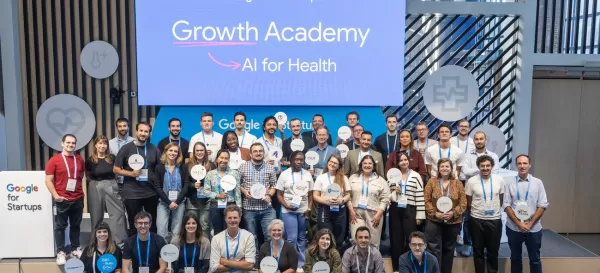
The World Health Organization underscores mental health as a basic human right, highlighting the urgent need for comprehensive, accessible, and top-notch mental health services. Yet, many, including entrepreneurs, struggle to access quality care. Thankfully, innovative startups are harnessing AI's potential to fill this gap, offering scalable mental health solutions for everyone.
Navigating the startup world can be tough and lonely, with the pressure to succeed often impacting mental health. Research indicates that entrepreneurs are 50% more likely to experience mental health issues. Recognizing this, Google for Startups is committed to supporting these trailblazers through our Growth Academy: AI for Health program, spanning Europe, the Middle East, and Africa. This initiative offers mentorship, resources, and a global network to help startups amplify their impact and foster healthcare innovation, particularly those using responsible AI to create mental health solutions.
On this World Mental Health Day, I'm thrilled to spotlight a few inspiring startups from our program that are revolutionizing mental health support and enhancing daily lives globally:
O7 Therapy (Egypt)
O7 Therapy is developing an AI-powered platform designed to connect patients with therapists that best fit their needs and preferences. This streamlined approach helps individuals find the right support more quickly, boosting the likelihood of successful treatment outcomes. Ashraf Bacheet, the cofounder, shares how the platform uses AI to match users with the right therapist from his red-striped shirt and couch.
Callyope (France)
Callyope is crafting speech-based AI models to analyze patient behaviors and monitor symptoms across various mental health conditions. This provides clinicians with insights into treatment effectiveness and potential relapses, making mental health care more precise and timely. Martin Denais, CEO, sits on a couch wearing a white shirt and tan pants, explaining to the camera how Callyope leverages Google Cloud AI to improve patient outcomes.
HearMe (Poland)
HearMe employs AI-powered chatbots to offer immediate support and resources to those facing mental health challenges. With round-the-clock availability and personalized guidance, HearMe seeks to lower the barriers to seeking help and enhance early intervention. Kasia Gryzlo, cofounder and CEO, discusses from her couch in a red shirt and brown pants how HearMe is revolutionizing mental health support in the workplace.
Thalia Psychotherapy (Kenya)
Thalia Psychotherapy is building AI tools to help therapists analyze patient conversations and spot potential mental health issues. This technology enables therapists to deliver more personalized and data-informed care, leading to improved patient outcomes. Mercy Mwende, cofounder and COO, sits on a couch wearing a white shirt and jeans, speaking to the camera about how Thalia is developing scalable solutions for mental wellbeing.
To delve deeper into the Google for Startups Growth Academy: AI for Health program and its participating startups, visit startup.google.com.
For more on Google's health initiatives, head over to health.google.com.
 Stripe to Acquire OpenRouter as AI Model Routing Gains Momentum
Stripe has agreed to acquire OpenRouter, an AI model-routing platform that gives developers access to hundreds of models through a single interface. The deal adds model selection and routing to Stripe’s existing work around AI usage and token-based b
Google AI Overviews Gain Ground in Search Results
According to Similarweb’s 2026 Generative AI Landscape report, Google’s AI-generated summaries appeared in 43% of US searches, a significant rise from 15% recorded a year prior.While AI Overviews present generated summaries within standard search res
Sequoia-backed Empirik raises $21M to forecast outages before they strike
Before joining Sequoia Capital in 2020 as chief digital and information officer, Avon Puri spent over a decade running infrastructure at Rubrik and VMware. Three years ago, as large language models began showing their true potential, Puri, alongside
Related Special Topic Recommendations
Design & Art
Stripe to Acquire OpenRouter as AI Model Routing Gains Momentum
Stripe has agreed to acquire OpenRouter, an AI model-routing platform that gives developers access to hundreds of models through a single interface. The deal adds model selection and routing to Stripe’s existing work around AI usage and token-based b
Google AI Overviews Gain Ground in Search Results
According to Similarweb’s 2026 Generative AI Landscape report, Google’s AI-generated summaries appeared in 43% of US searches, a significant rise from 15% recorded a year prior.While AI Overviews present generated summaries within standard search res
Sequoia-backed Empirik raises $21M to forecast outages before they strike
Before joining Sequoia Capital in 2020 as chief digital and information officer, Avon Puri spent over a decade running infrastructure at Rubrik and VMware. Three years ago, as large language models began showing their true potential, Puri, alongside
Related Special Topic Recommendations
Design & Art
 Top AI Illustration Tools: Create Editorial Scenes and Cover Art Faster
2026 Latest Top-rated AI Illustration Tools: Our curated list features the best powerfully designed tools for creating stunning editorial scenes and eye-catching cover art quickly. Each option has gone through rigorous real-world tests, offering a free vs paid comparison to help you find the perfect match for your workflow. Try these must-try solutions today to unlock your AI edge and boost your creative productivity. Explore now at XIX.AI.
 10 tools
 xix.ai
Education and Learning
Top AI Tutors for Exam Prep: Practice Math, Science, and English
xix.ai
Education and Learning
Top AI Tutors for Exam Prep: Practice Math, Science, and English
2026 Latest Top-Rated Best AI Tutors for Exam Prep are here on XIX.AI! Our curated list features powerful game-changing tools that offer free vs paid comparison, real-world tests, and weekly updated rankings. They help boost your writing efficiency, simplify complex topic learning, and unlock your academic potential. Explore now to Discover your perfect exam prep tool and Start creating today to Unlock your AI edge!
10 tools
xix.ai
Finance
AI Budget Planning Tools for Personal Money Management
2026 Latest Best Top-Rated AI Budget Planning Tools for Personal Money Management are here on XIX.AI! This curated collection features powerful, game-changing solutions that help you conduct real-world tests, understand spending habits, and create personalized plans to boost productivity. Enjoy a free vs paid comparison along with detailed rankings. Must-try tools designed to simplify money management and unlock your AI edge. Explore now!
11 tools
xix.ai
Health & Wellness
AI Sleep Tracking Assistants: Improve Recovery with Better Bedtime Habits
2026 Latest Best Top-Rated AI Sleep Tracking Assistants curated for ultimate recovery. This fully updated weekly guide features powerful tools that deliver real-world tests, free vs paid comparison, and detailed rankings to help you find the must-try solution that boosts sleep quality and supports better bedtime habits. Explore now at XIX.AI to Unlock your AI edge.
10 tools
xix.ai
Data Analysis
AI SQL Copilots for Product and Revenue Analytics
2026 Latest Best Top-Rated AI SQL Copilots for Product and Revenue Analytics! XIX.AI has curated a powerful, game-changing collection of must-try tools that undergo real-world tests through weekly updated rankings. These tools help users boost productivity significantly by accelerating data analysis, streamlining complex queries, and generating accurate insights to drive smarter business decisions. Explore now to Discover your perfect tool for unlocking your AI edge!
14 tools
xix.ai
Education and Learning
Best AI Homework Helpers That Teach: Learn Concepts, Not Just Answers
2026 Latest Best Top-Rated AI Homework Helpers That Teach Core Concepts Not Just Answers Powerful Tools for Students Must-Try Curated List Weekly Updated Free vs Paid Comparison Real-World Tests Accurate Rankings to Help You Unlock Your Full Learning Potential Explore now to Discover your perfect tool for smarter studying.
10 tools
xix.ai

 Comments (32)
0/500
Comments (32)
0/500
![RyanLee]()
看到AI在心理健康領域的應用,既期待又有些擔心。這些工具真的能理解人類複雜的情緒嗎?會不會反而讓人更依賴科技而少了真實互動?不過,如果能幫助到那些無法獲得傳統服務的人,確實是好事一樁。希望開發者能重視數據隱私和倫理問題。
![LarryHernández]()
Finde die Idee total spannend, aber irgendwie auch gruselig. Wenn mein Therapeut plötzlich ein Algorithmus ist, der jede Nachricht analysiert... Wo bleibt da die menschliche Intuition? Hoffe nicht, dass das nur eine weitere 'Lösung' wird, um Menschen mit günstigen Bots abzufertigen, statt mehr echte Berater auszubilden. 🤔
![MatthewWilliams]()
AI для ментального здоровья — это круто, но не станет ли оно слишком бездушным? 🤔 Я бы предпочёл живого психолога, если бы мог его найти. Впрочем, для многих это единственный шанс получить помощь.
![JackMartinez]()
Un amigo me recomendó una app tipo salud mental con IA hace poco, pero todavía me da un poco de miedo compartir mis problemas personales con una máquina 🤔. Ver esto me hace pensar que aunque hay mucho potencial, ¿qué pasa con la precisión de los diagnósticos y la privacidad de los datos? Quizás aún necesitamos tiempo para ver cómo madura esta tecnología.
![DanielThomas]()
정신 건강에 AI를 적용하는 건 참 신선한 아이디어네요. 🤔 스타트업들이 이런 혁신을 이끌다니 기대됩니다. 그런데 데이터 프라이버시 문제는 어떻게 해결할까? 개인 정보 보호가 가장 중요한 과제일 것 같아요.
![BruceMiller]()
Ces startups utilisant l'IA pour la santé mentale sont prometteuses, mais je m'inquiète de la confidentialité des données... Nos pensées les plus intimes seraient-elles exploitées par des entreprises ? 🤨 Il faut une régulation stricte.
The World Health Organization underscores mental health as a basic human right, highlighting the urgent need for comprehensive, accessible, and top-notch mental health services. Yet, many, including entrepreneurs, struggle to access quality care. Thankfully, innovative startups are harnessing AI's potential to fill this gap, offering scalable mental health solutions for everyone.
Navigating the startup world can be tough and lonely, with the pressure to succeed often impacting mental health. Research indicates that entrepreneurs are 50% more likely to experience mental health issues. Recognizing this, Google for Startups is committed to supporting these trailblazers through our Growth Academy: AI for Health program, spanning Europe, the Middle East, and Africa. This initiative offers mentorship, resources, and a global network to help startups amplify their impact and foster healthcare innovation, particularly those using responsible AI to create mental health solutions.
On this World Mental Health Day, I'm thrilled to spotlight a few inspiring startups from our program that are revolutionizing mental health support and enhancing daily lives globally:
O7 Therapy (Egypt)
O7 Therapy is developing an AI-powered platform designed to connect patients with therapists that best fit their needs and preferences. This streamlined approach helps individuals find the right support more quickly, boosting the likelihood of successful treatment outcomes. Ashraf Bacheet, the cofounder, shares how the platform uses AI to match users with the right therapist from his red-striped shirt and couch.
Callyope (France)
Callyope is crafting speech-based AI models to analyze patient behaviors and monitor symptoms across various mental health conditions. This provides clinicians with insights into treatment effectiveness and potential relapses, making mental health care more precise and timely. Martin Denais, CEO, sits on a couch wearing a white shirt and tan pants, explaining to the camera how Callyope leverages Google Cloud AI to improve patient outcomes.
HearMe (Poland)
HearMe employs AI-powered chatbots to offer immediate support and resources to those facing mental health challenges. With round-the-clock availability and personalized guidance, HearMe seeks to lower the barriers to seeking help and enhance early intervention. Kasia Gryzlo, cofounder and CEO, discusses from her couch in a red shirt and brown pants how HearMe is revolutionizing mental health support in the workplace.
Thalia Psychotherapy (Kenya)
Thalia Psychotherapy is building AI tools to help therapists analyze patient conversations and spot potential mental health issues. This technology enables therapists to deliver more personalized and data-informed care, leading to improved patient outcomes. Mercy Mwende, cofounder and COO, sits on a couch wearing a white shirt and jeans, speaking to the camera about how Thalia is developing scalable solutions for mental wellbeing.
To delve deeper into the Google for Startups Growth Academy: AI for Health program and its participating startups, visit startup.google.com.
For more on Google's health initiatives, head over to health.google.com.








 Stripe to Acquire OpenRouter as AI Model Routing Gains Momentum
Stripe has agreed to acquire OpenRouter, an AI model-routing platform that gives developers access to hundreds of models through a single interface. The deal adds model selection and routing to Stripe’s existing work around AI usage and token-based b
Stripe to Acquire OpenRouter as AI Model Routing Gains Momentum
Stripe has agreed to acquire OpenRouter, an AI model-routing platform that gives developers access to hundreds of models through a single interface. The deal adds model selection and routing to Stripe’s existing work around AI usage and token-based b
 Google AI Overviews Gain Ground in Search Results
According to Similarweb’s 2026 Generative AI Landscape report, Google’s AI-generated summaries appeared in 43% of US searches, a significant rise from 15% recorded a year prior.While AI Overviews present generated summaries within standard search res
Google AI Overviews Gain Ground in Search Results
According to Similarweb’s 2026 Generative AI Landscape report, Google’s AI-generated summaries appeared in 43% of US searches, a significant rise from 15% recorded a year prior.While AI Overviews present generated summaries within standard search res
 Sequoia-backed Empirik raises $21M to forecast outages before they strike
Before joining Sequoia Capital in 2020 as chief digital and information officer, Avon Puri spent over a decade running infrastructure at Rubrik and VMware. Three years ago, as large language models began showing their true potential, Puri, alongside
Sequoia-backed Empirik raises $21M to forecast outages before they strike
Before joining Sequoia Capital in 2020 as chief digital and information officer, Avon Puri spent over a decade running infrastructure at Rubrik and VMware. Three years ago, as large language models began showing their true potential, Puri, alongside

2026 Latest Top-rated AI Illustration Tools: Our curated list features the best powerfully designed tools for creating stunning editorial scenes and eye-catching cover art quickly. Each option has gone through rigorous real-world tests, offering a free vs paid comparison to help you find the perfect match for your workflow. Try these must-try solutions today to unlock your AI edge and boost your creative productivity. Explore now at XIX.AI.
10 tools
xix.ai

2026 Latest Top-Rated Best AI Tutors for Exam Prep are here on XIX.AI! Our curated list features powerful game-changing tools that offer free vs paid comparison, real-world tests, and weekly updated rankings. They help boost your writing efficiency, simplify complex topic learning, and unlock your academic potential. Explore now to Discover your perfect exam prep tool and Start creating today to Unlock your AI edge!
10 tools
xix.ai

2026 Latest Best Top-Rated AI Budget Planning Tools for Personal Money Management are here on XIX.AI! This curated collection features powerful, game-changing solutions that help you conduct real-world tests, understand spending habits, and create personalized plans to boost productivity. Enjoy a free vs paid comparison along with detailed rankings. Must-try tools designed to simplify money management and unlock your AI edge. Explore now!
11 tools
xix.ai

2026 Latest Best Top-Rated AI Sleep Tracking Assistants curated for ultimate recovery. This fully updated weekly guide features powerful tools that deliver real-world tests, free vs paid comparison, and detailed rankings to help you find the must-try solution that boosts sleep quality and supports better bedtime habits. Explore now at XIX.AI to Unlock your AI edge.
10 tools
xix.ai

2026 Latest Best Top-Rated AI SQL Copilots for Product and Revenue Analytics! XIX.AI has curated a powerful, game-changing collection of must-try tools that undergo real-world tests through weekly updated rankings. These tools help users boost productivity significantly by accelerating data analysis, streamlining complex queries, and generating accurate insights to drive smarter business decisions. Explore now to Discover your perfect tool for unlocking your AI edge!
14 tools
xix.ai

2026 Latest Best Top-Rated AI Homework Helpers That Teach Core Concepts Not Just Answers Powerful Tools for Students Must-Try Curated List Weekly Updated Free vs Paid Comparison Real-World Tests Accurate Rankings to Help You Unlock Your Full Learning Potential Explore now to Discover your perfect tool for smarter studying.
10 tools
xix.ai

看到AI在心理健康領域的應用,既期待又有些擔心。這些工具真的能理解人類複雜的情緒嗎?會不會反而讓人更依賴科技而少了真實互動?不過,如果能幫助到那些無法獲得傳統服務的人,確實是好事一樁。希望開發者能重視數據隱私和倫理問題。
Finde die Idee total spannend, aber irgendwie auch gruselig. Wenn mein Therapeut plötzlich ein Algorithmus ist, der jede Nachricht analysiert... Wo bleibt da die menschliche Intuition? Hoffe nicht, dass das nur eine weitere 'Lösung' wird, um Menschen mit günstigen Bots abzufertigen, statt mehr echte Berater auszubilden. 🤔
AI для ментального здоровья — это круто, но не станет ли оно слишком бездушным? 🤔 Я бы предпочёл живого психолога, если бы мог его найти. Впрочем, для многих это единственный шанс получить помощь.
Un amigo me recomendó una app tipo salud mental con IA hace poco, pero todavía me da un poco de miedo compartir mis problemas personales con una máquina 🤔. Ver esto me hace pensar que aunque hay mucho potencial, ¿qué pasa con la precisión de los diagnósticos y la privacidad de los datos? Quizás aún necesitamos tiempo para ver cómo madura esta tecnología.
정신 건강에 AI를 적용하는 건 참 신선한 아이디어네요. 🤔 스타트업들이 이런 혁신을 이끌다니 기대됩니다. 그런데 데이터 프라이버시 문제는 어떻게 해결할까? 개인 정보 보호가 가장 중요한 과제일 것 같아요.
Ces startups utilisant l'IA pour la santé mentale sont prometteuses, mais je m'inquiète de la confidentialité des données... Nos pensées les plus intimes seraient-elles exploitées par des entreprises ? 🤨 Il faut une régulation stricte.












