


 Home
HomeUnlock AI Magic: Transform Your Photos with Intelligent Image Generation
The emergence of artificial intelligence has revolutionized digital creativity, introducing powerful new tools for visual expression. Among these innovations, AI-powered photo generation stands out as a transformative technology that converts standard photographs into extraordinary artistic creations through advanced algorithmic processing. This comprehensive guide explores the fascinating possibilities of AI image creation while demonstrating practical techniques for realizing your visual concepts.
Essential Insights
- Convert standard photographs into artistic AI interpretations using specialized software
- Leverage sophisticated neural networks capable of analyzing and recreating visual styles
- Personalize output through customizable parameters including gender specifications
- Train AI models effectively by uploading multiple reference photographs
- Experiment with diverse artistic treatments and algorithmic enhancements
Exploring AI-Powered Photo Transformation
Understanding AI-Generated Imagery
AI-powered photo generation represents a technological breakthrough in digital visualization. This sophisticated process involves neural networks analyzing image content before algorithmically generating enhanced variations or entirely novel compositions.

Unlike conventional photo editing methods, AI algorithms process images holistically - simultaneously understanding content, composition, and stylistic elements. This enables unprecedented creative possibilities ranging from subtle enhancements to complete stylistic transformations.
The technology relies on deep learning models trained on comprehensive visual datasets. These datasets enable the AI to recognize patterns and stylistic conventions, allowing for convincing recreations and novel interpretations. Leading-edge models can maintain photographic realism while incorporating requested artistic treatments.
Modern implementations offer creators significant control over output characteristics through adjustable parameters. Users can specify desired stylistic elements, modify compositional aspects, and adjust processing intensity to achieve precise visual outcomes.
Selecting Optimal AI Imaging Solutions
Choosing appropriate AI imaging software requires evaluating several key factors:
- Processing Capabilities: Superior algorithms maintain detail integrity throughout transformations
- Style Variety: Comprehensive style libraries enable broader creative exploration
- Output Quality: Advanced models produce higher resolution, artifact-free results
- User Experience: Intuitive interfaces streamline the creative workflow
Leading solutions typically offer:
- Multi-stage processing pipelines
- Style parameter customization
- Batch processing capabilities
- Resolution enhancement options
- Platform compatibility across devices
Many developers provide tiered access models:
- Free tiers demonstrating basic functionality
- Subscription plans unlocking advanced features
- Enterprise solutions offering customized implementations
Optimizing AI Visualization Results
Preparing Source Materials
Input quality directly impacts output excellence:
- Resolution Quality: High-definition source images preserve detail
- Lighting Conditions: Even illumination ensures accurate interpretation
- Compositional Variety: Multiple perspectives improve model training
- Background Characteristics: Clean backdrops minimize interference
Ethical Implementation Practices
Responsible utilization requires considering:
- Transparency: Clearly denoting AI-generated content
- Intellectual Property: Respecting copyright boundaries
- Representational Integrity: Avoiding misleading alterations
- Privacy Considerations: Protecting personal image rights
Practical Implementation Guide
Initial Configuration Process
- Launch selected AI imaging application
- Establish user profile including relevant attributes
- Upload required reference images (typically 8 samples)
- Verify model training completion

Creative Generation Workflow
- Select desired artistic treatment/style
- Adjust stylistic intensity parameters
- Initiate generation process
- Evaluate and refine outputs
- Apply optional post-processing enhancements
Commercial Access Models
Subscription Framework Overview
Access Tier Investment Included Features Introductory $0 Basic functionality with branding Standard $9.99/month Core features with generation limits Professional $29.99/month Unrestricted access to all features Custom Tailored Dedicated solutions for enterprises
Comparative Advantages Analysis
Strategic Benefits
- Enhanced creative efficiency and output volume
- Consistent style maintenance across projects
- Cost-effective alternative to manual creation
- Accessible advanced imaging capabilities
- Scalable solution adaptable to various needs
Potential Limitations
- Output variance requiring iterative refinement
- Algorithmic learning curves impacting consistency
- Ethical considerations requiring oversight
- Subscription commitments for full functionality
- Creative direction requiring human oversight
Industry Applications
Practical Implementation Scenarios
Sector Application Implementation Retail Fashion Virtual Product Visualization Generate lifelike model presentations Property Development Virtual Interior Design Create furnished environment previews Entertainment Character Development Produce distinctive game personas
Common Implementation Questions
Technical Considerations
- Reference Requirements: Typically 8 high-quality portraits
- Privacy Protections: Personal generation requires consent
- Quality Optimization: Advanced enhancement tools available
- Copyright Clarity: Output ownership varies by jurisdiction
Extended Implementation Queries
Solution Exploration
- Freemium Options: Limited functionality introductory versions
- Professional Integration: Customizable enterprise solutions
- Workflow Optimization: Batch processing capabilities
- Technical Requirements: Cloud-based accessibility
Related article
 Stripe to Acquire OpenRouter as AI Model Routing Gains Momentum
Stripe has agreed to acquire OpenRouter, an AI model-routing platform that gives developers access to hundreds of models through a single interface. The deal adds model selection and routing to Stripe’s existing work around AI usage and token-based b
Former OpenAI Researcher Barrett Zoph Returns to Google to Support Gemini Development
Barret Zoph, who previously abruptly left and joined OpenAI due to a disagreement with Thinking Machines Lab CEO Miriam Mularati, has once again changed employers. Alphabet's Google announced that Zoph will return as Vice President of Research, bring
How Recursive Intelligence Raised $335M at $4B Valuation in 4 Months
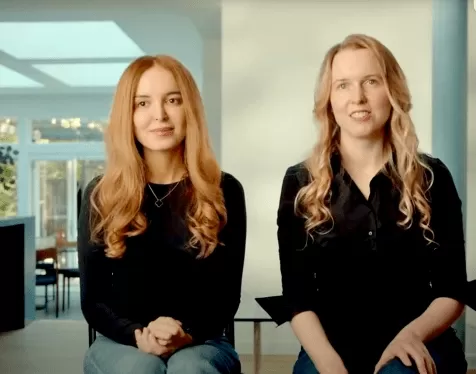
The co-founders of startup Ricursive Intelligence seemed destined to be co-founders.Anna Goldie, CEO, and Azalia Mirhoseini, CTO, are so well-known in the AI community that they were among those AI engineers who “got those weird emails from Zuckerber
Related Special Topic Recommendations
Design & Art
Stripe to Acquire OpenRouter as AI Model Routing Gains Momentum
Stripe has agreed to acquire OpenRouter, an AI model-routing platform that gives developers access to hundreds of models through a single interface. The deal adds model selection and routing to Stripe’s existing work around AI usage and token-based b
Former OpenAI Researcher Barrett Zoph Returns to Google to Support Gemini Development
Barret Zoph, who previously abruptly left and joined OpenAI due to a disagreement with Thinking Machines Lab CEO Miriam Mularati, has once again changed employers. Alphabet's Google announced that Zoph will return as Vice President of Research, bring
How Recursive Intelligence Raised $335M at $4B Valuation in 4 Months
The co-founders of startup Ricursive Intelligence seemed destined to be co-founders.Anna Goldie, CEO, and Azalia Mirhoseini, CTO, are so well-known in the AI community that they were among those AI engineers who “got those weird emails from Zuckerber
Related Special Topic Recommendations
Design & Art
 Top AI Illustration Tools: Create Editorial Scenes and Cover Art Faster
2026 Latest Top-rated AI Illustration Tools: Our curated list features the best powerfully designed tools for creating stunning editorial scenes and eye-catching cover art quickly. Each option has gone through rigorous real-world tests, offering a free vs paid comparison to help you find the perfect match for your workflow. Try these must-try solutions today to unlock your AI edge and boost your creative productivity. Explore now at XIX.AI.
 10 tools
 xix.ai
Education and Learning
Top AI Tutors for Exam Prep: Practice Math, Science, and English
xix.ai
Education and Learning
Top AI Tutors for Exam Prep: Practice Math, Science, and English
2026 Latest Top-Rated Best AI Tutors for Exam Prep are here on XIX.AI! Our curated list features powerful game-changing tools that offer free vs paid comparison, real-world tests, and weekly updated rankings. They help boost your writing efficiency, simplify complex topic learning, and unlock your academic potential. Explore now to Discover your perfect exam prep tool and Start creating today to Unlock your AI edge!
10 tools
xix.ai
Finance
AI Budget Planning Tools for Personal Money Management
2026 Latest Best Top-Rated AI Budget Planning Tools for Personal Money Management are here on XIX.AI! This curated collection features powerful, game-changing solutions that help you conduct real-world tests, understand spending habits, and create personalized plans to boost productivity. Enjoy a free vs paid comparison along with detailed rankings. Must-try tools designed to simplify money management and unlock your AI edge. Explore now!
11 tools
xix.ai
Health & Wellness
AI Sleep Tracking Assistants: Improve Recovery with Better Bedtime Habits
2026 Latest Best Top-Rated AI Sleep Tracking Assistants curated for ultimate recovery. This fully updated weekly guide features powerful tools that deliver real-world tests, free vs paid comparison, and detailed rankings to help you find the must-try solution that boosts sleep quality and supports better bedtime habits. Explore now at XIX.AI to Unlock your AI edge.
10 tools
xix.ai
Data Analysis
AI SQL Copilots for Product and Revenue Analytics
2026 Latest Best Top-Rated AI SQL Copilots for Product and Revenue Analytics! XIX.AI has curated a powerful, game-changing collection of must-try tools that undergo real-world tests through weekly updated rankings. These tools help users boost productivity significantly by accelerating data analysis, streamlining complex queries, and generating accurate insights to drive smarter business decisions. Explore now to Discover your perfect tool for unlocking your AI edge!
14 tools
xix.ai
Education and Learning
Best AI Homework Helpers That Teach: Learn Concepts, Not Just Answers
2026 Latest Best Top-Rated AI Homework Helpers That Teach Core Concepts Not Just Answers Powerful Tools for Students Must-Try Curated List Weekly Updated Free vs Paid Comparison Real-World Tests Accurate Rankings to Help You Unlock Your Full Learning Potential Explore now to Discover your perfect tool for smarter studying.
10 tools
xix.ai

 Comments (1)
0/500
Comments (1)
0/500
![BruceClark]()
AI画像生成は確かにすごいけど、私の猫の写真を変換したら、なぜか毛がフワフワしすぎて宇宙人のようになったんだけど…😅 これって過学習かな?それとも単に私の写真のクオリティが悪いのかしら。
The emergence of artificial intelligence has revolutionized digital creativity, introducing powerful new tools for visual expression. Among these innovations, AI-powered photo generation stands out as a transformative technology that converts standard photographs into extraordinary artistic creations through advanced algorithmic processing. This comprehensive guide explores the fascinating possibilities of AI image creation while demonstrating practical techniques for realizing your visual concepts.
Essential Insights
- Convert standard photographs into artistic AI interpretations using specialized software
- Leverage sophisticated neural networks capable of analyzing and recreating visual styles
- Personalize output through customizable parameters including gender specifications
- Train AI models effectively by uploading multiple reference photographs
- Experiment with diverse artistic treatments and algorithmic enhancements
Exploring AI-Powered Photo Transformation
Understanding AI-Generated Imagery
AI-powered photo generation represents a technological breakthrough in digital visualization. This sophisticated process involves neural networks analyzing image content before algorithmically generating enhanced variations or entirely novel compositions.
Unlike conventional photo editing methods, AI algorithms process images holistically - simultaneously understanding content, composition, and stylistic elements. This enables unprecedented creative possibilities ranging from subtle enhancements to complete stylistic transformations.
The technology relies on deep learning models trained on comprehensive visual datasets. These datasets enable the AI to recognize patterns and stylistic conventions, allowing for convincing recreations and novel interpretations. Leading-edge models can maintain photographic realism while incorporating requested artistic treatments.
Modern implementations offer creators significant control over output characteristics through adjustable parameters. Users can specify desired stylistic elements, modify compositional aspects, and adjust processing intensity to achieve precise visual outcomes.
Selecting Optimal AI Imaging Solutions
Choosing appropriate AI imaging software requires evaluating several key factors:
- Processing Capabilities: Superior algorithms maintain detail integrity throughout transformations
- Style Variety: Comprehensive style libraries enable broader creative exploration
- Output Quality: Advanced models produce higher resolution, artifact-free results
- User Experience: Intuitive interfaces streamline the creative workflow
Leading solutions typically offer:
- Multi-stage processing pipelines
- Style parameter customization
- Batch processing capabilities
- Resolution enhancement options
- Platform compatibility across devices
Many developers provide tiered access models:
- Free tiers demonstrating basic functionality
- Subscription plans unlocking advanced features
- Enterprise solutions offering customized implementations
Optimizing AI Visualization Results
Preparing Source Materials
Input quality directly impacts output excellence:
- Resolution Quality: High-definition source images preserve detail
- Lighting Conditions: Even illumination ensures accurate interpretation
- Compositional Variety: Multiple perspectives improve model training
- Background Characteristics: Clean backdrops minimize interference
Ethical Implementation Practices
Responsible utilization requires considering:
- Transparency: Clearly denoting AI-generated content
- Intellectual Property: Respecting copyright boundaries
- Representational Integrity: Avoiding misleading alterations
- Privacy Considerations: Protecting personal image rights
Practical Implementation Guide
Initial Configuration Process
- Launch selected AI imaging application
- Establish user profile including relevant attributes
- Upload required reference images (typically 8 samples)
- Verify model training completion
Creative Generation Workflow
- Select desired artistic treatment/style
- Adjust stylistic intensity parameters
- Initiate generation process
- Evaluate and refine outputs
- Apply optional post-processing enhancements
Commercial Access Models
Subscription Framework Overview
| Access Tier | Investment | Included Features |
|---|---|---|
| Introductory | $0 | Basic functionality with branding |
| Standard | $9.99/month | Core features with generation limits |
| Professional | $29.99/month | Unrestricted access to all features |
| Custom | Tailored | Dedicated solutions for enterprises |
Comparative Advantages Analysis
Strategic Benefits
- Enhanced creative efficiency and output volume
- Consistent style maintenance across projects
- Cost-effective alternative to manual creation
- Accessible advanced imaging capabilities
- Scalable solution adaptable to various needs
Potential Limitations
- Output variance requiring iterative refinement
- Algorithmic learning curves impacting consistency
- Ethical considerations requiring oversight
- Subscription commitments for full functionality
- Creative direction requiring human oversight
Industry Applications
Practical Implementation Scenarios
| Sector | Application | Implementation |
|---|---|---|
| Retail Fashion | Virtual Product Visualization | Generate lifelike model presentations |
| Property Development | Virtual Interior Design | Create furnished environment previews |
| Entertainment | Character Development | Produce distinctive game personas |
Common Implementation Questions
Technical Considerations
- Reference Requirements: Typically 8 high-quality portraits
- Privacy Protections: Personal generation requires consent
- Quality Optimization: Advanced enhancement tools available
- Copyright Clarity: Output ownership varies by jurisdiction
Extended Implementation Queries
Solution Exploration
- Freemium Options: Limited functionality introductory versions
- Professional Integration: Customizable enterprise solutions
- Workflow Optimization: Batch processing capabilities
- Technical Requirements: Cloud-based accessibility








 Stripe to Acquire OpenRouter as AI Model Routing Gains Momentum
Stripe has agreed to acquire OpenRouter, an AI model-routing platform that gives developers access to hundreds of models through a single interface. The deal adds model selection and routing to Stripe’s existing work around AI usage and token-based b
Stripe to Acquire OpenRouter as AI Model Routing Gains Momentum
Stripe has agreed to acquire OpenRouter, an AI model-routing platform that gives developers access to hundreds of models through a single interface. The deal adds model selection and routing to Stripe’s existing work around AI usage and token-based b
 Former OpenAI Researcher Barrett Zoph Returns to Google to Support Gemini Development
Barret Zoph, who previously abruptly left and joined OpenAI due to a disagreement with Thinking Machines Lab CEO Miriam Mularati, has once again changed employers. Alphabet's Google announced that Zoph will return as Vice President of Research, bring
Former OpenAI Researcher Barrett Zoph Returns to Google to Support Gemini Development
Barret Zoph, who previously abruptly left and joined OpenAI due to a disagreement with Thinking Machines Lab CEO Miriam Mularati, has once again changed employers. Alphabet's Google announced that Zoph will return as Vice President of Research, bring
 How Recursive Intelligence Raised $335M at $4B Valuation in 4 Months
The co-founders of startup Ricursive Intelligence seemed destined to be co-founders.Anna Goldie, CEO, and Azalia Mirhoseini, CTO, are so well-known in the AI community that they were among those AI engineers who “got those weird emails from Zuckerber
How Recursive Intelligence Raised $335M at $4B Valuation in 4 Months
The co-founders of startup Ricursive Intelligence seemed destined to be co-founders.Anna Goldie, CEO, and Azalia Mirhoseini, CTO, are so well-known in the AI community that they were among those AI engineers who “got those weird emails from Zuckerber
2026 Latest Top-rated AI Illustration Tools: Our curated list features the best powerfully designed tools for creating stunning editorial scenes and eye-catching cover art quickly. Each option has gone through rigorous real-world tests, offering a free vs paid comparison to help you find the perfect match for your workflow. Try these must-try solutions today to unlock your AI edge and boost your creative productivity. Explore now at XIX.AI.
10 tools
xix.ai

2026 Latest Top-Rated Best AI Tutors for Exam Prep are here on XIX.AI! Our curated list features powerful game-changing tools that offer free vs paid comparison, real-world tests, and weekly updated rankings. They help boost your writing efficiency, simplify complex topic learning, and unlock your academic potential. Explore now to Discover your perfect exam prep tool and Start creating today to Unlock your AI edge!
10 tools
xix.ai

2026 Latest Best Top-Rated AI Budget Planning Tools for Personal Money Management are here on XIX.AI! This curated collection features powerful, game-changing solutions that help you conduct real-world tests, understand spending habits, and create personalized plans to boost productivity. Enjoy a free vs paid comparison along with detailed rankings. Must-try tools designed to simplify money management and unlock your AI edge. Explore now!
11 tools
xix.ai

2026 Latest Best Top-Rated AI Sleep Tracking Assistants curated for ultimate recovery. This fully updated weekly guide features powerful tools that deliver real-world tests, free vs paid comparison, and detailed rankings to help you find the must-try solution that boosts sleep quality and supports better bedtime habits. Explore now at XIX.AI to Unlock your AI edge.
10 tools
xix.ai
2026 Latest Best Top-Rated AI SQL Copilots for Product and Revenue Analytics! XIX.AI has curated a powerful, game-changing collection of must-try tools that undergo real-world tests through weekly updated rankings. These tools help users boost productivity significantly by accelerating data analysis, streamlining complex queries, and generating accurate insights to drive smarter business decisions. Explore now to Discover your perfect tool for unlocking your AI edge!
14 tools
xix.ai

2026 Latest Best Top-Rated AI Homework Helpers That Teach Core Concepts Not Just Answers Powerful Tools for Students Must-Try Curated List Weekly Updated Free vs Paid Comparison Real-World Tests Accurate Rankings to Help You Unlock Your Full Learning Potential Explore now to Discover your perfect tool for smarter studying.
10 tools
xix.ai

AI画像生成は確かにすごいけど、私の猫の写真を変換したら、なぜか毛がフワフワしすぎて宇宙人のようになったんだけど…😅 これって過学習かな?それとも単に私の写真のクオリティが悪いのかしら。












