


 Home
HomeHow to create an AI video mocking Trump, Schumer, and Jeffries? 2025 guide
In the turbulent landscape of American politics, a new controversy has erupted involving an AI-generated video targeting top Democratic leaders, shared by former President Donald Trump. The incident has ignited fierce debate, raising critical questions about the ethics of artificial intelligence in political discourse and its potential to shape public perception. To fully grasp the situation, we must examine the video's content, the reactions it provoked, and the broader context of heightened political tensions.
Key Points
A satirical AI-generated video targeting Democratic leaders Chuck Schumer and Hakeem Jeffries was posted on the social media platform Truth Social.
The video prompted immediate backlash, criticized for deploying AI technology for political attacks.
Many viewers found the content racially insensitive, while others defended it as permissible political satire.
Its release coincided with critical negotiations to avert a government shutdown, intensifying the political drama.
Responses split sharply along partisan lines, underscoring the deep divisions within the American electorate.
The episode has renewed discussions about the ethical boundaries for AI in political communication.
Analysts are assessing the video's potential influence on public opinion and upcoming electoral contests.
The AI Mocking Video: A Detailed Overview
What Happened?
The controversy began when former President Donald Trump posted an AI-generated video on his platform, Truth Social. The content took aim at Senate Majority Leader Chuck Schumer and House Minority Leader Hakeem Jeffries, quickly going viral and sparking a heated national debate. The use of artificial intelligence to create the material added a complex, modern twist to the dispute, fueling concerns about the role of advanced technology in political messaging.
Understanding the Video's Content
The video's content is key to understanding the uproar. It appeared to depict Congressman Hakeem Jeffries wearing a sombrero and a fake mustache. A simulated voice, attributed to Chuck Schumer, made remarks about appealing to new voters, including undocumented immigrants. Critics swiftly denounced the imagery as a racist caricature.
The video employed satire to mock Democratic policies on issues like immigration and healthcare. By using AI to mimic the politicians' likenesses and voices, the creators aimed to deliver a more potent and controversial message.
The Timing of the Post
The video's release was strategically timed. It followed a meeting at the White House between Trump and Democratic congressional leaders to discuss the imminent threat of a government shutdown. This timing suggests the video was a pointed retort to those negotiations, potentially meant to weaken the Democrats' stance. The confluence of events amplified the political significance and public scrutiny.
The Reactions: A Divided Nation
The release of the AI-generated video
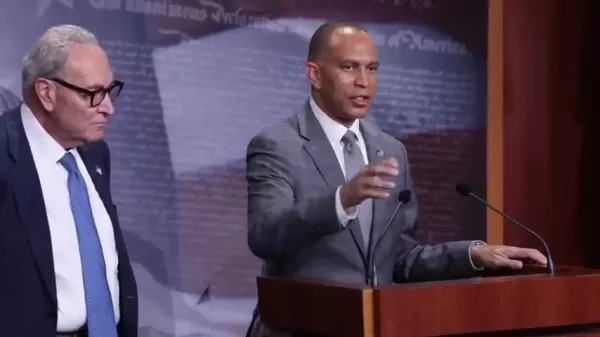
triggered polarized reactions, mirroring the country's deep political fractures. Democrats and their allies condemned it as insensitive, disrespectful, and racially charged. They argued that using AI to produce and spread such content is unethical and dangerous, potentially fueling misinformation and eroding trust in democratic institutions.
Schumer and Jeffries' Response
Senate Majority Leader Chuck Schumer and House Minority Leader Hakeem Jeffries both publicly denounced the video. Schumer criticized the move as juvenile antics from Trump. Jeffries called it a "disgusting video," stating that bigotry is a political dead-end. Democratic supporters widely labeled the content as divisive and unfit for political debate.
Republican Responses
Republican reactions were more mixed. Some defended the video as protected political satire and a legitimate critique of Democratic policies. Others chose to remain silent, likely to avoid being associated with the contentious material.
Media Coverage
Major news outlets extensively covered the story, frequently framing it as a symptom of America's political polarization and the rising use of AI in campaigns. Cable news networks dedicated significant segments to the video's implications, featuring analysts and commentators from across the political spectrum. Print and online media published detailed analyses of the content, the fallout, and its potential impact on future elections.
The Ethical and Political Implications of AI in Political Messaging
The AI-generated video mocking Schumer and Jeffries
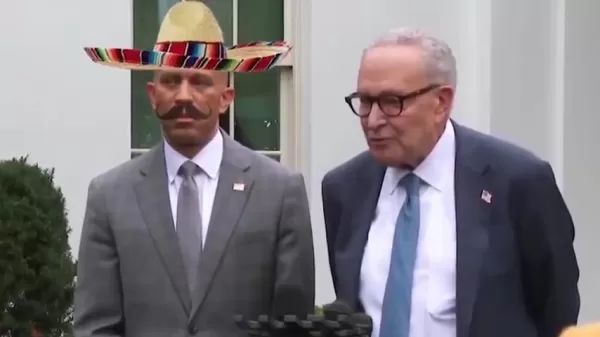
has revived a crucial debate on the ethics of using artificial intelligence in politics. As the technology advances, creating convincing yet deceptive content becomes easier, blurring the lines between reality and fabrication. This poses a serious threat to the integrity of public discourse and informed civic decision-making.
Deepfakes and Misinformation
A primary worry is the rise of 'deepfakes'—hyper-realistic, fake videos or audio recordings. These can be weaponized to manipulate public opinion, destroy reputations, or incite unrest. While not a technical deepfake, the Schumer and Jeffries video demonstrates AI's potential for creating misleading and inflammatory political content.
Erosion of Trust
The pervasive use of AI in messaging risks further degrading public trust in political institutions and media. As awareness of digital manipulation grows, citizens may become skeptical of all information, leading to decreased civic engagement and a weaker democracy.
Regulatory Challenges
Regulating AI in politics is difficult. Policymakers must balance protecting the public from misinformation and manipulation with upholding free speech principles and encouraging innovation. Finding this balance requires navigating complex legal, ethical, and technical terrain.
The Need for Transparency and Media Literacy
In the current regulatory vacuum, transparency from campaigns and media outlets about AI use is essential. Equally important is public media literacy, empowering citizens to critically assess online information. Fostering transparency and critical thinking can help mitigate the risks of AI in politics and safeguard democratic processes.
Analyzing the Use of Racial Caricatures in AI-Generated Content
The Debate Over Racial Insensitivity
A central point of controversy about the AI-generated video

was whether it relied on racial stereotypes. Critics contended that depicting Hakeem Jeffries with a sombrero and mustache perpetuated harmful stereotypes about Latino people. This ignited a broader conversation about the responsibility of political figures to avoid offensive or discriminatory imagery.
Examining the Imagery
The specific imagery warrants analysis. The sombrero is a culturally significant Mexican hat, while the mustache, though not exclusively Latino, can be seen as a stereotypical trope. Combining these elements in a video targeting a Black congressman raised legitimate concerns about racial insensitivity.
Defenses of Political Satire
Proponents argued the video was mere political satire, using exaggeration for humorous effect to critique Jeffries' and Schumer's policies. They maintained it was within the bounds of acceptable political humor. Critics, however, rejected this defense, believing the video crossed into the territory of racial stereotyping.
The Impact on Public Perception
Regardless of intent, employing racial caricatures in political messaging can harm public perception. Such imagery can reinforce negative stereotypes, foster prejudice, and create a hostile climate for minority communities. Political actors must therefore carefully consider the potential impact of their messaging and avoid content that can be reasonably interpreted as discriminatory.
Pros and Cons of AI Usage in Political Campaigns
Pros
Increased Efficiency: AI can automate tasks like data analysis and voter targeting.
Enhanced Personalization: Campaigns can use AI to tailor messages to individual voters' interests.
Broader Reach: AI-powered tools like chatbots can engage a vast audience across social media.
Cost-Effectiveness: AI can reduce labor costs for certain repetitive campaign tasks.
Can help identify emerging trends in voter behavior and sentiment.
Cons
Ethical Concerns: AI can be used to create and spread misinformation, manipulating voter opinions.
Bias and Discrimination: AI algorithms may inadvertently amplify societal biases and discriminate against certain groups.
Lack of Transparency: The decision-making processes of AI systems are often opaque and hard to audit.
Security Risks: AI platforms are vulnerable to hacking and malicious manipulation.
May be perceived as impersonal or inauthentic by voters.
Frequently Asked Questions
What is an AI-generated video?
An AI-generated video is content produced using artificial intelligence. This includes 'deepfakes,' which are fabricated but realistic videos, as well as videos that use AI to simulate a person's voice, appearance, or other characteristics.
What is Truth Social?
Truth Social is a social media platform launched by former President Donald Trump. It was created as a free-speech-oriented alternative after he was suspended from major platforms like Twitter (now X) and Facebook, and it has a strong user base among conservatives.
Why is the use of AI in political messaging controversial?
Using AI in political messaging is contentious due to serious ethical issues. It enables the creation of convincing false content, blurs the line between truth and fiction, and raises alarms about voter manipulation, inherent algorithmic bias, and the erosion of trust in information.
Related Questions
What are the potential consequences of the government shutdown?
A government shutdown can lead to widespread consequences: federal employees are furloughed, essential services face disruption, and economic instability can ensue. It also damages the United States' international credibility. The recurring struggle among lawmakers to pass funding bills ultimately places the burden on the American public.
How can citizens protect themselves from misinformation?
Citizens can guard against misinformation by honing their media literacy skills, critically evaluating online sources, and relying on reputable news outlets. It is also wise to be aware of potential biases, to fact-check surprising claims, and to be skeptical of content designed to provoke strong emotional reactions.
What are some potential solutions to the ethical challenges posed by AI in political messaging?
Addressing these ethical challenges requires a multi-faceted approach. Potential solutions include developing clear regulations and industry standards, promoting transparency from campaigns and tech companies, investing in public media literacy education, and leveraging AI itself to help detect and flag disinformation. Collaboration among lawmakers, technology firms, the media, and an engaged public is essential.
Related article
 Stripe to Acquire OpenRouter as AI Model Routing Gains Momentum
Stripe has agreed to acquire OpenRouter, an AI model-routing platform that gives developers access to hundreds of models through a single interface. The deal adds model selection and routing to Stripe’s existing work around AI usage and token-based b
Former OpenAI Researcher Barrett Zoph Returns to Google to Support Gemini Development
Barret Zoph, who previously abruptly left and joined OpenAI due to a disagreement with Thinking Machines Lab CEO Miriam Mularati, has once again changed employers. Alphabet's Google announced that Zoph will return as Vice President of Research, bring
How Recursive Intelligence Raised $335M at $4B Valuation in 4 Months
The co-founders of startup Ricursive Intelligence seemed destined to be co-founders.Anna Goldie, CEO, and Azalia Mirhoseini, CTO, are so well-known in the AI community that they were among those AI engineers who “got those weird emails from Zuckerber
Related Special Topic Recommendations
Design & Art
Stripe to Acquire OpenRouter as AI Model Routing Gains Momentum
Stripe has agreed to acquire OpenRouter, an AI model-routing platform that gives developers access to hundreds of models through a single interface. The deal adds model selection and routing to Stripe’s existing work around AI usage and token-based b
Former OpenAI Researcher Barrett Zoph Returns to Google to Support Gemini Development
Barret Zoph, who previously abruptly left and joined OpenAI due to a disagreement with Thinking Machines Lab CEO Miriam Mularati, has once again changed employers. Alphabet's Google announced that Zoph will return as Vice President of Research, bring
How Recursive Intelligence Raised $335M at $4B Valuation in 4 Months
The co-founders of startup Ricursive Intelligence seemed destined to be co-founders.Anna Goldie, CEO, and Azalia Mirhoseini, CTO, are so well-known in the AI community that they were among those AI engineers who “got those weird emails from Zuckerber
Related Special Topic Recommendations
Design & Art
 Top AI Illustration Tools: Create Editorial Scenes and Cover Art Faster
2026 Latest Top-rated AI Illustration Tools: Our curated list features the best powerfully designed tools for creating stunning editorial scenes and eye-catching cover art quickly. Each option has gone through rigorous real-world tests, offering a free vs paid comparison to help you find the perfect match for your workflow. Try these must-try solutions today to unlock your AI edge and boost your creative productivity. Explore now at XIX.AI.
 10 tools
 xix.ai
Education and Learning
Top AI Tutors for Exam Prep: Practice Math, Science, and English
xix.ai
Education and Learning
Top AI Tutors for Exam Prep: Practice Math, Science, and English
2026 Latest Top-Rated Best AI Tutors for Exam Prep are here on XIX.AI! Our curated list features powerful game-changing tools that offer free vs paid comparison, real-world tests, and weekly updated rankings. They help boost your writing efficiency, simplify complex topic learning, and unlock your academic potential. Explore now to Discover your perfect exam prep tool and Start creating today to Unlock your AI edge!
10 tools
xix.ai
Finance
AI Budget Planning Tools for Personal Money Management
2026 Latest Best Top-Rated AI Budget Planning Tools for Personal Money Management are here on XIX.AI! This curated collection features powerful, game-changing solutions that help you conduct real-world tests, understand spending habits, and create personalized plans to boost productivity. Enjoy a free vs paid comparison along with detailed rankings. Must-try tools designed to simplify money management and unlock your AI edge. Explore now!
11 tools
xix.ai
Health & Wellness
AI Sleep Tracking Assistants: Improve Recovery with Better Bedtime Habits
2026 Latest Best Top-Rated AI Sleep Tracking Assistants curated for ultimate recovery. This fully updated weekly guide features powerful tools that deliver real-world tests, free vs paid comparison, and detailed rankings to help you find the must-try solution that boosts sleep quality and supports better bedtime habits. Explore now at XIX.AI to Unlock your AI edge.
10 tools
xix.ai
Data Analysis
AI SQL Copilots for Product and Revenue Analytics
2026 Latest Best Top-Rated AI SQL Copilots for Product and Revenue Analytics! XIX.AI has curated a powerful, game-changing collection of must-try tools that undergo real-world tests through weekly updated rankings. These tools help users boost productivity significantly by accelerating data analysis, streamlining complex queries, and generating accurate insights to drive smarter business decisions. Explore now to Discover your perfect tool for unlocking your AI edge!
14 tools
xix.ai
Education and Learning
Best AI Homework Helpers That Teach: Learn Concepts, Not Just Answers
2026 Latest Best Top-Rated AI Homework Helpers That Teach Core Concepts Not Just Answers Powerful Tools for Students Must-Try Curated List Weekly Updated Free vs Paid Comparison Real-World Tests Accurate Rankings to Help You Unlock Your Full Learning Potential Explore now to Discover your perfect tool for smarter studying.
10 tools
xix.ai

 Comments (1)
0/500
Comments (1)
0/500
![AlbertWalker]()
So Trump shares an AI video mocking his rivals? I'm not even surprised anymore. The real question is: who's regulating this stuff before it gets out of hand? 🎭🤖
In the turbulent landscape of American politics, a new controversy has erupted involving an AI-generated video targeting top Democratic leaders, shared by former President Donald Trump. The incident has ignited fierce debate, raising critical questions about the ethics of artificial intelligence in political discourse and its potential to shape public perception. To fully grasp the situation, we must examine the video's content, the reactions it provoked, and the broader context of heightened political tensions.
Key Points
A satirical AI-generated video targeting Democratic leaders Chuck Schumer and Hakeem Jeffries was posted on the social media platform Truth Social.
The video prompted immediate backlash, criticized for deploying AI technology for political attacks.
Many viewers found the content racially insensitive, while others defended it as permissible political satire.
Its release coincided with critical negotiations to avert a government shutdown, intensifying the political drama.
Responses split sharply along partisan lines, underscoring the deep divisions within the American electorate.
The episode has renewed discussions about the ethical boundaries for AI in political communication.
Analysts are assessing the video's potential influence on public opinion and upcoming electoral contests.
The AI Mocking Video: A Detailed Overview
What Happened?
The controversy began when former President Donald Trump posted an AI-generated video on his platform, Truth Social. The content took aim at Senate Majority Leader Chuck Schumer and House Minority Leader Hakeem Jeffries, quickly going viral and sparking a heated national debate. The use of artificial intelligence to create the material added a complex, modern twist to the dispute, fueling concerns about the role of advanced technology in political messaging.
Understanding the Video's Content
The video's content is key to understanding the uproar. It appeared to depict Congressman Hakeem Jeffries wearing a sombrero and a fake mustache. A simulated voice, attributed to Chuck Schumer, made remarks about appealing to new voters, including undocumented immigrants. Critics swiftly denounced the imagery as a racist caricature.
The video employed satire to mock Democratic policies on issues like immigration and healthcare. By using AI to mimic the politicians' likenesses and voices, the creators aimed to deliver a more potent and controversial message.
The Timing of the Post
The video's release was strategically timed. It followed a meeting at the White House between Trump and Democratic congressional leaders to discuss the imminent threat of a government shutdown. This timing suggests the video was a pointed retort to those negotiations, potentially meant to weaken the Democrats' stance. The confluence of events amplified the political significance and public scrutiny.
The Reactions: A Divided Nation
The release of the AI-generated video
triggered polarized reactions, mirroring the country's deep political fractures. Democrats and their allies condemned it as insensitive, disrespectful, and racially charged. They argued that using AI to produce and spread such content is unethical and dangerous, potentially fueling misinformation and eroding trust in democratic institutions.
Schumer and Jeffries' Response
Senate Majority Leader Chuck Schumer and House Minority Leader Hakeem Jeffries both publicly denounced the video. Schumer criticized the move as juvenile antics from Trump. Jeffries called it a "disgusting video," stating that bigotry is a political dead-end. Democratic supporters widely labeled the content as divisive and unfit for political debate.
Republican Responses
Republican reactions were more mixed. Some defended the video as protected political satire and a legitimate critique of Democratic policies. Others chose to remain silent, likely to avoid being associated with the contentious material.
Media Coverage
Major news outlets extensively covered the story, frequently framing it as a symptom of America's political polarization and the rising use of AI in campaigns. Cable news networks dedicated significant segments to the video's implications, featuring analysts and commentators from across the political spectrum. Print and online media published detailed analyses of the content, the fallout, and its potential impact on future elections.
The Ethical and Political Implications of AI in Political Messaging
The AI-generated video mocking Schumer and Jeffries
has revived a crucial debate on the ethics of using artificial intelligence in politics. As the technology advances, creating convincing yet deceptive content becomes easier, blurring the lines between reality and fabrication. This poses a serious threat to the integrity of public discourse and informed civic decision-making.
Deepfakes and Misinformation
A primary worry is the rise of 'deepfakes'—hyper-realistic, fake videos or audio recordings. These can be weaponized to manipulate public opinion, destroy reputations, or incite unrest. While not a technical deepfake, the Schumer and Jeffries video demonstrates AI's potential for creating misleading and inflammatory political content.
Erosion of Trust
The pervasive use of AI in messaging risks further degrading public trust in political institutions and media. As awareness of digital manipulation grows, citizens may become skeptical of all information, leading to decreased civic engagement and a weaker democracy.
Regulatory Challenges
Regulating AI in politics is difficult. Policymakers must balance protecting the public from misinformation and manipulation with upholding free speech principles and encouraging innovation. Finding this balance requires navigating complex legal, ethical, and technical terrain.
The Need for Transparency and Media Literacy
In the current regulatory vacuum, transparency from campaigns and media outlets about AI use is essential. Equally important is public media literacy, empowering citizens to critically assess online information. Fostering transparency and critical thinking can help mitigate the risks of AI in politics and safeguard democratic processes.
Analyzing the Use of Racial Caricatures in AI-Generated Content
The Debate Over Racial Insensitivity
A central point of controversy about the AI-generated video
was whether it relied on racial stereotypes. Critics contended that depicting Hakeem Jeffries with a sombrero and mustache perpetuated harmful stereotypes about Latino people. This ignited a broader conversation about the responsibility of political figures to avoid offensive or discriminatory imagery.
Examining the Imagery
The specific imagery warrants analysis. The sombrero is a culturally significant Mexican hat, while the mustache, though not exclusively Latino, can be seen as a stereotypical trope. Combining these elements in a video targeting a Black congressman raised legitimate concerns about racial insensitivity.
Defenses of Political Satire
Proponents argued the video was mere political satire, using exaggeration for humorous effect to critique Jeffries' and Schumer's policies. They maintained it was within the bounds of acceptable political humor. Critics, however, rejected this defense, believing the video crossed into the territory of racial stereotyping.
The Impact on Public Perception
Regardless of intent, employing racial caricatures in political messaging can harm public perception. Such imagery can reinforce negative stereotypes, foster prejudice, and create a hostile climate for minority communities. Political actors must therefore carefully consider the potential impact of their messaging and avoid content that can be reasonably interpreted as discriminatory.
Pros and Cons of AI Usage in Political Campaigns
Pros
Increased Efficiency: AI can automate tasks like data analysis and voter targeting.
Enhanced Personalization: Campaigns can use AI to tailor messages to individual voters' interests.
Broader Reach: AI-powered tools like chatbots can engage a vast audience across social media.
Cost-Effectiveness: AI can reduce labor costs for certain repetitive campaign tasks.
Can help identify emerging trends in voter behavior and sentiment.
Cons
Ethical Concerns: AI can be used to create and spread misinformation, manipulating voter opinions.
Bias and Discrimination: AI algorithms may inadvertently amplify societal biases and discriminate against certain groups.
Lack of Transparency: The decision-making processes of AI systems are often opaque and hard to audit.
Security Risks: AI platforms are vulnerable to hacking and malicious manipulation.
May be perceived as impersonal or inauthentic by voters.
Frequently Asked Questions
What is an AI-generated video?
An AI-generated video is content produced using artificial intelligence. This includes 'deepfakes,' which are fabricated but realistic videos, as well as videos that use AI to simulate a person's voice, appearance, or other characteristics.
What is Truth Social?
Truth Social is a social media platform launched by former President Donald Trump. It was created as a free-speech-oriented alternative after he was suspended from major platforms like Twitter (now X) and Facebook, and it has a strong user base among conservatives.
Why is the use of AI in political messaging controversial?
Using AI in political messaging is contentious due to serious ethical issues. It enables the creation of convincing false content, blurs the line between truth and fiction, and raises alarms about voter manipulation, inherent algorithmic bias, and the erosion of trust in information.
Related Questions
What are the potential consequences of the government shutdown?
A government shutdown can lead to widespread consequences: federal employees are furloughed, essential services face disruption, and economic instability can ensue. It also damages the United States' international credibility. The recurring struggle among lawmakers to pass funding bills ultimately places the burden on the American public.
How can citizens protect themselves from misinformation?
Citizens can guard against misinformation by honing their media literacy skills, critically evaluating online sources, and relying on reputable news outlets. It is also wise to be aware of potential biases, to fact-check surprising claims, and to be skeptical of content designed to provoke strong emotional reactions.
What are some potential solutions to the ethical challenges posed by AI in political messaging?
Addressing these ethical challenges requires a multi-faceted approach. Potential solutions include developing clear regulations and industry standards, promoting transparency from campaigns and tech companies, investing in public media literacy education, and leveraging AI itself to help detect and flag disinformation. Collaboration among lawmakers, technology firms, the media, and an engaged public is essential.








 Stripe to Acquire OpenRouter as AI Model Routing Gains Momentum
Stripe has agreed to acquire OpenRouter, an AI model-routing platform that gives developers access to hundreds of models through a single interface. The deal adds model selection and routing to Stripe’s existing work around AI usage and token-based b
Stripe to Acquire OpenRouter as AI Model Routing Gains Momentum
Stripe has agreed to acquire OpenRouter, an AI model-routing platform that gives developers access to hundreds of models through a single interface. The deal adds model selection and routing to Stripe’s existing work around AI usage and token-based b
 Former OpenAI Researcher Barrett Zoph Returns to Google to Support Gemini Development
Barret Zoph, who previously abruptly left and joined OpenAI due to a disagreement with Thinking Machines Lab CEO Miriam Mularati, has once again changed employers. Alphabet's Google announced that Zoph will return as Vice President of Research, bring
Former OpenAI Researcher Barrett Zoph Returns to Google to Support Gemini Development
Barret Zoph, who previously abruptly left and joined OpenAI due to a disagreement with Thinking Machines Lab CEO Miriam Mularati, has once again changed employers. Alphabet's Google announced that Zoph will return as Vice President of Research, bring
 How Recursive Intelligence Raised $335M at $4B Valuation in 4 Months
The co-founders of startup Ricursive Intelligence seemed destined to be co-founders.Anna Goldie, CEO, and Azalia Mirhoseini, CTO, are so well-known in the AI community that they were among those AI engineers who “got those weird emails from Zuckerber
How Recursive Intelligence Raised $335M at $4B Valuation in 4 Months
The co-founders of startup Ricursive Intelligence seemed destined to be co-founders.Anna Goldie, CEO, and Azalia Mirhoseini, CTO, are so well-known in the AI community that they were among those AI engineers who “got those weird emails from Zuckerber

2026 Latest Top-rated AI Illustration Tools: Our curated list features the best powerfully designed tools for creating stunning editorial scenes and eye-catching cover art quickly. Each option has gone through rigorous real-world tests, offering a free vs paid comparison to help you find the perfect match for your workflow. Try these must-try solutions today to unlock your AI edge and boost your creative productivity. Explore now at XIX.AI.
10 tools
xix.ai

2026 Latest Top-Rated Best AI Tutors for Exam Prep are here on XIX.AI! Our curated list features powerful game-changing tools that offer free vs paid comparison, real-world tests, and weekly updated rankings. They help boost your writing efficiency, simplify complex topic learning, and unlock your academic potential. Explore now to Discover your perfect exam prep tool and Start creating today to Unlock your AI edge!
10 tools
xix.ai

2026 Latest Best Top-Rated AI Budget Planning Tools for Personal Money Management are here on XIX.AI! This curated collection features powerful, game-changing solutions that help you conduct real-world tests, understand spending habits, and create personalized plans to boost productivity. Enjoy a free vs paid comparison along with detailed rankings. Must-try tools designed to simplify money management and unlock your AI edge. Explore now!
11 tools
xix.ai

2026 Latest Best Top-Rated AI Sleep Tracking Assistants curated for ultimate recovery. This fully updated weekly guide features powerful tools that deliver real-world tests, free vs paid comparison, and detailed rankings to help you find the must-try solution that boosts sleep quality and supports better bedtime habits. Explore now at XIX.AI to Unlock your AI edge.
10 tools
xix.ai

2026 Latest Best Top-Rated AI SQL Copilots for Product and Revenue Analytics! XIX.AI has curated a powerful, game-changing collection of must-try tools that undergo real-world tests through weekly updated rankings. These tools help users boost productivity significantly by accelerating data analysis, streamlining complex queries, and generating accurate insights to drive smarter business decisions. Explore now to Discover your perfect tool for unlocking your AI edge!
14 tools
xix.ai

2026 Latest Best Top-Rated AI Homework Helpers That Teach Core Concepts Not Just Answers Powerful Tools for Students Must-Try Curated List Weekly Updated Free vs Paid Comparison Real-World Tests Accurate Rankings to Help You Unlock Your Full Learning Potential Explore now to Discover your perfect tool for smarter studying.
10 tools
xix.ai

So Trump shares an AI video mocking his rivals? I'm not even surprised anymore. The real question is: who's regulating this stuff before it gets out of hand? 🎭🤖












