


 Home
HomeWhat is AI Mental Health in 2026? From symptom checker to expert.
Artificial intelligence is fundamentally reshaping mental healthcare. What began as basic symptom checkers has evolved into sophisticated systems that act like expert mechanics for the mind. This article traces this progression, focusing on the move toward biologically-informed diagnostics and customized treatments that are poised to transform mental wellness. We'll explore how these innovations are paving the way for healthcare solutions that comprehend our brain's inner workings with unprecedented clarity.
Key Points
AI is transitioning from basic symptom assessment to becoming expert mental health diagnosticians.
Conventional AI diagnostics depend on subjective information provided by users.
Advanced AI methods now integrate objective biological markers including brainwave patterns and nervous system function.
AI enables the creation of personalized treatment strategies based on individual biological profiles.
The future may see AI understanding brain function with greater precision than our own self-awareness.
The Evolution of AI in Mental Health Diagnostics
From Symptom Checkers to Expert Mechanics
The function of AI in mental healthcare is experiencing a profound metamorphosis. Initial implementations centered around elementary symptom assessment tools, frequently guiding users through confusing paths of online diagnoses and self-identified rare conditions.
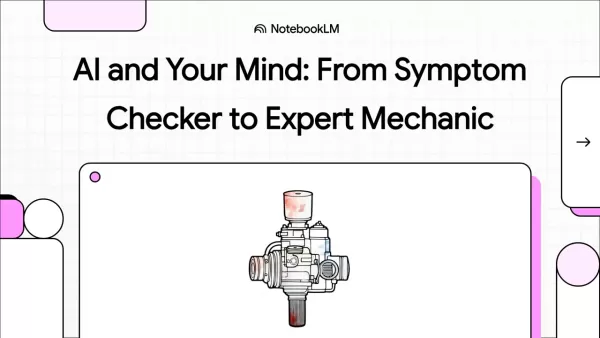
While these tools offer accessibility, their effectiveness is constrained by dependence on user-described symptoms, which often lack objectivity and completeness.
Contemporary AI is progressing toward becoming specialized diagnosticians for brain health, equipped to examine complex biological information to identify the fundamental causes of mental health challenges. This evolution signifies a transition from superficial evaluations to more profound, individually-tailored diagnostics.
The fundamental distinction rests in how mental health is approached. Symptom checkers operate under the assumption that reported symptoms represent the complete picture. Expert diagnosticians, conversely, investigate deeper, exploring the underlying mechanisms that generate symptoms. This comprehensive investigation involves evaluating brainwave patterns, autonomic nervous system function, and fundamental personality characteristics to establish a more complete understanding of mental wellbeing.
This sophisticated methodology enables more precise and effective interventions. By detecting the biological foundations of mental health conditions, AI can assist healthcare providers in creating customized treatment protocols that target each person's specific requirements. This represents progress toward a more accurate and productive era in mental healthcare, potentially substantially enhancing treatment results.
The Limitations of Traditional AI Symptom Checkers
Current AI diagnostic systems, especially in mental health, depend heavily on symptom information provided by users. This method, while apparently convenient, presents several significant drawbacks.
- Subjectivity: User-reported symptoms are intrinsically subjective. People may interpret questions differently, recall details inaccurately, or struggle to articulate their experiences precisely.
- Incompleteness: Digital questionnaires or structured interviews can only capture a limited perspective of an individual's mental condition. They cannot incorporate the complex interaction of biological, psychological, and social elements that affect mental health.
- Statistical Estimation: These AI systems function by processing numerical data and detecting patterns from historical information. They essentially generate statistical probabilities regarding potential mental health conditions, without genuinely comprehending the root causes.
The outcome is frequently an ambiguous probability rating, such as a 60% likelihood of depression or 30% probability of anxiety.
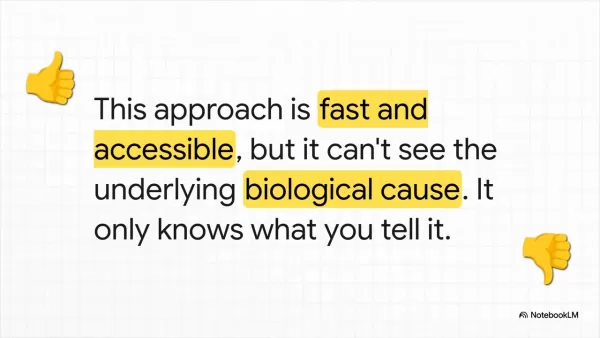
These scores offer minimal practical guidance and can potentially increase confusion and anxiety.
The core issue is that these techniques operate superficially. They cannot investigate the fundamental biological origins of mental health problems. This resembles informing a mechanic about unusual vehicle noises without permitting inspection under the hood. The process is quick and accessible, certainly, but ultimately inadequate for identifying the actual problem source and delivering meaningful understanding.
Analyzing the Brain: A Deeper Look
Holistic Data Analysis with Advanced AI
Modern AI tools are revolutionizing mental health by extending beyond conventional symptom reporting. Rather than depending exclusively on subjective questionnaires, these AI systems incorporate objective biological measurements, including brainwave activity and nervous system function, to establish a more thorough comprehension of an individual's mental condition. This evidence-based approach facilitates more accurate and personalized treatment strategies.
Easybrain AI represents substantial progress in this direction.
This AI platform utilizes multiple data sources to evaluate mental health.
- Brainwaves (EEG): Examines the brain's internal condition using electroencephalography.
- Autonomic Nerves (HRV): Evaluates the autonomic nervous system through heart rate variability measurements.
- Personality (TCI): Assesses fundamental temperament using the Temperament and Character Inventory.
- Attention (CPT): Measures concentration capacity through Continuous Performance Tests.
By analyzing these objective biological indicators, AI can acquire understanding of the underlying causes of mental health issues, enabling more targeted interventions. This parallels a mechanic conducting comprehensive engine diagnostics to identify the root of mechanical problems. This precision level establishes the foundation for individualized mental healthcare approaches that address each patient's unique biological and psychological characteristics.
Such detailed biological mapping of brain function enables advanced AI to propose sophisticated, multi-component treatment strategies. This transcends simple condition labeling, instead indicating potential biological origins for symptoms. It also marks a transition for AI diagnostics, from predicting disease probability to actually forecasting treatment effectiveness and recovery likelihood.
Using AI-Powered Mental Health Tools
Steps to Access AI-Driven Mental Health Insights
While broad implementation continues to develop, several steps can help you investigate and utilize AI in mental healthcare:
- Research Available Platforms: Identify AI-enhanced mental health platforms or tools currently accessible. Carefully assess their credentials and data protection protocols.
- Consult Healthcare Professionals: Before utilizing any AI tool, discuss it with a mental health specialist. They can offer guidance and interpret outcomes within your specific context.
- Provide Honest Information: When using symptom assessment or questionnaire-based tools, respond to questions truthfully and accurately. Output quality directly correlates with input quality.
- Explore Objective Data Analysis: Seek AI systems that incorporate objective biological measurements, such as EEG or HRV assessments, for more comprehensive evaluation.
- Collaborate on Personalized Treatment: Work with your healthcare provider to develop customized treatment plans based on insights derived from AI analysis. This might include medication, neuromodulation, lifestyle adjustments, or combined approaches.
- Stay Informed: Maintain current knowledge about the latest developments in AI and mental healthcare. This field is rapidly advancing, with new tools and methodologies continuously emerging.
Understanding Costs: AI in Mental Healthcare
Factors Influencing Pricing and Accessibility
The expense of AI-driven mental health tools varies considerably depending on tool type, features provided, and the supplier. Symptom checkers and questionnaire-based assessments are typically free or low-cost, while more advanced systems incorporating biological data analysis generally carry higher costs.
Elements affecting pricing include:
- Data Acquisition: Tools requiring EEG or HRV measurements may involve extra equipment or professional administration costs.
- AI Expertise: The complexity of AI algorithms and the expertise needed for results interpretation can influence pricing.
- Personalization: Highly customized treatment plans typically command premium pricing compared to generic recommendations.
As AI technology continues advancing, costs are anticipated to decrease, making these tools more accessible to broader populations.
Meanwhile, it's important to research available options and compare pricing to identify solutions matching your requirements and budget. Additionally, verify with your insurance provider whether AI-driven mental health services receive coverage.
Pros and Cons of AI in Mental Healthcare
Pros
Delivers objective information and insights for diagnosis and treatment.
Provides customized treatment plans based on individual biology.
Enhances mental healthcare access in remote or underserved regions.
Minimizes trial and error in treatment selection.
Enables remote tracking and early intervention.
Cons
Raises ethical questions regarding data privacy and algorithmic bias.
Requires thorough evaluation of data security practices.
May create technology over-dependence and reduced human interaction.
Could worsen existing mental health inequalities if implemented unevenly.
Is not designed to substitute human therapists and psychiatrists.
Key Features of Advanced AI Mental Health Tools
Revolutionizing Mental Healthcare
The newest AI systems for mental health contain powerful capabilities designed to deliver deeper, more personalized experiences. Here are the core functionalities:
- Biological Data Integration: Incorporates EEG, HRV, and additional biological measurements for comprehensive assessment.
- Root Cause Analysis: Identifies underlying biological and psychological factors contributing to mental health conditions.
- Personalized Treatment Planning: Recommends tailored treatment strategies based on individual biology and requirements.
- Predictive Power: Forecasts treatment success probability, reducing experimentation.
- Remote Accessibility: Provides advanced diagnostics and treatment access from home environments.
- Objective Insights: Offers impartial insights into mental state, decreasing reliance on subjective reporting.
- Continuous Monitoring: Allows ongoing tracking of mental health and treatment efficacy.
These capabilities represent a paradigm shift in mental healthcare, empowering both individuals and professionals with necessary tools for achieving optimal mental wellbeing.
Use Cases: AI Transforming Mental Health
Applications Across the Spectrum of Mental Healthcare
AI implementation spans the complete spectrum of mental healthcare settings, impacting individuals, professionals, and researchers simultaneously. Key applications include:
- Early Detection: AI can help identify individuals at risk for mental health conditions before symptom severity increases.
- Diagnostic Assistance: AI can supply clinicians with objective data and insights to support diagnosis.
- Personalized Treatment: AI can help customize treatment plans to match each individual's unique needs.
- Remote Monitoring: AI can facilitate remote patient tracking, enabling early intervention and improved outcomes.
- Research and Development: AI can analyze extensive datasets and identify new targets for pharmaceutical development and therapy.
- Mental Health Tracking: AI will deliver personalized mental health insights through individual monitoring, helping enhance treatments.
Frequently Asked Questions
How does AI analyze brainwaves for mental health assessment?
AI utilizes algorithms to process EEG data, detecting patterns and irregularities that may indicate mental health concerns. These patterns can provide understanding of brain activity, cognitive performance, and emotional control. By comparing individual brainwave patterns against healthy benchmarks, AI can highlight potential problem areas and suggest appropriate interventions. AI evaluates brain temperament and concentration through comprehensive analysis.
Is AI-driven mental healthcare safe and secure?
Data privacy and security are critical priorities in AI-driven mental healthcare. Reputable AI platforms follow strict data protection regulations and implement encryption alongside other security measures to protect patient information. However, it's essential to thoroughly assess the privacy practices of any AI tool and ensure responsible data handling. Utilizing reliable, verified sources and professional healthcare guidance significantly minimizes potential issues.
Can AI replace human therapists and psychiatrists?
AI is not designed to replace human therapists and psychiatrists. Instead, AI functions as a valuable tool to enhance their capabilities, providing objective data and insights that improve clinical decision-making. The human connection and therapeutic relationship remain vital components of effective mental healthcare. Similar to how expert automotive mechanics remain essential, human professionals are necessary to implement AI assistance and ensure smooth, patient-beneficial operation.
Related Questions
What ethical considerations arise from AI in mental healthcare?
AI implementation in mental healthcare raises multiple ethical considerations, including data privacy, algorithmic bias, and potential technology over-reliance. It's essential to ensure AI systems are developed and implemented in ways that promote fairness, transparency, and human autonomy. AI integration requires proper assessment and implementation to safeguard patient rights and healthcare professional responsibilities.
How can AI address mental health disparities in underserved communities?
AI holds potential to improve mental healthcare access in underserved communities through remote assessments, personalized treatment recommendations, and affordable support. However, ensuring cultural sensitivity and tailoring AI systems to specific community needs is crucial. This approach can help reduce healthcare access discrepancies and provide necessary affordable support and services.
What is the future of AI in mental health research?
AI is positioned to play a transformative role in mental health research by enabling large dataset analysis, identifying new biomarkers, and developing innovative treatment approaches. AI can also accelerate research pace and enhance clinical trial efficiency. Essentially, the precision and speed of information discovery will assist healthcare researchers in properly identifying and implementing AI technology.
Related article
 Stripe to Acquire OpenRouter as AI Model Routing Gains Momentum
Stripe has agreed to acquire OpenRouter, an AI model-routing platform that gives developers access to hundreds of models through a single interface. The deal adds model selection and routing to Stripe’s existing work around AI usage and token-based b
Former OpenAI Researcher Barrett Zoph Returns to Google to Support Gemini Development
Barret Zoph, who previously abruptly left and joined OpenAI due to a disagreement with Thinking Machines Lab CEO Miriam Mularati, has once again changed employers. Alphabet's Google announced that Zoph will return as Vice President of Research, bring
How Recursive Intelligence Raised $335M at $4B Valuation in 4 Months
The co-founders of startup Ricursive Intelligence seemed destined to be co-founders.Anna Goldie, CEO, and Azalia Mirhoseini, CTO, are so well-known in the AI community that they were among those AI engineers who “got those weird emails from Zuckerber
Related Special Topic Recommendations
Design & Art
Stripe to Acquire OpenRouter as AI Model Routing Gains Momentum
Stripe has agreed to acquire OpenRouter, an AI model-routing platform that gives developers access to hundreds of models through a single interface. The deal adds model selection and routing to Stripe’s existing work around AI usage and token-based b
Former OpenAI Researcher Barrett Zoph Returns to Google to Support Gemini Development
Barret Zoph, who previously abruptly left and joined OpenAI due to a disagreement with Thinking Machines Lab CEO Miriam Mularati, has once again changed employers. Alphabet's Google announced that Zoph will return as Vice President of Research, bring
How Recursive Intelligence Raised $335M at $4B Valuation in 4 Months
The co-founders of startup Ricursive Intelligence seemed destined to be co-founders.Anna Goldie, CEO, and Azalia Mirhoseini, CTO, are so well-known in the AI community that they were among those AI engineers who “got those weird emails from Zuckerber
Related Special Topic Recommendations
Design & Art
 Top AI Illustration Tools: Create Editorial Scenes and Cover Art Faster
2026 Latest Top-rated AI Illustration Tools: Our curated list features the best powerfully designed tools for creating stunning editorial scenes and eye-catching cover art quickly. Each option has gone through rigorous real-world tests, offering a free vs paid comparison to help you find the perfect match for your workflow. Try these must-try solutions today to unlock your AI edge and boost your creative productivity. Explore now at XIX.AI.
 10 tools
 xix.ai
Education and Learning
Top AI Tutors for Exam Prep: Practice Math, Science, and English
xix.ai
Education and Learning
Top AI Tutors for Exam Prep: Practice Math, Science, and English
2026 Latest Top-Rated Best AI Tutors for Exam Prep are here on XIX.AI! Our curated list features powerful game-changing tools that offer free vs paid comparison, real-world tests, and weekly updated rankings. They help boost your writing efficiency, simplify complex topic learning, and unlock your academic potential. Explore now to Discover your perfect exam prep tool and Start creating today to Unlock your AI edge!
10 tools
xix.ai
Finance
AI Budget Planning Tools for Personal Money Management
2026 Latest Best Top-Rated AI Budget Planning Tools for Personal Money Management are here on XIX.AI! This curated collection features powerful, game-changing solutions that help you conduct real-world tests, understand spending habits, and create personalized plans to boost productivity. Enjoy a free vs paid comparison along with detailed rankings. Must-try tools designed to simplify money management and unlock your AI edge. Explore now!
11 tools
xix.ai
Health & Wellness
AI Sleep Tracking Assistants: Improve Recovery with Better Bedtime Habits
2026 Latest Best Top-Rated AI Sleep Tracking Assistants curated for ultimate recovery. This fully updated weekly guide features powerful tools that deliver real-world tests, free vs paid comparison, and detailed rankings to help you find the must-try solution that boosts sleep quality and supports better bedtime habits. Explore now at XIX.AI to Unlock your AI edge.
10 tools
xix.ai
Data Analysis
AI SQL Copilots for Product and Revenue Analytics
2026 Latest Best Top-Rated AI SQL Copilots for Product and Revenue Analytics! XIX.AI has curated a powerful, game-changing collection of must-try tools that undergo real-world tests through weekly updated rankings. These tools help users boost productivity significantly by accelerating data analysis, streamlining complex queries, and generating accurate insights to drive smarter business decisions. Explore now to Discover your perfect tool for unlocking your AI edge!
14 tools
xix.ai
Education and Learning
Best AI Homework Helpers That Teach: Learn Concepts, Not Just Answers
2026 Latest Best Top-Rated AI Homework Helpers That Teach Core Concepts Not Just Answers Powerful Tools for Students Must-Try Curated List Weekly Updated Free vs Paid Comparison Real-World Tests Accurate Rankings to Help You Unlock Your Full Learning Potential Explore now to Discover your perfect tool for smarter studying.
10 tools
xix.ai

 Comments (0)
0/500
Comments (0)
0/500
Artificial intelligence is fundamentally reshaping mental healthcare. What began as basic symptom checkers has evolved into sophisticated systems that act like expert mechanics for the mind. This article traces this progression, focusing on the move toward biologically-informed diagnostics and customized treatments that are poised to transform mental wellness. We'll explore how these innovations are paving the way for healthcare solutions that comprehend our brain's inner workings with unprecedented clarity.
Key Points
AI is transitioning from basic symptom assessment to becoming expert mental health diagnosticians.
Conventional AI diagnostics depend on subjective information provided by users.
Advanced AI methods now integrate objective biological markers including brainwave patterns and nervous system function.
AI enables the creation of personalized treatment strategies based on individual biological profiles.
The future may see AI understanding brain function with greater precision than our own self-awareness.
The Evolution of AI in Mental Health Diagnostics
From Symptom Checkers to Expert Mechanics
The function of AI in mental healthcare is experiencing a profound metamorphosis. Initial implementations centered around elementary symptom assessment tools, frequently guiding users through confusing paths of online diagnoses and self-identified rare conditions.
While these tools offer accessibility, their effectiveness is constrained by dependence on user-described symptoms, which often lack objectivity and completeness.
Contemporary AI is progressing toward becoming specialized diagnosticians for brain health, equipped to examine complex biological information to identify the fundamental causes of mental health challenges. This evolution signifies a transition from superficial evaluations to more profound, individually-tailored diagnostics.
The fundamental distinction rests in how mental health is approached. Symptom checkers operate under the assumption that reported symptoms represent the complete picture. Expert diagnosticians, conversely, investigate deeper, exploring the underlying mechanisms that generate symptoms. This comprehensive investigation involves evaluating brainwave patterns, autonomic nervous system function, and fundamental personality characteristics to establish a more complete understanding of mental wellbeing.
This sophisticated methodology enables more precise and effective interventions. By detecting the biological foundations of mental health conditions, AI can assist healthcare providers in creating customized treatment protocols that target each person's specific requirements. This represents progress toward a more accurate and productive era in mental healthcare, potentially substantially enhancing treatment results.
The Limitations of Traditional AI Symptom Checkers
Current AI diagnostic systems, especially in mental health, depend heavily on symptom information provided by users. This method, while apparently convenient, presents several significant drawbacks.
- Subjectivity: User-reported symptoms are intrinsically subjective. People may interpret questions differently, recall details inaccurately, or struggle to articulate their experiences precisely.
- Incompleteness: Digital questionnaires or structured interviews can only capture a limited perspective of an individual's mental condition. They cannot incorporate the complex interaction of biological, psychological, and social elements that affect mental health.
- Statistical Estimation: These AI systems function by processing numerical data and detecting patterns from historical information. They essentially generate statistical probabilities regarding potential mental health conditions, without genuinely comprehending the root causes.
The outcome is frequently an ambiguous probability rating, such as a 60% likelihood of depression or 30% probability of anxiety.
These scores offer minimal practical guidance and can potentially increase confusion and anxiety.
The core issue is that these techniques operate superficially. They cannot investigate the fundamental biological origins of mental health problems. This resembles informing a mechanic about unusual vehicle noises without permitting inspection under the hood. The process is quick and accessible, certainly, but ultimately inadequate for identifying the actual problem source and delivering meaningful understanding.
Analyzing the Brain: A Deeper Look
Holistic Data Analysis with Advanced AI
Modern AI tools are revolutionizing mental health by extending beyond conventional symptom reporting. Rather than depending exclusively on subjective questionnaires, these AI systems incorporate objective biological measurements, including brainwave activity and nervous system function, to establish a more thorough comprehension of an individual's mental condition. This evidence-based approach facilitates more accurate and personalized treatment strategies.
Easybrain AI represents substantial progress in this direction.
This AI platform utilizes multiple data sources to evaluate mental health.
- Brainwaves (EEG): Examines the brain's internal condition using electroencephalography.
- Autonomic Nerves (HRV): Evaluates the autonomic nervous system through heart rate variability measurements.
- Personality (TCI): Assesses fundamental temperament using the Temperament and Character Inventory.
- Attention (CPT): Measures concentration capacity through Continuous Performance Tests.
By analyzing these objective biological indicators, AI can acquire understanding of the underlying causes of mental health issues, enabling more targeted interventions. This parallels a mechanic conducting comprehensive engine diagnostics to identify the root of mechanical problems. This precision level establishes the foundation for individualized mental healthcare approaches that address each patient's unique biological and psychological characteristics.
Such detailed biological mapping of brain function enables advanced AI to propose sophisticated, multi-component treatment strategies. This transcends simple condition labeling, instead indicating potential biological origins for symptoms. It also marks a transition for AI diagnostics, from predicting disease probability to actually forecasting treatment effectiveness and recovery likelihood.
Using AI-Powered Mental Health Tools
Steps to Access AI-Driven Mental Health Insights
While broad implementation continues to develop, several steps can help you investigate and utilize AI in mental healthcare:
- Research Available Platforms: Identify AI-enhanced mental health platforms or tools currently accessible. Carefully assess their credentials and data protection protocols.
- Consult Healthcare Professionals: Before utilizing any AI tool, discuss it with a mental health specialist. They can offer guidance and interpret outcomes within your specific context.
- Provide Honest Information: When using symptom assessment or questionnaire-based tools, respond to questions truthfully and accurately. Output quality directly correlates with input quality.
- Explore Objective Data Analysis: Seek AI systems that incorporate objective biological measurements, such as EEG or HRV assessments, for more comprehensive evaluation.
- Collaborate on Personalized Treatment: Work with your healthcare provider to develop customized treatment plans based on insights derived from AI analysis. This might include medication, neuromodulation, lifestyle adjustments, or combined approaches.
- Stay Informed: Maintain current knowledge about the latest developments in AI and mental healthcare. This field is rapidly advancing, with new tools and methodologies continuously emerging.
Understanding Costs: AI in Mental Healthcare
Factors Influencing Pricing and Accessibility
The expense of AI-driven mental health tools varies considerably depending on tool type, features provided, and the supplier. Symptom checkers and questionnaire-based assessments are typically free or low-cost, while more advanced systems incorporating biological data analysis generally carry higher costs.
Elements affecting pricing include:
- Data Acquisition: Tools requiring EEG or HRV measurements may involve extra equipment or professional administration costs.
- AI Expertise: The complexity of AI algorithms and the expertise needed for results interpretation can influence pricing.
- Personalization: Highly customized treatment plans typically command premium pricing compared to generic recommendations.
As AI technology continues advancing, costs are anticipated to decrease, making these tools more accessible to broader populations.
Meanwhile, it's important to research available options and compare pricing to identify solutions matching your requirements and budget. Additionally, verify with your insurance provider whether AI-driven mental health services receive coverage.
Pros and Cons of AI in Mental Healthcare
Pros
Delivers objective information and insights for diagnosis and treatment.
Provides customized treatment plans based on individual biology.
Enhances mental healthcare access in remote or underserved regions.
Minimizes trial and error in treatment selection.
Enables remote tracking and early intervention.
Cons
Raises ethical questions regarding data privacy and algorithmic bias.
Requires thorough evaluation of data security practices.
May create technology over-dependence and reduced human interaction.
Could worsen existing mental health inequalities if implemented unevenly.
Is not designed to substitute human therapists and psychiatrists.
Key Features of Advanced AI Mental Health Tools
Revolutionizing Mental Healthcare
The newest AI systems for mental health contain powerful capabilities designed to deliver deeper, more personalized experiences. Here are the core functionalities:
- Biological Data Integration: Incorporates EEG, HRV, and additional biological measurements for comprehensive assessment.
- Root Cause Analysis: Identifies underlying biological and psychological factors contributing to mental health conditions.
- Personalized Treatment Planning: Recommends tailored treatment strategies based on individual biology and requirements.
- Predictive Power: Forecasts treatment success probability, reducing experimentation.
- Remote Accessibility: Provides advanced diagnostics and treatment access from home environments.
- Objective Insights: Offers impartial insights into mental state, decreasing reliance on subjective reporting.
- Continuous Monitoring: Allows ongoing tracking of mental health and treatment efficacy.
These capabilities represent a paradigm shift in mental healthcare, empowering both individuals and professionals with necessary tools for achieving optimal mental wellbeing.
Use Cases: AI Transforming Mental Health
Applications Across the Spectrum of Mental Healthcare
AI implementation spans the complete spectrum of mental healthcare settings, impacting individuals, professionals, and researchers simultaneously. Key applications include:
- Early Detection: AI can help identify individuals at risk for mental health conditions before symptom severity increases.
- Diagnostic Assistance: AI can supply clinicians with objective data and insights to support diagnosis.
- Personalized Treatment: AI can help customize treatment plans to match each individual's unique needs.
- Remote Monitoring: AI can facilitate remote patient tracking, enabling early intervention and improved outcomes.
- Research and Development: AI can analyze extensive datasets and identify new targets for pharmaceutical development and therapy.
- Mental Health Tracking: AI will deliver personalized mental health insights through individual monitoring, helping enhance treatments.
Frequently Asked Questions
How does AI analyze brainwaves for mental health assessment?
AI utilizes algorithms to process EEG data, detecting patterns and irregularities that may indicate mental health concerns. These patterns can provide understanding of brain activity, cognitive performance, and emotional control. By comparing individual brainwave patterns against healthy benchmarks, AI can highlight potential problem areas and suggest appropriate interventions. AI evaluates brain temperament and concentration through comprehensive analysis.
Is AI-driven mental healthcare safe and secure?
Data privacy and security are critical priorities in AI-driven mental healthcare. Reputable AI platforms follow strict data protection regulations and implement encryption alongside other security measures to protect patient information. However, it's essential to thoroughly assess the privacy practices of any AI tool and ensure responsible data handling. Utilizing reliable, verified sources and professional healthcare guidance significantly minimizes potential issues.
Can AI replace human therapists and psychiatrists?
AI is not designed to replace human therapists and psychiatrists. Instead, AI functions as a valuable tool to enhance their capabilities, providing objective data and insights that improve clinical decision-making. The human connection and therapeutic relationship remain vital components of effective mental healthcare. Similar to how expert automotive mechanics remain essential, human professionals are necessary to implement AI assistance and ensure smooth, patient-beneficial operation.
Related Questions
What ethical considerations arise from AI in mental healthcare?
AI implementation in mental healthcare raises multiple ethical considerations, including data privacy, algorithmic bias, and potential technology over-reliance. It's essential to ensure AI systems are developed and implemented in ways that promote fairness, transparency, and human autonomy. AI integration requires proper assessment and implementation to safeguard patient rights and healthcare professional responsibilities.
How can AI address mental health disparities in underserved communities?
AI holds potential to improve mental healthcare access in underserved communities through remote assessments, personalized treatment recommendations, and affordable support. However, ensuring cultural sensitivity and tailoring AI systems to specific community needs is crucial. This approach can help reduce healthcare access discrepancies and provide necessary affordable support and services.
What is the future of AI in mental health research?
AI is positioned to play a transformative role in mental health research by enabling large dataset analysis, identifying new biomarkers, and developing innovative treatment approaches. AI can also accelerate research pace and enhance clinical trial efficiency. Essentially, the precision and speed of information discovery will assist healthcare researchers in properly identifying and implementing AI technology.








 Stripe to Acquire OpenRouter as AI Model Routing Gains Momentum
Stripe has agreed to acquire OpenRouter, an AI model-routing platform that gives developers access to hundreds of models through a single interface. The deal adds model selection and routing to Stripe’s existing work around AI usage and token-based b
Stripe to Acquire OpenRouter as AI Model Routing Gains Momentum
Stripe has agreed to acquire OpenRouter, an AI model-routing platform that gives developers access to hundreds of models through a single interface. The deal adds model selection and routing to Stripe’s existing work around AI usage and token-based b
 Former OpenAI Researcher Barrett Zoph Returns to Google to Support Gemini Development
Barret Zoph, who previously abruptly left and joined OpenAI due to a disagreement with Thinking Machines Lab CEO Miriam Mularati, has once again changed employers. Alphabet's Google announced that Zoph will return as Vice President of Research, bring
Former OpenAI Researcher Barrett Zoph Returns to Google to Support Gemini Development
Barret Zoph, who previously abruptly left and joined OpenAI due to a disagreement with Thinking Machines Lab CEO Miriam Mularati, has once again changed employers. Alphabet's Google announced that Zoph will return as Vice President of Research, bring
 How Recursive Intelligence Raised $335M at $4B Valuation in 4 Months
The co-founders of startup Ricursive Intelligence seemed destined to be co-founders.Anna Goldie, CEO, and Azalia Mirhoseini, CTO, are so well-known in the AI community that they were among those AI engineers who “got those weird emails from Zuckerber
How Recursive Intelligence Raised $335M at $4B Valuation in 4 Months
The co-founders of startup Ricursive Intelligence seemed destined to be co-founders.Anna Goldie, CEO, and Azalia Mirhoseini, CTO, are so well-known in the AI community that they were among those AI engineers who “got those weird emails from Zuckerber

2026 Latest Top-rated AI Illustration Tools: Our curated list features the best powerfully designed tools for creating stunning editorial scenes and eye-catching cover art quickly. Each option has gone through rigorous real-world tests, offering a free vs paid comparison to help you find the perfect match for your workflow. Try these must-try solutions today to unlock your AI edge and boost your creative productivity. Explore now at XIX.AI.
10 tools
xix.ai

2026 Latest Top-Rated Best AI Tutors for Exam Prep are here on XIX.AI! Our curated list features powerful game-changing tools that offer free vs paid comparison, real-world tests, and weekly updated rankings. They help boost your writing efficiency, simplify complex topic learning, and unlock your academic potential. Explore now to Discover your perfect exam prep tool and Start creating today to Unlock your AI edge!
10 tools
xix.ai

2026 Latest Best Top-Rated AI Budget Planning Tools for Personal Money Management are here on XIX.AI! This curated collection features powerful, game-changing solutions that help you conduct real-world tests, understand spending habits, and create personalized plans to boost productivity. Enjoy a free vs paid comparison along with detailed rankings. Must-try tools designed to simplify money management and unlock your AI edge. Explore now!
11 tools
xix.ai

2026 Latest Best Top-Rated AI Sleep Tracking Assistants curated for ultimate recovery. This fully updated weekly guide features powerful tools that deliver real-world tests, free vs paid comparison, and detailed rankings to help you find the must-try solution that boosts sleep quality and supports better bedtime habits. Explore now at XIX.AI to Unlock your AI edge.
10 tools
xix.ai

2026 Latest Best Top-Rated AI SQL Copilots for Product and Revenue Analytics! XIX.AI has curated a powerful, game-changing collection of must-try tools that undergo real-world tests through weekly updated rankings. These tools help users boost productivity significantly by accelerating data analysis, streamlining complex queries, and generating accurate insights to drive smarter business decisions. Explore now to Discover your perfect tool for unlocking your AI edge!
14 tools
xix.ai

2026 Latest Best Top-Rated AI Homework Helpers That Teach Core Concepts Not Just Answers Powerful Tools for Students Must-Try Curated List Weekly Updated Free vs Paid Comparison Real-World Tests Accurate Rankings to Help You Unlock Your Full Learning Potential Explore now to Discover your perfect tool for smarter studying.
10 tools
xix.ai












