


 Home
HomeTrump Proposes $500 Billion AI Investment, Reshaping Global Landscape
The artificial intelligence revolution is no longer a distant vision but a tangible force shaping our world. As countries and technology leaders compete for supremacy, massive investments are fueling rapid AI development and implementation. Among the most ambitious proposals is the unveiling of a $500 billion mega-investment plan for AI, championed by Donald Trump, designed to strengthen America's AI infrastructure and accelerate innovation. This article explores the plan's specifics, its major contributors, the varied reactions it has provoked, and its potential consequences for the international AI arena. We will examine the crucial roles of corporations like OpenAI, Oracle, and SoftBank, and assess the possible effects on nations such as Australia.
Key Points
Trump announces a $500 billion mega-investment strategy for AI.
Key figures involved are Oracle founder Larry Ellison, SoftBank CEO Masayoshi Son, and OpenAI CEO Sam Altman.
Elon Musk voices doubts regarding the plan's financial backing.
The initiative prioritizes establishing new AI infrastructure within the United States.
Australia must choose between adopting foreign AI expertise or fostering domestic development.
The announcement has ignited debate about an AI 'golden age' and its economic influence.
The project highlights the importance of Australia cultivating its own Sovereign AI capabilities.
Trump's $500 Billion AI Investment Plan: A Deep Dive
The Stargate Project: A New Era for AI
Donald Trump, joined by influential tech leaders including Oracle's Larry Ellison, SoftBank's Masayoshi Son, and OpenAI's Sam Altman, has introduced a colossal $500 billion AI investment initiative. This 'Stargate' project entails the formation of a new entity dedicated to constructing sophisticated AI infrastructure over the next four years, largely within the US. The plan involves an immediate allocation of $100 billion, underscoring the project's scale and immediacy. The unprecedented size of this investment is intended to catalyze a new chapter in AI, positioning the United States as the global frontrunner.
This endeavor is more than just substantial funding; it is a calculated effort to maintain America's leadership in AI innovation. By concentrating on foundational infrastructure, the project seeks to create a solid platform for AI research and development, draw top talent, and stimulate a dynamic ecosystem. The overarching objective is to establish a technological foundation that secures a dominant position for the United States in this rapidly advancing field.
Key Players: Oracle, OpenAI, and SoftBank
A number of pivotal organizations are driving this ambitious project:
- Oracle: Founded by Larry Ellison, Oracle is a technology leader in database software and cloud solutions. Its proficiency in handling vast datasets is vital for developing the required AI infrastructure.
- OpenAI: Under CEO Sam Altman, OpenAI is a premier AI research organization known for creating advanced models like ChatGPT. Its participation guarantees that the project incorporates state-of-the-art AI research.
- SoftBank: Led by CEO Masayoshi Son, SoftBank is a major Japanese investment firm with extensive holdings in global technology ventures. SoftBank contributes significant financial support and strategic acumen.
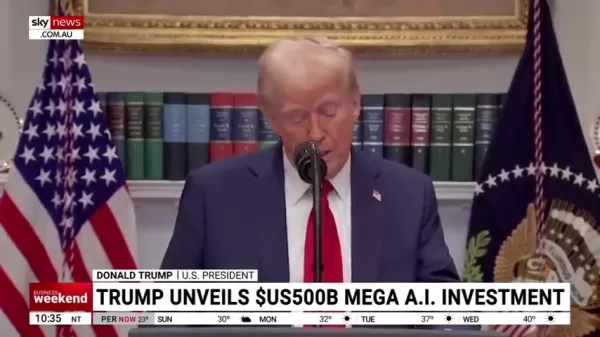
Masayoshi Son attended celebrations for Trump's electoral success and committed investment to help achieve the $200 billion target.
These entities contribute distinct and synergistic capabilities, forming a formidable consortium poised to make substantial advances in AI infrastructure and development.
Elon Musk's Skepticism: A Critical Perspective
Not all observers are fully confident in this grand proposal. Elon Musk, the CEO of Tesla and SpaceX and a co-founder of OpenAI, expressed reservations about the initiative, especially concerning its financing.
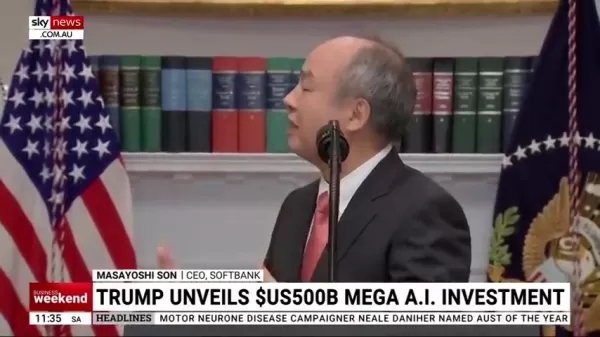
Musk posted on social media, 'They don't actually have the money,' adding in a subsequent post, 'SoftBank has well under $10B secured. I have that on good authority.'
Musk's apprehensions bring up legitimate issues about the practicality of amassing such an enormous sum. Securing $500 billion demands a wide alliance of investors and a convincing rationale for returns. His skepticism underscores the execution hurdles of a project of this magnitude and the necessity for clear, accountable processes.
The Global Race in AI and Australia's Pivotal Choice
Global Competition: A New Industrial Revolution
The $500 billion AI investment plan emerges amidst an intense international contest for AI dominance. China, the European Union, and other nations are making considerable investments in AI research, infrastructure, and talent cultivation, with the United States asserting its intent to lead. This worldwide competition is driven by the understanding that AI holds the power to revolutionize industries, economies, and social structures.
The potential rewards are immense, and nations that do not keep pace risk being left behind. As AI becomes more deeply embedded in daily life, those who excel in the technology will secure a substantial competitive edge. For instance, military applications increasingly use AI to enhance human soldiers' capabilities and inform national defense decisions.
It is crucial to acknowledge that this technological arms race also introduces significant risks to humanity, though these may be reduced through a focus on peaceful and responsible development.
Australia's Dilemma: Import or Innovate?
Australia stands at a critical juncture. As AI redefines global dynamics, the nation must determine whether to depend on imported AI knowledge and systems or to commit to building its own independent capabilities. Australia's decision will deeply affect its future economic health, national security, and international standing.
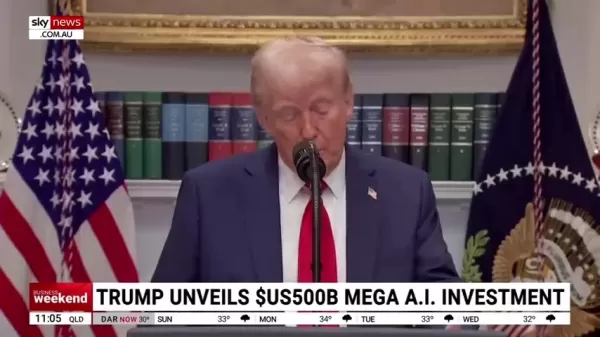
While adopting foreign technology might appear expedient, it carries inherent risks. Reliance on external AI systems could result in a loss of authority over vital data, algorithms, and infrastructure. It might also restrict Australia's capacity to customize AI solutions for its distinct requirements and circumstances.
Conversely, Australia could opt to emphasize the creation of a homegrown AI ecosystem. This path would demand significant funding for research, education, and infrastructure, alongside promoting strong collaboration among academic, industrial, and governmental sectors.
The Importance of Sovereign Capability
Establishing a sovereign AI capability is fundamental for Australia to steer its own technological destiny. This involves cultivating the knowledge, infrastructure, and ethical standards necessary to ensure AI delivers widespread benefits. Professor Anton van den Hengel emphasized that building a modern economy requires these steps. It extends beyond constructing data centers to operating Australian AI models, enhancing commercial productivity, and preserving intellectual property rights. A recent report indicated approximately 308 data centers are operational in Australia, a number growing with Microsoft's commitment of around $5 billion. Telstra has also pledged $600 million, though this investment is not specifically directed at enhancing domestic AI capacity.
A sovereign AI capability would empower Australia to design AI tools suited to its specific challenges and opportunities. It would also generate skilled employment, draw foreign investment, and establish the country as a pioneer in AI ethics and regulation. Additionally, these facilities could serve as testbeds for green energy technology by being situated near wind and solar farms.
Australia's Options: Importing vs. Innovating AI
Pros
Rapid adoption of advanced AI tools.
Lower upfront capital expenditure.
Access to global knowledge and experience.
More straightforward integration of AI systems.
Cons
Potential over-reliance on international AI providers.
Compromised control over sensitive information.
Reduced flexibility for customizing AI applications.
Danger of becoming dependent on specific vendors.
Diminished innovation potential over time.
Possible security vulnerabilities and update challenges.
Frequently Asked Questions
What is the Stargate Project?
The Stargate Project is a proposed $500 billion AI infrastructure initiative, led by Donald Trump in collaboration with Oracle, OpenAI, and SoftBank, with a primary focus on development within the United States.
Who are the key players involved in Trump's AI investment plan?
Principal contributors include Oracle's Larry Ellison, OpenAI's Sam Altman, and SoftBank's Masayoshi Son.
What concerns did Elon Musk raise about the AI investment plan?
Elon Musk cast doubt on the plan's financial viability, specifically questioning the level of funding that SoftBank has reportedly secured.
What are the potential benefits of building a sovereign AI capability for Australia?
It fosters national control over technology, enables bespoke AI solutions, creates high-value jobs, attracts investment, and promotes leadership in AI ethics and oversight.
Why is local business ownership so important?
It helps the government establish a more resilient economy. It grants companies greater autonomy over their technological assets. In the age of cloud computing, maintaining local business ownership is critical for retaining control and competitive advantage.
Related Questions
What is the significance of AI investment in the global technology race?
AI investment is a decisive element in the worldwide technology competition, influencing which nations and corporations will pioneer AI advancement, application, and regulation, thereby molding future economic and social structures. The energy demands of advanced AI systems are now comparable to those of small countries, a concern amplified by climate change and the environmental footprint of power usage. Proposals include situating data centers adjacent to renewable energy sources like wind and solar farms. Generating power locally can reduce transmission needs, with the resulting computing power potentially being exported. It is essential to recognize areas where we face competitive and innovative pressures, such as in transportation and digital marketing.
Related article
 Former OpenAI Researcher Barrett Zoph Returns to Google to Support Gemini Development
Barret Zoph, who previously abruptly left and joined OpenAI due to a disagreement with Thinking Machines Lab CEO Miriam Mularati, has once again changed employers. Alphabet's Google announced that Zoph will return as Vice President of Research, bring
How Recursive Intelligence Raised $335M at $4B Valuation in 4 Months
The co-founders of startup Ricursive Intelligence seemed destined to be co-founders.Anna Goldie, CEO, and Azalia Mirhoseini, CTO, are so well-known in the AI community that they were among those AI engineers who “got those weird emails from Zuckerber
AI race won’t wait, nor will this TechCrunch Disrupt 25% discount
Every founder building in AI right now is asking the same question: Are we moving fast enough, and effectively enough? TechCrunch Disrupt 2026 puts you in the same room as the people wrestling with that existential question at the highest levels. Fro
Related Special Topic Recommendations
Design & Art
Former OpenAI Researcher Barrett Zoph Returns to Google to Support Gemini Development
Barret Zoph, who previously abruptly left and joined OpenAI due to a disagreement with Thinking Machines Lab CEO Miriam Mularati, has once again changed employers. Alphabet's Google announced that Zoph will return as Vice President of Research, bring
How Recursive Intelligence Raised $335M at $4B Valuation in 4 Months
The co-founders of startup Ricursive Intelligence seemed destined to be co-founders.Anna Goldie, CEO, and Azalia Mirhoseini, CTO, are so well-known in the AI community that they were among those AI engineers who “got those weird emails from Zuckerber
AI race won’t wait, nor will this TechCrunch Disrupt 25% discount
Every founder building in AI right now is asking the same question: Are we moving fast enough, and effectively enough? TechCrunch Disrupt 2026 puts you in the same room as the people wrestling with that existential question at the highest levels. Fro
Related Special Topic Recommendations
Design & Art
 Top AI Illustration Tools: Create Editorial Scenes and Cover Art Faster
2026 Latest Top-rated AI Illustration Tools: Our curated list features the best powerfully designed tools for creating stunning editorial scenes and eye-catching cover art quickly. Each option has gone through rigorous real-world tests, offering a free vs paid comparison to help you find the perfect match for your workflow. Try these must-try solutions today to unlock your AI edge and boost your creative productivity. Explore now at XIX.AI.
 10 tools
 xix.ai
Education and Learning
Top AI Tutors for Exam Prep: Practice Math, Science, and English
xix.ai
Education and Learning
Top AI Tutors for Exam Prep: Practice Math, Science, and English
2026 Latest Top-Rated Best AI Tutors for Exam Prep are here on XIX.AI! Our curated list features powerful game-changing tools that offer free vs paid comparison, real-world tests, and weekly updated rankings. They help boost your writing efficiency, simplify complex topic learning, and unlock your academic potential. Explore now to Discover your perfect exam prep tool and Start creating today to Unlock your AI edge!
10 tools
xix.ai
Finance
AI Budget Planning Tools for Personal Money Management
2026 Latest Best Top-Rated AI Budget Planning Tools for Personal Money Management are here on XIX.AI! This curated collection features powerful, game-changing solutions that help you conduct real-world tests, understand spending habits, and create personalized plans to boost productivity. Enjoy a free vs paid comparison along with detailed rankings. Must-try tools designed to simplify money management and unlock your AI edge. Explore now!
11 tools
xix.ai
Health & Wellness
AI Sleep Tracking Assistants: Improve Recovery with Better Bedtime Habits
2026 Latest Best Top-Rated AI Sleep Tracking Assistants curated for ultimate recovery. This fully updated weekly guide features powerful tools that deliver real-world tests, free vs paid comparison, and detailed rankings to help you find the must-try solution that boosts sleep quality and supports better bedtime habits. Explore now at XIX.AI to Unlock your AI edge.
10 tools
xix.ai
Data Analysis
AI SQL Copilots for Product and Revenue Analytics
2026 Latest Best Top-Rated AI SQL Copilots for Product and Revenue Analytics! XIX.AI has curated a powerful, game-changing collection of must-try tools that undergo real-world tests through weekly updated rankings. These tools help users boost productivity significantly by accelerating data analysis, streamlining complex queries, and generating accurate insights to drive smarter business decisions. Explore now to Discover your perfect tool for unlocking your AI edge!
14 tools
xix.ai
Education and Learning
Best AI Homework Helpers That Teach: Learn Concepts, Not Just Answers
2026 Latest Best Top-Rated AI Homework Helpers That Teach Core Concepts Not Just Answers Powerful Tools for Students Must-Try Curated List Weekly Updated Free vs Paid Comparison Real-World Tests Accurate Rankings to Help You Unlock Your Full Learning Potential Explore now to Discover your perfect tool for smarter studying.
10 tools
xix.ai

 Comments (2)
0/500
Comments (2)
0/500
![AlbertHernández]()
Oh great, another billionaire vanity project. 500 billion? That's like the GDP of a small country. Wonder if they'll actually regulate it or just let the tech bros run wild 🚀🤔
![AlbertMartínez]()
$500B for AI? As a small business owner, I'm torn—excited for innovation but worried big tech will swallow all the benefits. Can we ensure some funding reaches local entrepreneurs too? 🤔
The artificial intelligence revolution is no longer a distant vision but a tangible force shaping our world. As countries and technology leaders compete for supremacy, massive investments are fueling rapid AI development and implementation. Among the most ambitious proposals is the unveiling of a $500 billion mega-investment plan for AI, championed by Donald Trump, designed to strengthen America's AI infrastructure and accelerate innovation. This article explores the plan's specifics, its major contributors, the varied reactions it has provoked, and its potential consequences for the international AI arena. We will examine the crucial roles of corporations like OpenAI, Oracle, and SoftBank, and assess the possible effects on nations such as Australia.
Key Points
Trump announces a $500 billion mega-investment strategy for AI.
Key figures involved are Oracle founder Larry Ellison, SoftBank CEO Masayoshi Son, and OpenAI CEO Sam Altman.
Elon Musk voices doubts regarding the plan's financial backing.
The initiative prioritizes establishing new AI infrastructure within the United States.
Australia must choose between adopting foreign AI expertise or fostering domestic development.
The announcement has ignited debate about an AI 'golden age' and its economic influence.
The project highlights the importance of Australia cultivating its own Sovereign AI capabilities.
Trump's $500 Billion AI Investment Plan: A Deep Dive
The Stargate Project: A New Era for AI
Donald Trump, joined by influential tech leaders including Oracle's Larry Ellison, SoftBank's Masayoshi Son, and OpenAI's Sam Altman, has introduced a colossal $500 billion AI investment initiative. This 'Stargate' project entails the formation of a new entity dedicated to constructing sophisticated AI infrastructure over the next four years, largely within the US. The plan involves an immediate allocation of $100 billion, underscoring the project's scale and immediacy. The unprecedented size of this investment is intended to catalyze a new chapter in AI, positioning the United States as the global frontrunner.
This endeavor is more than just substantial funding; it is a calculated effort to maintain America's leadership in AI innovation. By concentrating on foundational infrastructure, the project seeks to create a solid platform for AI research and development, draw top talent, and stimulate a dynamic ecosystem. The overarching objective is to establish a technological foundation that secures a dominant position for the United States in this rapidly advancing field.
Key Players: Oracle, OpenAI, and SoftBank
A number of pivotal organizations are driving this ambitious project:
- Oracle: Founded by Larry Ellison, Oracle is a technology leader in database software and cloud solutions. Its proficiency in handling vast datasets is vital for developing the required AI infrastructure.
- OpenAI: Under CEO Sam Altman, OpenAI is a premier AI research organization known for creating advanced models like ChatGPT. Its participation guarantees that the project incorporates state-of-the-art AI research.
- SoftBank: Led by CEO Masayoshi Son, SoftBank is a major Japanese investment firm with extensive holdings in global technology ventures. SoftBank contributes significant financial support and strategic acumen.
Masayoshi Son attended celebrations for Trump's electoral success and committed investment to help achieve the $200 billion target.
These entities contribute distinct and synergistic capabilities, forming a formidable consortium poised to make substantial advances in AI infrastructure and development.
Elon Musk's Skepticism: A Critical Perspective
Not all observers are fully confident in this grand proposal. Elon Musk, the CEO of Tesla and SpaceX and a co-founder of OpenAI, expressed reservations about the initiative, especially concerning its financing.
Musk posted on social media, 'They don't actually have the money,' adding in a subsequent post, 'SoftBank has well under $10B secured. I have that on good authority.'
Musk's apprehensions bring up legitimate issues about the practicality of amassing such an enormous sum. Securing $500 billion demands a wide alliance of investors and a convincing rationale for returns. His skepticism underscores the execution hurdles of a project of this magnitude and the necessity for clear, accountable processes.
The Global Race in AI and Australia's Pivotal Choice
Global Competition: A New Industrial Revolution
The $500 billion AI investment plan emerges amidst an intense international contest for AI dominance. China, the European Union, and other nations are making considerable investments in AI research, infrastructure, and talent cultivation, with the United States asserting its intent to lead. This worldwide competition is driven by the understanding that AI holds the power to revolutionize industries, economies, and social structures.
The potential rewards are immense, and nations that do not keep pace risk being left behind. As AI becomes more deeply embedded in daily life, those who excel in the technology will secure a substantial competitive edge. For instance, military applications increasingly use AI to enhance human soldiers' capabilities and inform national defense decisions.
It is crucial to acknowledge that this technological arms race also introduces significant risks to humanity, though these may be reduced through a focus on peaceful and responsible development.
Australia's Dilemma: Import or Innovate?
Australia stands at a critical juncture. As AI redefines global dynamics, the nation must determine whether to depend on imported AI knowledge and systems or to commit to building its own independent capabilities. Australia's decision will deeply affect its future economic health, national security, and international standing.
While adopting foreign technology might appear expedient, it carries inherent risks. Reliance on external AI systems could result in a loss of authority over vital data, algorithms, and infrastructure. It might also restrict Australia's capacity to customize AI solutions for its distinct requirements and circumstances.
Conversely, Australia could opt to emphasize the creation of a homegrown AI ecosystem. This path would demand significant funding for research, education, and infrastructure, alongside promoting strong collaboration among academic, industrial, and governmental sectors.
The Importance of Sovereign Capability
Establishing a sovereign AI capability is fundamental for Australia to steer its own technological destiny. This involves cultivating the knowledge, infrastructure, and ethical standards necessary to ensure AI delivers widespread benefits. Professor Anton van den Hengel emphasized that building a modern economy requires these steps. It extends beyond constructing data centers to operating Australian AI models, enhancing commercial productivity, and preserving intellectual property rights. A recent report indicated approximately 308 data centers are operational in Australia, a number growing with Microsoft's commitment of around $5 billion. Telstra has also pledged $600 million, though this investment is not specifically directed at enhancing domestic AI capacity.
A sovereign AI capability would empower Australia to design AI tools suited to its specific challenges and opportunities. It would also generate skilled employment, draw foreign investment, and establish the country as a pioneer in AI ethics and regulation. Additionally, these facilities could serve as testbeds for green energy technology by being situated near wind and solar farms.
Australia's Options: Importing vs. Innovating AI
Pros
Rapid adoption of advanced AI tools.
Lower upfront capital expenditure.
Access to global knowledge and experience.
More straightforward integration of AI systems.
Cons
Potential over-reliance on international AI providers.
Compromised control over sensitive information.
Reduced flexibility for customizing AI applications.
Danger of becoming dependent on specific vendors.
Diminished innovation potential over time.
Possible security vulnerabilities and update challenges.
Frequently Asked Questions
What is the Stargate Project?
The Stargate Project is a proposed $500 billion AI infrastructure initiative, led by Donald Trump in collaboration with Oracle, OpenAI, and SoftBank, with a primary focus on development within the United States.
Who are the key players involved in Trump's AI investment plan?
Principal contributors include Oracle's Larry Ellison, OpenAI's Sam Altman, and SoftBank's Masayoshi Son.
What concerns did Elon Musk raise about the AI investment plan?
Elon Musk cast doubt on the plan's financial viability, specifically questioning the level of funding that SoftBank has reportedly secured.
What are the potential benefits of building a sovereign AI capability for Australia?
It fosters national control over technology, enables bespoke AI solutions, creates high-value jobs, attracts investment, and promotes leadership in AI ethics and oversight.
Why is local business ownership so important?
It helps the government establish a more resilient economy. It grants companies greater autonomy over their technological assets. In the age of cloud computing, maintaining local business ownership is critical for retaining control and competitive advantage.
Related Questions
What is the significance of AI investment in the global technology race?
AI investment is a decisive element in the worldwide technology competition, influencing which nations and corporations will pioneer AI advancement, application, and regulation, thereby molding future economic and social structures. The energy demands of advanced AI systems are now comparable to those of small countries, a concern amplified by climate change and the environmental footprint of power usage. Proposals include situating data centers adjacent to renewable energy sources like wind and solar farms. Generating power locally can reduce transmission needs, with the resulting computing power potentially being exported. It is essential to recognize areas where we face competitive and innovative pressures, such as in transportation and digital marketing.








 Former OpenAI Researcher Barrett Zoph Returns to Google to Support Gemini Development
Barret Zoph, who previously abruptly left and joined OpenAI due to a disagreement with Thinking Machines Lab CEO Miriam Mularati, has once again changed employers. Alphabet's Google announced that Zoph will return as Vice President of Research, bring
Former OpenAI Researcher Barrett Zoph Returns to Google to Support Gemini Development
Barret Zoph, who previously abruptly left and joined OpenAI due to a disagreement with Thinking Machines Lab CEO Miriam Mularati, has once again changed employers. Alphabet's Google announced that Zoph will return as Vice President of Research, bring
 How Recursive Intelligence Raised $335M at $4B Valuation in 4 Months
The co-founders of startup Ricursive Intelligence seemed destined to be co-founders.Anna Goldie, CEO, and Azalia Mirhoseini, CTO, are so well-known in the AI community that they were among those AI engineers who “got those weird emails from Zuckerber
How Recursive Intelligence Raised $335M at $4B Valuation in 4 Months
The co-founders of startup Ricursive Intelligence seemed destined to be co-founders.Anna Goldie, CEO, and Azalia Mirhoseini, CTO, are so well-known in the AI community that they were among those AI engineers who “got those weird emails from Zuckerber
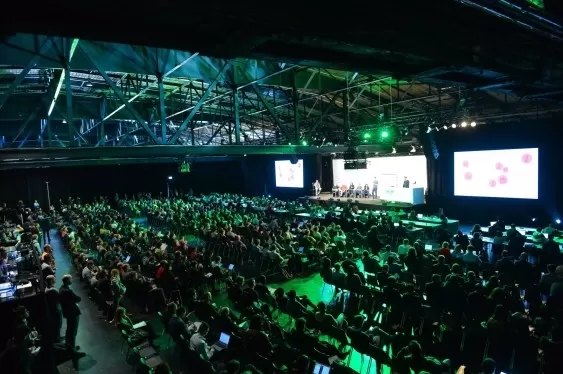 AI race won’t wait, nor will this TechCrunch Disrupt 25% discount
Every founder building in AI right now is asking the same question: Are we moving fast enough, and effectively enough? TechCrunch Disrupt 2026 puts you in the same room as the people wrestling with that existential question at the highest levels. Fro
AI race won’t wait, nor will this TechCrunch Disrupt 25% discount
Every founder building in AI right now is asking the same question: Are we moving fast enough, and effectively enough? TechCrunch Disrupt 2026 puts you in the same room as the people wrestling with that existential question at the highest levels. Fro

2026 Latest Top-rated AI Illustration Tools: Our curated list features the best powerfully designed tools for creating stunning editorial scenes and eye-catching cover art quickly. Each option has gone through rigorous real-world tests, offering a free vs paid comparison to help you find the perfect match for your workflow. Try these must-try solutions today to unlock your AI edge and boost your creative productivity. Explore now at XIX.AI.
10 tools
xix.ai

2026 Latest Top-Rated Best AI Tutors for Exam Prep are here on XIX.AI! Our curated list features powerful game-changing tools that offer free vs paid comparison, real-world tests, and weekly updated rankings. They help boost your writing efficiency, simplify complex topic learning, and unlock your academic potential. Explore now to Discover your perfect exam prep tool and Start creating today to Unlock your AI edge!
10 tools
xix.ai

2026 Latest Best Top-Rated AI Budget Planning Tools for Personal Money Management are here on XIX.AI! This curated collection features powerful, game-changing solutions that help you conduct real-world tests, understand spending habits, and create personalized plans to boost productivity. Enjoy a free vs paid comparison along with detailed rankings. Must-try tools designed to simplify money management and unlock your AI edge. Explore now!
11 tools
xix.ai

2026 Latest Best Top-Rated AI Sleep Tracking Assistants curated for ultimate recovery. This fully updated weekly guide features powerful tools that deliver real-world tests, free vs paid comparison, and detailed rankings to help you find the must-try solution that boosts sleep quality and supports better bedtime habits. Explore now at XIX.AI to Unlock your AI edge.
10 tools
xix.ai

2026 Latest Best Top-Rated AI SQL Copilots for Product and Revenue Analytics! XIX.AI has curated a powerful, game-changing collection of must-try tools that undergo real-world tests through weekly updated rankings. These tools help users boost productivity significantly by accelerating data analysis, streamlining complex queries, and generating accurate insights to drive smarter business decisions. Explore now to Discover your perfect tool for unlocking your AI edge!
14 tools
xix.ai

2026 Latest Best Top-Rated AI Homework Helpers That Teach Core Concepts Not Just Answers Powerful Tools for Students Must-Try Curated List Weekly Updated Free vs Paid Comparison Real-World Tests Accurate Rankings to Help You Unlock Your Full Learning Potential Explore now to Discover your perfect tool for smarter studying.
10 tools
xix.ai

Oh great, another billionaire vanity project. 500 billion? That's like the GDP of a small country. Wonder if they'll actually regulate it or just let the tech bros run wild 🚀🤔
$500B for AI? As a small business owner, I'm torn—excited for innovation but worried big tech will swallow all the benefits. Can we ensure some funding reaches local entrepreneurs too? 🤔












