


 Home
HomeUnveiling the Impact of AI on Hair Loss Treatment
Artificial intelligence is increasingly hailed as a transformative force across numerous sectors. However, its application in fields like hair loss research demands a more critical look. While AI offers exciting potential, it's vital to distinguish genuine progress from marketing hype and understand the risks consumers might face. This article offers a critical evaluation of AI's current role in addressing hair loss and provides practical guidance.
Key Points
The role of AI in hair loss research and treatment is currently overstated.
Marketing frequently exaggerates AI's actual capabilities in hair restoration.
Consumers may make poor purchasing choices based on AI-generated information.
Ethical concerns and algorithmic bias present significant challenges.
Applying critical thinking is essential when assessing AI-based hair loss solutions.
The AI Revolution: A Critical Perspective
The Promise of AI in Hair Loss Treatments
There's no doubt we are in the midst of an AI revolution

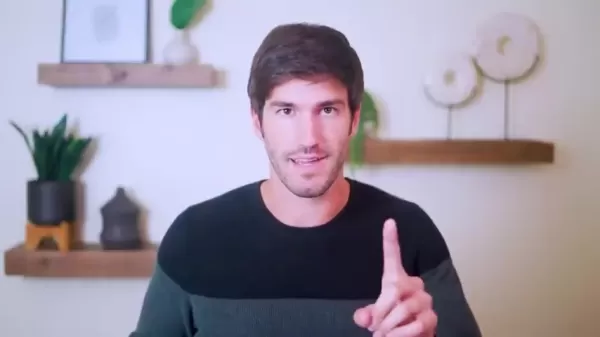
. Investors, media commentators, and even some scientists promote AI as the key to a better future. Large Language Models (LLMs) are anticipated to speed up medical research and even help reverse diseases. In the context of hair loss, it's easy to be swept up by this enthusiasm. This technological wave holds the potential to accelerate research, uncover more effective treatments, and create personalized plans for individuals dealing with hair loss. AI algorithms can process massive datasets containing genetic information, lifestyle factors, and treatment results to identify patterns and predict how well specific interventions might work for different people.
The primary advantage is personalization. Envision a future where you receive hair loss recommendations tailored to your unique biology. AI could assess your scalp health, hair follicle condition, and even forecast your response to various treatments. This represents a significant departure from the current dominant one-size-fits-all model.However, this promise of AI has not yet materialized for the average person experiencing hair loss. We must scrutinize what AI is actually doing and where its information comes from. Failure to do so can lead to consumer harm
.
AI Summaries: What Lies Beneath the Surface?
Despite the glamour and hype surrounding AI, particularly in hair loss research, the technology remains immature in practical use. While AI has made significant advances in data analysis, in my specialization of hair loss research, I have only observed it causing consumer harm. It's critical to recognize that current AI models have fundamental weaknesses. Until these are addressed, they may cause more problems than they solve. I will demonstrate this in the following section.
Presently, the focus is on leveraging AI for profit generation, often to the detriment of the consumer through biased data and misinformation. This has created a consumer marketplace that is inefficient and ineffective. Consequently, patients are wasting their time, money, and hair on treatments that don't work, all influenced by AI.
Google's AI Overview - How Reliable Is It?
As AI hype intensified around 2021, I was initially optimistic that Large Language Models could enable faster and more accurate information sharing
. These models had the potential to serve as tools for improved diagnosis and to help avoid poor product choices. Unfortunately, reality has proven otherwise. The models are being leveraged by marketers, and within the hair loss industry, this is leading to misguided purchasing decisions. This stems from a core problem in how these models function. Without resolving this issue, the situation is likely to deteriorate in the coming years.
Google's AI summary tool, Gemini, often fails to deliver sound, practical advice. While surface-level results may appear satisfactory, it's clear that AI is vulnerable to manipulation and is not necessarily a reliable source for individuals battling hair loss. I will provide a recent example to illustrate why education should always take precedence over product purchasing.
Exposing AI's Flaws: A Minoxidil Case Study
The Search for Evidence: Where is 7.5% Minoxidil Most Effective?
A community member recently inquired about the optimal concentration for topical minoxidil. For context, topical minoxidil is an FDA-approved, over-the-counter drug available in 2% and 5% strengths to treat pattern hair loss
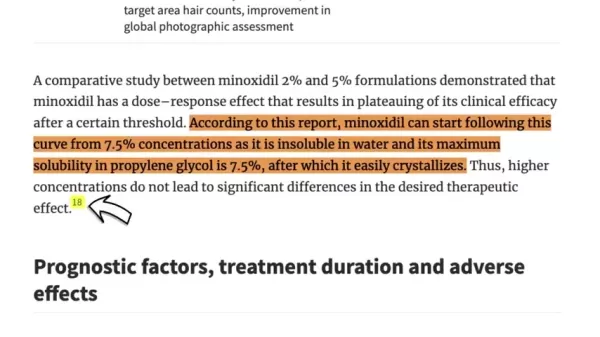
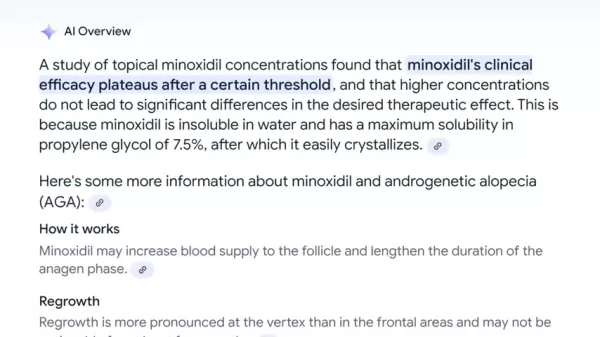
. However, some telehealth brands market prescription formulas with higher concentrations.To gather information, I searched for "7.5% minoxidil" on Google, and Gemini provided this response:
"A study on topical minoxidil concentrations found that its clinical effectiveness plateaus beyond a certain point, and higher concentrations do not yield significantly better therapeutic results.This is because minoxidil has limited solubility in water and reaches its maximum solubility in propylene glycol at 7.5%, beyond which it tends to crystallize."
This statement raised suspicions. I am aware of studies from nearly three decades ago demonstrating that minoxidil can crystallize at concentrations as low as 2%, depending on the product formulation. Furthermore, I was unfamiliar with the 2022 study Gemini referenced. This led me to question the source of the AI's information.
Consequently, I examined the references cited by Gemini and found a study titled: "Does topical minoxidil at concentrations higher than 5% provide additional clinical benefit?" The journal was reputable and the authors were well-known. However, upon closer inspection, the linked document was not a peer-reviewed study—it was an article on a commercial website!
Essentially, what did Gemini cite? An article from a website affiliated with a company that profits from selling high-strength topical minoxidil. This source is not peer-reviewed and is therefore unreliable. The inclusion of such a citation is highly unusual, as peer-reviewed articles typically do not cite non-peer-reviewed sources. How did this error occur?
Digging Deeper: The Implications for AI
After thorough investigation, the claims made by minoxidil affiliates, which were then cited in the literature review summarized by Google's AI Gemini, lack substantiation
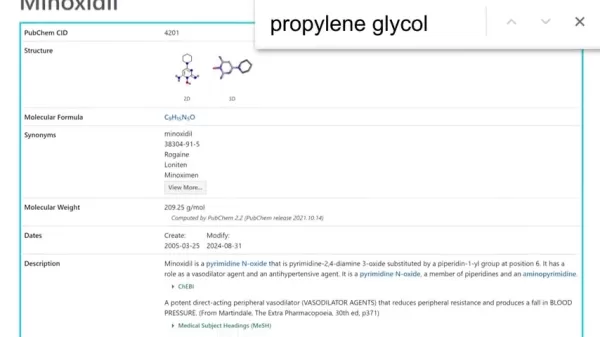
. It appears to be a statement based on fabricated data. Yet, this unverified claim has been repeated as fact on platforms like Reddit, online hair loss forums, and across the internet.
This situation exposes an exploitable weakness in Google's AI. The algorithm tends to trust data from large, "authoritative" websites. Marketers are aware of this and may attempt to manipulate content on these platforms. This creates an environment where misinformation can thrive.
As Charlie Munger famously said, "Show me the incentive and I will show you the outcome." The incentives here are clear: marketers aim to generate revenue. Content on their websites is often designed to promote product sales, not necessarily to provide accurate or beneficial information. The data feeding these AI systems is input by people, not computers. In this scenario, my concern is less with the computers and more with the people providing the data.
In summary, it is crucial to understand how these AI algorithms operate. Stay informed to protect your interests.
Tips for Researching AI-Driven Information
A Proposed AI Solution: Retraining Models to Halt Inaccurate and Biased Data
These are just some of the current problems with information presented by AI systems. What can be done to address this?
I propose retraining AI models to avoid relying on single citations and to evaluate multiple websites for trustworthiness. Here's how this could be applied in the hair loss and pharmaceutical domain:
- When AI extracts information from a specific peer-reviewed paper, it should generate a summary comparing how different websites interpret the source data.
- It should map the variations in interpretation across these different platforms.
- The AI could assign a sentiment score to analyze whether an article is biased towards promoting a specific product for financial gain.
This approach could ultimately lead to more trustworthy and well-grounded algorithms.
Affordable Hair Loss Product Pricing
Considering Cost-Effective Options like Minoxidil and Microneedling
Be wary of dermatologists who heavily promote PRP and stem cell therapies while overlooking many effective and affordable at-home treatments
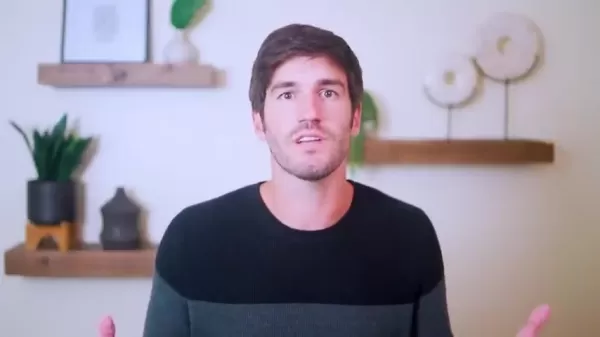
. A package of PRP injections can cost $3,000 or more, whereas proven treatments like minoxidil and microneedling devices are available for under $20. The key is to be an informed consumer and conduct thorough research.
Ethical Pitfalls of Fear Mongering
Pros
Potential side effects of drugs, such as DHT reduction, are not always fully communicated.
Side effects can be serious or undesirable (e.g., reduced libido).
Alternative treatments exist but are frequently not presented as options.
Cons
Supplement companies may engage in fear-based marketing by exaggerating the side effects of pharmaceutical drugs.
Alternative treatments can be more expensive and potentially less effective.
The severity of side effects might be downplayed, leading to an unfair comparison.
Frequently Asked Questions
What is Perfect Hair Health?
My name is Rob English, and I am a research specialist focused on hair loss disorders. I serve on the editorial boards of dermatology journals and founded Perfect Hair Health.Our website serves as a hub for consumer advocacy and education on all matters related to hair. If you are dealing with hair loss, feeling confused about where to begin or what steps to take, or overwhelmed by treatment options, this site is designed to help you!
What is a core principle of Perfect Hair Health?
Our site operates on a fundamental tenet: prioritize education over product purchases. Some marketers may present slanted information to drive sales. At Perfect Hair Health, our primary goal is to provide accurate information and consumer education, not to sell you products.
What is Perfect Hair Health's stance on PRP and Stem Cell treatments?
Dermatologists often promote PRP and stem cell injections. If you are considering these treatments, that's your choice—but it's important to ask critical questions beforehand. For instance, are there alternative treatments that could be equally effective but far less expensive? Consider whether the high cost of the procedure is truly justified.
What is the problem with fearmongering about side effects?
The side effects of pharmaceutical drugs should always be taken seriously. However, some companies, health websites, and related groups engage in fear-based tactics. They do this to steer you towards purchasing supplements that claim to be free of such side effects. Always ask tough questions and conduct your own research before making any financial decisions.
Related Questions
How Can I Avoid Scams and Deceptive Marketing in the Hair Loss Industry?
Navigating hair loss treatments requires diligent research. Marketers may push unproven solutions, overstate benefits, or minimize potential risks. To protect yourself, prioritize information from peer-reviewed scientific studies over personal anecdotes. Seek out products recommended by reputable dermatologists or hair loss specialists, and be cautious of sensational testimonials or before-and-after photos that seem unrealistic. Consulting with a qualified healthcare professional is essential for developing a treatment plan suited to your specific needs. Always employ critical thinking and conduct comprehensive research before investing in any hair loss product or procedure. This empowers you to make well-informed decisions and avoid common pitfalls set by deceptive marketing.
Related article
 Meta Removes AI Photo Editing Feature Following User Backlash
Meta, the social media giant, is once again embroiled in a public debate regarding the delicate balance between artificial intelligence and user privacy. According to TechCrunch, Meta’s Superintelligence Labs introduced a new AI image generator, Muse
DeepMind CEO Hassabis: I sleep six hours a day, usually feel energetic around 1 a.m.
Fortune recently featured an interview with Demis Hassabis, CEO of Google DeepMind, revealing his unconventional approach to rest and productivity. Hassabis disclosed that he sleeps very little, structuring his waking hours into two distinct work blo
OpenAI, Anthropic Vie for Market Share Despite Revenue Shortfalls
Despite recent reports suggesting OpenAI missed revenue targets, creating pressure on tech stocks this Tuesday, private AI lab investors remain resilient. Seasoned backers have confirmed they will not reduce investment despite negative media coverage
Related Special Topic Recommendations
Video creation
Meta Removes AI Photo Editing Feature Following User Backlash
Meta, the social media giant, is once again embroiled in a public debate regarding the delicate balance between artificial intelligence and user privacy. According to TechCrunch, Meta’s Superintelligence Labs introduced a new AI image generator, Muse
DeepMind CEO Hassabis: I sleep six hours a day, usually feel energetic around 1 a.m.
Fortune recently featured an interview with Demis Hassabis, CEO of Google DeepMind, revealing his unconventional approach to rest and productivity. Hassabis disclosed that he sleeps very little, structuring his waking hours into two distinct work blo
OpenAI, Anthropic Vie for Market Share Despite Revenue Shortfalls
Despite recent reports suggesting OpenAI missed revenue targets, creating pressure on tech stocks this Tuesday, private AI lab investors remain resilient. Seasoned backers have confirmed they will not reduce investment despite negative media coverage
Related Special Topic Recommendations
Video creation
 AI Short-Form Video Hook Generators for Reels, Shorts, and Product Launch Campaigns
2026 Latest Best AI Short-Form Video Hook Generators for Reels Shorts and Product Launch Campaigns! XIX.AI curates top-rated powerful game-changing tools that deliver must-try results through real-world tests. This weekly updated page offers free vs paid comparison rankings to help you find the perfect solution for boosting content creativity and productivity. Explore now to Unlock your AI edge!
 11 tools
 xix.ai
writing
AI Article Outline Tools for Long Form Writing
xix.ai
writing
AI Article Outline Tools for Long Form Writing
2026 Latest Best Top-Rated AI Article Outline Tools for Long Form Writing! This curated collection features powerful, game-changing tools that deliver accurate, structured outlines with real-world tests to boost writing efficiency significantly. XIX.AI is part of this elite selection. Get a free vs paid comparison to help you choose the perfect tool. Explore now and Unlock your AI edge!
9 tools
xix.ai
chatbot
Best AI Roleplay Chat Apps for Language Practice, Interview Prep, and Daily Fluency
2026 Latest Best Top-rated AI Roleplay Chat Apps for Language Practice, Interview Prep, and Daily Fluency! XIX.AI curates a powerful game-changing collection that offers free vs paid comparison, real-world tests, and updated rankings weekly. These must-try tools help you boost writing skills, overcome fluency challenges, and improve communication efficiency across all daily scenarios. Explore now to discover your perfect tool for language growth!
10 tools
xix.ai
Music composition
AI Stem Separation Tools for Remix Production, Sampling Prep, and Karaoke Masters
2026 Latest Best Top-rated AI Stem Separation Tools Curated for Remix Production, Sampling Prep, and Karaoke Masters. These powerful game-changing tools offer real-world tests to deliver precise audio isolation, boosting productivity significantly. XIX.AI provides a weekly updated free vs paid comparison guide to help you find the must-try solution that suits your needs. Explore now to unlock your AI edge.
8 tools
xix.ai
Data Analysis
AI SQL Copilots for Revenue Dashboards, Funnel Analysis, and Product Metrics
2026 Latest Best AI SQL Copilots Ranked Top-Rated! XIX.AI curates a powerful game-changing collection for weekly updated real-world tests. These must-try tools help you generate accurate revenue dashboards, analyze sales funnels, and track product metrics swiftly, boosting productivity massively. Explore now to Discover your perfect tool for data-driven decision making! 238 characters
9 tools
xix.ai
Music composition
Best AI Melody Writing Tools for Song Drafts
2026 Latest Best Top-Rated AI Melody Writing Tools for Song Drafts! XIX.AI has curated a highly powerful game-changing collection that goes through rigorous real-world tests to deliver the best writing experience. You can find detailed free vs paid comparisons, accurate rankings, and must-try options designed to help you create stunning song drafts effortlessly and boost your creative productivity significantly. Explore now to discover your perfect tool!
8 tools
xix.ai

 Comments (2)
0/500
Comments (2)
0/500
![PaulThomas]()
Удивительно видеть применение AI в таких неожиданных областях, как лечение волос. В статье правильно поднимается вопрос о необходимости критической оценки: все эти обещания «революции» иногда оказываются просто шумихой. Лично у меня вызывает опасение коммерциализация — не превратится ли это просто в дорогую игрушку для клиник премиум-класса? Нужны реальные, доступные решения, а не просто модные слова. 🤔
![JoeLewis]()
Hat jemand Erfahrung mit KI-basierten Haarbehandlungen? Diese Artikel machen es so spannend, aber ich bin skeptisch. Die meisten Apps scheinen nur Geld zu machen, indem sie falsche Hoffnungen geben. Es wäre schön, wenn die Forschung sich mehr auf die tatsächlichen Ursachen konzentrieren würde, statt nur auf Werbung zu setzen. 🧐
Artificial intelligence is increasingly hailed as a transformative force across numerous sectors. However, its application in fields like hair loss research demands a more critical look. While AI offers exciting potential, it's vital to distinguish genuine progress from marketing hype and understand the risks consumers might face. This article offers a critical evaluation of AI's current role in addressing hair loss and provides practical guidance.
Key Points
The role of AI in hair loss research and treatment is currently overstated.
Marketing frequently exaggerates AI's actual capabilities in hair restoration.
Consumers may make poor purchasing choices based on AI-generated information.
Ethical concerns and algorithmic bias present significant challenges.
Applying critical thinking is essential when assessing AI-based hair loss solutions.
The AI Revolution: A Critical Perspective
The Promise of AI in Hair Loss Treatments
There's no doubt we are in the midst of an AI revolution
. Investors, media commentators, and even some scientists promote AI as the key to a better future. Large Language Models (LLMs) are anticipated to speed up medical research and even help reverse diseases. In the context of hair loss, it's easy to be swept up by this enthusiasm. This technological wave holds the potential to accelerate research, uncover more effective treatments, and create personalized plans for individuals dealing with hair loss. AI algorithms can process massive datasets containing genetic information, lifestyle factors, and treatment results to identify patterns and predict how well specific interventions might work for different people.
The primary advantage is personalization. Envision a future where you receive hair loss recommendations tailored to your unique biology. AI could assess your scalp health, hair follicle condition, and even forecast your response to various treatments. This represents a significant departure from the current dominant one-size-fits-all model.However, this promise of AI has not yet materialized for the average person experiencing hair loss. We must scrutinize what AI is actually doing and where its information comes from. Failure to do so can lead to consumer harm
.
AI Summaries: What Lies Beneath the Surface?
Despite the glamour and hype surrounding AI, particularly in hair loss research, the technology remains immature in practical use. While AI has made significant advances in data analysis, in my specialization of hair loss research, I have only observed it causing consumer harm. It's critical to recognize that current AI models have fundamental weaknesses. Until these are addressed, they may cause more problems than they solve. I will demonstrate this in the following section.
Presently, the focus is on leveraging AI for profit generation, often to the detriment of the consumer through biased data and misinformation. This has created a consumer marketplace that is inefficient and ineffective. Consequently, patients are wasting their time, money, and hair on treatments that don't work, all influenced by AI.
Google's AI Overview - How Reliable Is It?
As AI hype intensified around 2021, I was initially optimistic that Large Language Models could enable faster and more accurate information sharing
. These models had the potential to serve as tools for improved diagnosis and to help avoid poor product choices. Unfortunately, reality has proven otherwise. The models are being leveraged by marketers, and within the hair loss industry, this is leading to misguided purchasing decisions. This stems from a core problem in how these models function. Without resolving this issue, the situation is likely to deteriorate in the coming years.
Google's AI summary tool, Gemini, often fails to deliver sound, practical advice. While surface-level results may appear satisfactory, it's clear that AI is vulnerable to manipulation and is not necessarily a reliable source for individuals battling hair loss. I will provide a recent example to illustrate why education should always take precedence over product purchasing.
Exposing AI's Flaws: A Minoxidil Case Study
The Search for Evidence: Where is 7.5% Minoxidil Most Effective?
A community member recently inquired about the optimal concentration for topical minoxidil. For context, topical minoxidil is an FDA-approved, over-the-counter drug available in 2% and 5% strengths to treat pattern hair loss
. However, some telehealth brands market prescription formulas with higher concentrations.To gather information, I searched for "7.5% minoxidil" on Google, and Gemini provided this response:
"A study on topical minoxidil concentrations found that its clinical effectiveness plateaus beyond a certain point, and higher concentrations do not yield significantly better therapeutic results.This is because minoxidil has limited solubility in water and reaches its maximum solubility in propylene glycol at 7.5%, beyond which it tends to crystallize."
This statement raised suspicions. I am aware of studies from nearly three decades ago demonstrating that minoxidil can crystallize at concentrations as low as 2%, depending on the product formulation. Furthermore, I was unfamiliar with the 2022 study Gemini referenced. This led me to question the source of the AI's information.
Consequently, I examined the references cited by Gemini and found a study titled: "Does topical minoxidil at concentrations higher than 5% provide additional clinical benefit?" The journal was reputable and the authors were well-known. However, upon closer inspection, the linked document was not a peer-reviewed study—it was an article on a commercial website!
Essentially, what did Gemini cite? An article from a website affiliated with a company that profits from selling high-strength topical minoxidil. This source is not peer-reviewed and is therefore unreliable. The inclusion of such a citation is highly unusual, as peer-reviewed articles typically do not cite non-peer-reviewed sources. How did this error occur?
Digging Deeper: The Implications for AI
After thorough investigation, the claims made by minoxidil affiliates, which were then cited in the literature review summarized by Google's AI Gemini, lack substantiation
. It appears to be a statement based on fabricated data. Yet, this unverified claim has been repeated as fact on platforms like Reddit, online hair loss forums, and across the internet.
This situation exposes an exploitable weakness in Google's AI. The algorithm tends to trust data from large, "authoritative" websites. Marketers are aware of this and may attempt to manipulate content on these platforms. This creates an environment where misinformation can thrive.
As Charlie Munger famously said, "Show me the incentive and I will show you the outcome." The incentives here are clear: marketers aim to generate revenue. Content on their websites is often designed to promote product sales, not necessarily to provide accurate or beneficial information. The data feeding these AI systems is input by people, not computers. In this scenario, my concern is less with the computers and more with the people providing the data.
In summary, it is crucial to understand how these AI algorithms operate. Stay informed to protect your interests.
Tips for Researching AI-Driven Information
A Proposed AI Solution: Retraining Models to Halt Inaccurate and Biased Data
These are just some of the current problems with information presented by AI systems. What can be done to address this?
I propose retraining AI models to avoid relying on single citations and to evaluate multiple websites for trustworthiness. Here's how this could be applied in the hair loss and pharmaceutical domain:
- When AI extracts information from a specific peer-reviewed paper, it should generate a summary comparing how different websites interpret the source data.
- It should map the variations in interpretation across these different platforms.
- The AI could assign a sentiment score to analyze whether an article is biased towards promoting a specific product for financial gain.
This approach could ultimately lead to more trustworthy and well-grounded algorithms.
Affordable Hair Loss Product Pricing
Considering Cost-Effective Options like Minoxidil and Microneedling
Be wary of dermatologists who heavily promote PRP and stem cell therapies while overlooking many effective and affordable at-home treatments
. A package of PRP injections can cost $3,000 or more, whereas proven treatments like minoxidil and microneedling devices are available for under $20. The key is to be an informed consumer and conduct thorough research.
Ethical Pitfalls of Fear Mongering
Pros
Potential side effects of drugs, such as DHT reduction, are not always fully communicated.
Side effects can be serious or undesirable (e.g., reduced libido).
Alternative treatments exist but are frequently not presented as options.
Cons
Supplement companies may engage in fear-based marketing by exaggerating the side effects of pharmaceutical drugs.
Alternative treatments can be more expensive and potentially less effective.
The severity of side effects might be downplayed, leading to an unfair comparison.
Frequently Asked Questions
What is Perfect Hair Health?
My name is Rob English, and I am a research specialist focused on hair loss disorders. I serve on the editorial boards of dermatology journals and founded Perfect Hair Health.Our website serves as a hub for consumer advocacy and education on all matters related to hair. If you are dealing with hair loss, feeling confused about where to begin or what steps to take, or overwhelmed by treatment options, this site is designed to help you!
What is a core principle of Perfect Hair Health?
Our site operates on a fundamental tenet: prioritize education over product purchases. Some marketers may present slanted information to drive sales. At Perfect Hair Health, our primary goal is to provide accurate information and consumer education, not to sell you products.
What is Perfect Hair Health's stance on PRP and Stem Cell treatments?
Dermatologists often promote PRP and stem cell injections. If you are considering these treatments, that's your choice—but it's important to ask critical questions beforehand. For instance, are there alternative treatments that could be equally effective but far less expensive? Consider whether the high cost of the procedure is truly justified.
What is the problem with fearmongering about side effects?
The side effects of pharmaceutical drugs should always be taken seriously. However, some companies, health websites, and related groups engage in fear-based tactics. They do this to steer you towards purchasing supplements that claim to be free of such side effects. Always ask tough questions and conduct your own research before making any financial decisions.
Related Questions
How Can I Avoid Scams and Deceptive Marketing in the Hair Loss Industry?
Navigating hair loss treatments requires diligent research. Marketers may push unproven solutions, overstate benefits, or minimize potential risks. To protect yourself, prioritize information from peer-reviewed scientific studies over personal anecdotes. Seek out products recommended by reputable dermatologists or hair loss specialists, and be cautious of sensational testimonials or before-and-after photos that seem unrealistic. Consulting with a qualified healthcare professional is essential for developing a treatment plan suited to your specific needs. Always employ critical thinking and conduct comprehensive research before investing in any hair loss product or procedure. This empowers you to make well-informed decisions and avoid common pitfalls set by deceptive marketing.








 Meta Removes AI Photo Editing Feature Following User Backlash
Meta, the social media giant, is once again embroiled in a public debate regarding the delicate balance between artificial intelligence and user privacy. According to TechCrunch, Meta’s Superintelligence Labs introduced a new AI image generator, Muse
Meta Removes AI Photo Editing Feature Following User Backlash
Meta, the social media giant, is once again embroiled in a public debate regarding the delicate balance between artificial intelligence and user privacy. According to TechCrunch, Meta’s Superintelligence Labs introduced a new AI image generator, Muse
 DeepMind CEO Hassabis: I sleep six hours a day, usually feel energetic around 1 a.m.
Fortune recently featured an interview with Demis Hassabis, CEO of Google DeepMind, revealing his unconventional approach to rest and productivity. Hassabis disclosed that he sleeps very little, structuring his waking hours into two distinct work blo
DeepMind CEO Hassabis: I sleep six hours a day, usually feel energetic around 1 a.m.
Fortune recently featured an interview with Demis Hassabis, CEO of Google DeepMind, revealing his unconventional approach to rest and productivity. Hassabis disclosed that he sleeps very little, structuring his waking hours into two distinct work blo
 OpenAI, Anthropic Vie for Market Share Despite Revenue Shortfalls
Despite recent reports suggesting OpenAI missed revenue targets, creating pressure on tech stocks this Tuesday, private AI lab investors remain resilient. Seasoned backers have confirmed they will not reduce investment despite negative media coverage
OpenAI, Anthropic Vie for Market Share Despite Revenue Shortfalls
Despite recent reports suggesting OpenAI missed revenue targets, creating pressure on tech stocks this Tuesday, private AI lab investors remain resilient. Seasoned backers have confirmed they will not reduce investment despite negative media coverage

2026 Latest Best AI Short-Form Video Hook Generators for Reels Shorts and Product Launch Campaigns! XIX.AI curates top-rated powerful game-changing tools that deliver must-try results through real-world tests. This weekly updated page offers free vs paid comparison rankings to help you find the perfect solution for boosting content creativity and productivity. Explore now to Unlock your AI edge!
11 tools
xix.ai

2026 Latest Best Top-Rated AI Article Outline Tools for Long Form Writing! This curated collection features powerful, game-changing tools that deliver accurate, structured outlines with real-world tests to boost writing efficiency significantly. XIX.AI is part of this elite selection. Get a free vs paid comparison to help you choose the perfect tool. Explore now and Unlock your AI edge!
9 tools
xix.ai

2026 Latest Best Top-rated AI Roleplay Chat Apps for Language Practice, Interview Prep, and Daily Fluency! XIX.AI curates a powerful game-changing collection that offers free vs paid comparison, real-world tests, and updated rankings weekly. These must-try tools help you boost writing skills, overcome fluency challenges, and improve communication efficiency across all daily scenarios. Explore now to discover your perfect tool for language growth!
10 tools
xix.ai

2026 Latest Best Top-rated AI Stem Separation Tools Curated for Remix Production, Sampling Prep, and Karaoke Masters. These powerful game-changing tools offer real-world tests to deliver precise audio isolation, boosting productivity significantly. XIX.AI provides a weekly updated free vs paid comparison guide to help you find the must-try solution that suits your needs. Explore now to unlock your AI edge.
8 tools
xix.ai

2026 Latest Best AI SQL Copilots Ranked Top-Rated! XIX.AI curates a powerful game-changing collection for weekly updated real-world tests. These must-try tools help you generate accurate revenue dashboards, analyze sales funnels, and track product metrics swiftly, boosting productivity massively. Explore now to Discover your perfect tool for data-driven decision making! 238 characters
9 tools
xix.ai

2026 Latest Best Top-Rated AI Melody Writing Tools for Song Drafts! XIX.AI has curated a highly powerful game-changing collection that goes through rigorous real-world tests to deliver the best writing experience. You can find detailed free vs paid comparisons, accurate rankings, and must-try options designed to help you create stunning song drafts effortlessly and boost your creative productivity significantly. Explore now to discover your perfect tool!
8 tools
xix.ai

Удивительно видеть применение AI в таких неожиданных областях, как лечение волос. В статье правильно поднимается вопрос о необходимости критической оценки: все эти обещания «революции» иногда оказываются просто шумихой. Лично у меня вызывает опасение коммерциализация — не превратится ли это просто в дорогую игрушку для клиник премиум-класса? Нужны реальные, доступные решения, а не просто модные слова. 🤔
Hat jemand Erfahrung mit KI-basierten Haarbehandlungen? Diese Artikel machen es so spannend, aber ich bin skeptisch. Die meisten Apps scheinen nur Geld zu machen, indem sie falsche Hoffnungen geben. Es wäre schön, wenn die Forschung sich mehr auf die tatsächlichen Ursachen konzentrieren würde, statt nur auf Werbung zu setzen. 🧐












