


 Home
HomeIs AI transforming education in 2026 or just hype? A complete analysis.
Artificial intelligence (AI) is reshaping numerous facets of modern life, and the educational sector is a key area of transformation. With applications ranging from adaptive learning platforms to automated assessment tools, AI's potential in education is extensive. But is it genuinely redefining learning, or is it merely a trending topic? This article explores the nuanced role of AI in education and its possible effects on future learning. We'll cover personalized learning, how AI influences teaching, and the importance of nurturing human skills in a tech-driven world.
Key Points
AI enables personalized learning by adapting educational content to suit each student's unique requirements.
By automating routine administrative duties, AI gives teachers more time to focus on individual student support.
It's increasingly vital to emphasize human skills such as creativity and critical thinking alongside technological progress.
AI's swift evolution prompts discussions about the role of conventional education systems.
Distinguishing genuine AI applications from exaggerated claims is essential for effective implementation.
The Promise and Peril of AI in Education
What is Artificial Intelligence in Education?
Artificial Intelligence in Education (AIEd) involves using AI technologies to improve and innovate the learning experience. It includes various tools and methods, such as:
- Personalized Learning Platforms:
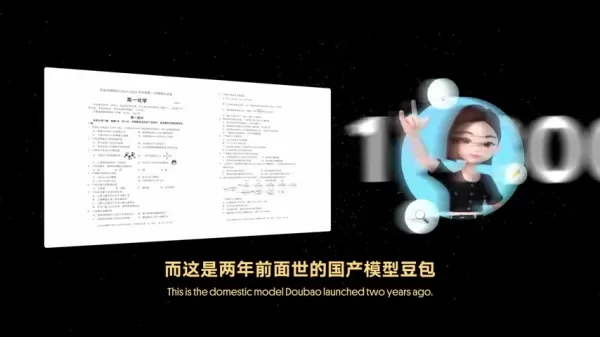
These systems employ AI to evaluate student performance and customize learning paths according to individual pace and preferences, often incorporating adaptive quizzes and tailored material.
- AI-Powered Tutoring Systems: These intelligent systems offer students personalized help and feedback, functioning like a human tutor with round-the-clock availability.
- Automated Grading and Assessment: AI can quickly grade student work, offering timely feedback while reducing teachers' workload.
- Intelligent Content Creation: Educators can use AI to develop learning resources, including quizzes, lesson outlines, and interactive exercises.
- Data Analytics: AI analyzes student data to detect learning patterns, highlight challenges, and inform improvements in teaching methods and curricula.
The central idea is to leverage technology so instructors can deliver more effective, individualized education.
Navigating the Transformative AI Landscape in Education
The adoption of AI in education has spurred considerable discussion. Proponents point to AI's ability to create tailored learning experiences that are hard to achieve with traditional resources. AI tools evaluate each student's progress and adjust instructional strategies accordingly, enabling a truly customized educational path.
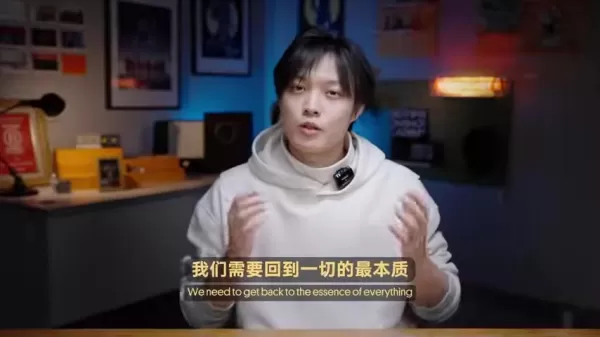
These platforms provide constant access to guidance, offering instant assistance as students work through problems. Additionally, learners may use AI flashcard generators to distill complex subjects into manageable prompts, aiding review during self-study.
Another focal point is how AI can reduce administrative burdens for teachers. By automating grading, generating content, and interpreting data, AI frees educators to concentrate on personalized mentoring, dynamic project design, and student interaction.
Still, it's crucial not to let technological advances overshadow the need to cultivate skills like creative thinking and analytical reasoning. As AI progresses, abilities such as adaptability, innovation, and problem-solving will become even more valuable for students.
Advanced AI models, including those used for content generation and text analysis, rely on machine learning—essentially, learning from data. To make the most of tools like Doubao or ChatGPT (Kimi), users should grasp how these models derive insights from data patterns. Building a basic understanding of how AI operates and its constraints is important.
Ongoing debates question the value of traditional schooling in an AI-enhanced world. If AI can handle routine educational tasks, what purpose do conventional institutions serve? This invites a reassessment of education models, with greater emphasis on collaborative learning and skill-building.
AI's Capabilities in Completing High School Chemistry Exams
Assessing AI Performance on a Chemistry Final Exam
A high school chemistry final from Beijing serves as an example of AI's proficiency in tasks demanding broad knowledge and advanced reasoning. A typical student might need 150 classes, learn over 200 core concepts, and invest more than 300 hours (or 1,080,000 seconds) to potentially score 80 points on the same exam.
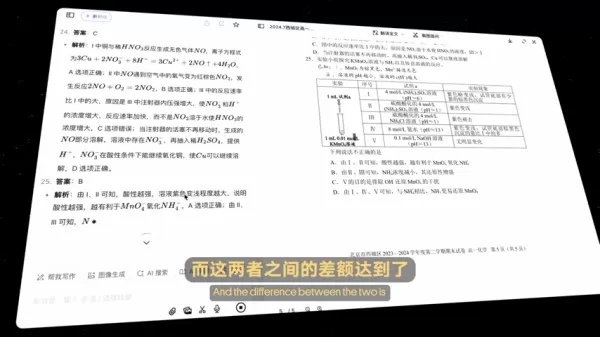
This comparison suggests AI holds a distinct advantage in scenarios requiring quick information processing and application.
Unlocking AI: Practical Applications for Transforming the Classroom
Enhancing Learning with Kimi
Kimi's performance is noted as an example: it can complete a test with near-perfect accuracy in roughly 200 seconds—a pace about 5400 times faster than a human student.

This indicates that language AI models like Kimi can now be used to solve exam papers efficiently.
How Will This Affect Our Schools?
Pros
Personalized Learning: AI tailors instruction to each student's needs, pace, and preferred learning style.
Increased Efficiency: Automation of administrative tasks gives teachers more time for instruction.
24/7 Availability: AI tutoring systems provide continuous academic support from any location.
Cons
Lack of Human Touch: AI may not offer the emotional support and mentorship that human teachers provide.
Potential for Bias: If trained on biased data, AI systems can reinforce or worsen existing prejudices.
Data Privacy Concerns: Using AI involves collecting and handling student data, raising privacy issues.
Frequently Asked Questions about AI in Education
Will AI replace teachers?
AI is not expected to fully replace educators. While it can automate tasks and support personalized learning, teachers provide essential mentorship, emotional guidance, and critical thinking development that AI cannot match. Instead, AI will likely complement teachers, enabling them to concentrate on more interactive and tailored instruction.
Is AI biased?
Since AI systems learn from data, any biases in that data can be perpetuated or intensified. It's important to assess AI tools for fairness and to train them using diverse, representative datasets.
What are the ethical considerations of using AI in education?
Key ethical issues include data privacy, algorithmic bias, and the risk of becoming too dependent on technology. Establishing clear policies and guidelines is necessary to ensure AI is used responsibly in educational settings.
Related Questions About Artifical Intelligence
What are some of the top companies working in AI and education?
The discussion mentions Zhang Mingjian, a computer science teacher at MSA, and Xu Jiahao, an AI specialist at Dream, as influential figures. Other notable organizations in this space include: OpenAI, known for ChatGPT and other advanced models; Google DeepMind, which develops general AI for various uses, including education; Duolingo, which personalizes language learning with AI; and Coursera & edX, online platforms that use AI for course suggestions and learner support. This is not an exhaustive list but illustrates the variety of groups advancing AI in education. The presentation also notes that AI's image recognition works through statistical analysis—essentially, identifying patterns after processing large datasets.
What does AI mean for the future of humanity?
With AI mastering abilities once considered uniquely human, such as analytical reasoning, it's time to reconsider what defines successful education. This shift invites a deeper focus on inherently human qualities—emotional depth, interpersonal connections, and creative expression—that technology cannot replicate.
Related article
 Former OpenAI Chief Scientist Ilya’s SSI Unveils First Model
AI has achieved another major milestone. Following his departure from OpenAI, former chief scientist Ilya Sutskever established Safe Superintelligence Inc. (SSI), which has recently unveiled details regarding its inaugural model. Reports from oversea
Lovable Leads Atech's Seed Round as AI Ambient Coding Officially Enters the Hardware Field
On May 14, 2026, AI application development platform Lovable announced its participation in the $800,000 seed funding round for Danish hardware startup Atech. Led by Lovable, the round attracted top-tier venture capital firms including the a16z Scout
Anthropic Expands Claude AI Coding Tools to Japan in Push for Overseas Growth
Anthropic, a prominent U.S. artificial intelligence firm, is intensifying its global outreach. On Wednesday, the company hosted a major developer gathering, "Code with Claude," in Tokyo, drawing close to 500 software engineers. This initiative seeks
Related Special Topic Recommendations
chatbot
Former OpenAI Chief Scientist Ilya’s SSI Unveils First Model
AI has achieved another major milestone. Following his departure from OpenAI, former chief scientist Ilya Sutskever established Safe Superintelligence Inc. (SSI), which has recently unveiled details regarding its inaugural model. Reports from oversea
Lovable Leads Atech's Seed Round as AI Ambient Coding Officially Enters the Hardware Field
On May 14, 2026, AI application development platform Lovable announced its participation in the $800,000 seed funding round for Danish hardware startup Atech. Led by Lovable, the round attracted top-tier venture capital firms including the a16z Scout
Anthropic Expands Claude AI Coding Tools to Japan in Push for Overseas Growth
Anthropic, a prominent U.S. artificial intelligence firm, is intensifying its global outreach. On Wednesday, the company hosted a major developer gathering, "Code with Claude," in Tokyo, drawing close to 500 software engineers. This initiative seeks
Related Special Topic Recommendations
chatbot
 Best AI Conversation Trainer Tools for Interview Practice
2026 Latest Best Top-rated AI Conversation Trainer Tools for Interview Practice are here on XIX.AI! This curated collection features powerful, game-changing tools that go through rigorous real-world tests to deliver accurate feedback. You’ll find a free vs paid comparison and detailed rankings to help you choose the must-try option that boosts your confidence and skills. Explore now to Discover your perfect tool for interview success!
 12 tools
 xix.ai
Design & Art
Best AI Style Transfer Tools for Creative Experiments
xix.ai
Design & Art
Best AI Style Transfer Tools for Creative Experiments
2026 Latest Best Top-rated AI Style Transfer Tools for Creative Experiments! XIX.AI has curated a powerful, game-changing collection of must-try tools that deliver exceptional results through real-world tests and rigorous rankings. These top solutions help creatives boost productivity significantly by accelerating content creation and unlocking endless creative possibilities. Explore now to discover your perfect tool and start creating today!
9 tools
xix.ai
Comic Creation
Best AI Dialogue Bubble Tools for Visual Storytelling
2026 Latest Best Top-Rated AI Dialogue Bubble Tools for Visual Storytelling are here on XIX.AI! This curated collection features powerful, game-changing tools that help creators boost productivity and overcome creative bottlenecks. Get a free vs paid comparison, see real-world tests, and check the latest rankings to find the must-try solutions perfect for crafting engaging visual narratives. Explore now to discover your ideal tool!
10 tools
xix.ai
Meeting Assistant
Top AI Meeting Summary Tools: Track Decisions and Follow-Ups Clearly
2026 Latest Top-Rated Best AI Meeting Summary Tools for Clear Decision Tracking and Effortless Follow-Ups. This curated list showcases powerful, game-changing solutions that boost productivity dramatically by automating meeting notes, identifying key action items, and streamlining team coordination across all projects. Get a free vs paid comparison along with real-world tests and weekly updated rankings to help you find the perfect tool. Explore now to unlock your AI edge!
9 tools
xix.ai
Data Analysis
Best AI Data Cleaning Tools: Fix Missing Values and Duplicates Fast
2026 Latest Best Top-rated AI Data Cleaning Tools for quick fixing of missing values and duplicates. This curated list showcases powerful, game-changing solutions that boost productivity significantly. Each option has undergone rigorous real-world tests to ensure reliability. Get a free vs paid comparison and discover the must-try tool that fits your needs best. Explore now at XIX.AI to Unlock your AI edge.
11 tools
xix.ai
Design & Art
Best AI Creative Ideation Tools for Artists: Break Through Visual Blocks
2026 Latest Best Top-Rated AI Creative Ideation Tools for Artists are curated by XIX.AI to help creators break through visual blocks and boost creativity instantly. These powerful game-changing tools offer real-world tests, detailed free vs paid comparison, and weekly updated rankings. Discover your perfect tool to accelerate content creation and unlock your AI edge today. Explore now!
14 tools
xix.ai

 Comments (1)
0/500
Comments (1)
0/500
![JerryMitchell]()
Interesting analysis! I've been using AI tools in my classroom and honestly, they help with grading but can't replace the human touch. Still, the potential for personalized learning is huge - if the hype doesn't burn out first. 🤔
Artificial intelligence (AI) is reshaping numerous facets of modern life, and the educational sector is a key area of transformation. With applications ranging from adaptive learning platforms to automated assessment tools, AI's potential in education is extensive. But is it genuinely redefining learning, or is it merely a trending topic? This article explores the nuanced role of AI in education and its possible effects on future learning. We'll cover personalized learning, how AI influences teaching, and the importance of nurturing human skills in a tech-driven world.
Key Points
AI enables personalized learning by adapting educational content to suit each student's unique requirements.
By automating routine administrative duties, AI gives teachers more time to focus on individual student support.
It's increasingly vital to emphasize human skills such as creativity and critical thinking alongside technological progress.
AI's swift evolution prompts discussions about the role of conventional education systems.
Distinguishing genuine AI applications from exaggerated claims is essential for effective implementation.
The Promise and Peril of AI in Education
What is Artificial Intelligence in Education?
Artificial Intelligence in Education (AIEd) involves using AI technologies to improve and innovate the learning experience. It includes various tools and methods, such as:
- Personalized Learning Platforms:
These systems employ AI to evaluate student performance and customize learning paths according to individual pace and preferences, often incorporating adaptive quizzes and tailored material.
- AI-Powered Tutoring Systems: These intelligent systems offer students personalized help and feedback, functioning like a human tutor with round-the-clock availability.
- Automated Grading and Assessment: AI can quickly grade student work, offering timely feedback while reducing teachers' workload.
- Intelligent Content Creation: Educators can use AI to develop learning resources, including quizzes, lesson outlines, and interactive exercises.
- Data Analytics: AI analyzes student data to detect learning patterns, highlight challenges, and inform improvements in teaching methods and curricula.
The central idea is to leverage technology so instructors can deliver more effective, individualized education.
Navigating the Transformative AI Landscape in Education
The adoption of AI in education has spurred considerable discussion. Proponents point to AI's ability to create tailored learning experiences that are hard to achieve with traditional resources. AI tools evaluate each student's progress and adjust instructional strategies accordingly, enabling a truly customized educational path.
These platforms provide constant access to guidance, offering instant assistance as students work through problems. Additionally, learners may use AI flashcard generators to distill complex subjects into manageable prompts, aiding review during self-study.
Another focal point is how AI can reduce administrative burdens for teachers. By automating grading, generating content, and interpreting data, AI frees educators to concentrate on personalized mentoring, dynamic project design, and student interaction.
Still, it's crucial not to let technological advances overshadow the need to cultivate skills like creative thinking and analytical reasoning. As AI progresses, abilities such as adaptability, innovation, and problem-solving will become even more valuable for students.
Advanced AI models, including those used for content generation and text analysis, rely on machine learning—essentially, learning from data. To make the most of tools like Doubao or ChatGPT (Kimi), users should grasp how these models derive insights from data patterns. Building a basic understanding of how AI operates and its constraints is important.
Ongoing debates question the value of traditional schooling in an AI-enhanced world. If AI can handle routine educational tasks, what purpose do conventional institutions serve? This invites a reassessment of education models, with greater emphasis on collaborative learning and skill-building.
AI's Capabilities in Completing High School Chemistry Exams
Assessing AI Performance on a Chemistry Final Exam
A high school chemistry final from Beijing serves as an example of AI's proficiency in tasks demanding broad knowledge and advanced reasoning. A typical student might need 150 classes, learn over 200 core concepts, and invest more than 300 hours (or 1,080,000 seconds) to potentially score 80 points on the same exam.
This comparison suggests AI holds a distinct advantage in scenarios requiring quick information processing and application.
Unlocking AI: Practical Applications for Transforming the Classroom
Enhancing Learning with Kimi
Kimi's performance is noted as an example: it can complete a test with near-perfect accuracy in roughly 200 seconds—a pace about 5400 times faster than a human student.
This indicates that language AI models like Kimi can now be used to solve exam papers efficiently.
How Will This Affect Our Schools?
Pros
Personalized Learning: AI tailors instruction to each student's needs, pace, and preferred learning style.
Increased Efficiency: Automation of administrative tasks gives teachers more time for instruction.
24/7 Availability: AI tutoring systems provide continuous academic support from any location.
Cons
Lack of Human Touch: AI may not offer the emotional support and mentorship that human teachers provide.
Potential for Bias: If trained on biased data, AI systems can reinforce or worsen existing prejudices.
Data Privacy Concerns: Using AI involves collecting and handling student data, raising privacy issues.
Frequently Asked Questions about AI in Education
Will AI replace teachers?
AI is not expected to fully replace educators. While it can automate tasks and support personalized learning, teachers provide essential mentorship, emotional guidance, and critical thinking development that AI cannot match. Instead, AI will likely complement teachers, enabling them to concentrate on more interactive and tailored instruction.
Is AI biased?
Since AI systems learn from data, any biases in that data can be perpetuated or intensified. It's important to assess AI tools for fairness and to train them using diverse, representative datasets.
What are the ethical considerations of using AI in education?
Key ethical issues include data privacy, algorithmic bias, and the risk of becoming too dependent on technology. Establishing clear policies and guidelines is necessary to ensure AI is used responsibly in educational settings.
Related Questions About Artifical Intelligence
What are some of the top companies working in AI and education?
The discussion mentions Zhang Mingjian, a computer science teacher at MSA, and Xu Jiahao, an AI specialist at Dream, as influential figures. Other notable organizations in this space include: OpenAI, known for ChatGPT and other advanced models; Google DeepMind, which develops general AI for various uses, including education; Duolingo, which personalizes language learning with AI; and Coursera & edX, online platforms that use AI for course suggestions and learner support. This is not an exhaustive list but illustrates the variety of groups advancing AI in education. The presentation also notes that AI's image recognition works through statistical analysis—essentially, identifying patterns after processing large datasets.
What does AI mean for the future of humanity?
With AI mastering abilities once considered uniquely human, such as analytical reasoning, it's time to reconsider what defines successful education. This shift invites a deeper focus on inherently human qualities—emotional depth, interpersonal connections, and creative expression—that technology cannot replicate.








 Former OpenAI Chief Scientist Ilya’s SSI Unveils First Model
AI has achieved another major milestone. Following his departure from OpenAI, former chief scientist Ilya Sutskever established Safe Superintelligence Inc. (SSI), which has recently unveiled details regarding its inaugural model. Reports from oversea
Former OpenAI Chief Scientist Ilya’s SSI Unveils First Model
AI has achieved another major milestone. Following his departure from OpenAI, former chief scientist Ilya Sutskever established Safe Superintelligence Inc. (SSI), which has recently unveiled details regarding its inaugural model. Reports from oversea
 Lovable Leads Atech's Seed Round as AI Ambient Coding Officially Enters the Hardware Field
On May 14, 2026, AI application development platform Lovable announced its participation in the $800,000 seed funding round for Danish hardware startup Atech. Led by Lovable, the round attracted top-tier venture capital firms including the a16z Scout
Lovable Leads Atech's Seed Round as AI Ambient Coding Officially Enters the Hardware Field
On May 14, 2026, AI application development platform Lovable announced its participation in the $800,000 seed funding round for Danish hardware startup Atech. Led by Lovable, the round attracted top-tier venture capital firms including the a16z Scout
 Anthropic Expands Claude AI Coding Tools to Japan in Push for Overseas Growth
Anthropic, a prominent U.S. artificial intelligence firm, is intensifying its global outreach. On Wednesday, the company hosted a major developer gathering, "Code with Claude," in Tokyo, drawing close to 500 software engineers. This initiative seeks
Anthropic Expands Claude AI Coding Tools to Japan in Push for Overseas Growth
Anthropic, a prominent U.S. artificial intelligence firm, is intensifying its global outreach. On Wednesday, the company hosted a major developer gathering, "Code with Claude," in Tokyo, drawing close to 500 software engineers. This initiative seeks
2026 Latest Best Top-rated AI Conversation Trainer Tools for Interview Practice are here on XIX.AI! This curated collection features powerful, game-changing tools that go through rigorous real-world tests to deliver accurate feedback. You’ll find a free vs paid comparison and detailed rankings to help you choose the must-try option that boosts your confidence and skills. Explore now to Discover your perfect tool for interview success!
12 tools
xix.ai

2026 Latest Best Top-rated AI Style Transfer Tools for Creative Experiments! XIX.AI has curated a powerful, game-changing collection of must-try tools that deliver exceptional results through real-world tests and rigorous rankings. These top solutions help creatives boost productivity significantly by accelerating content creation and unlocking endless creative possibilities. Explore now to discover your perfect tool and start creating today!
9 tools
xix.ai

2026 Latest Best Top-Rated AI Dialogue Bubble Tools for Visual Storytelling are here on XIX.AI! This curated collection features powerful, game-changing tools that help creators boost productivity and overcome creative bottlenecks. Get a free vs paid comparison, see real-world tests, and check the latest rankings to find the must-try solutions perfect for crafting engaging visual narratives. Explore now to discover your ideal tool!
10 tools
xix.ai

2026 Latest Top-Rated Best AI Meeting Summary Tools for Clear Decision Tracking and Effortless Follow-Ups. This curated list showcases powerful, game-changing solutions that boost productivity dramatically by automating meeting notes, identifying key action items, and streamlining team coordination across all projects. Get a free vs paid comparison along with real-world tests and weekly updated rankings to help you find the perfect tool. Explore now to unlock your AI edge!
9 tools
xix.ai

2026 Latest Best Top-rated AI Data Cleaning Tools for quick fixing of missing values and duplicates. This curated list showcases powerful, game-changing solutions that boost productivity significantly. Each option has undergone rigorous real-world tests to ensure reliability. Get a free vs paid comparison and discover the must-try tool that fits your needs best. Explore now at XIX.AI to Unlock your AI edge.
11 tools
xix.ai

2026 Latest Best Top-Rated AI Creative Ideation Tools for Artists are curated by XIX.AI to help creators break through visual blocks and boost creativity instantly. These powerful game-changing tools offer real-world tests, detailed free vs paid comparison, and weekly updated rankings. Discover your perfect tool to accelerate content creation and unlock your AI edge today. Explore now!
14 tools
xix.ai

Interesting analysis! I've been using AI tools in my classroom and honestly, they help with grading but can't replace the human touch. Still, the potential for personalized learning is huge - if the hype doesn't burn out first. 🤔












