


 Home
HomeAI Revolutionizes Dungeons & Dragons: ChatGPT as Your Game Master
Explore the innovative realm of Dungeons & Dragons enhanced by artificial intelligence. This article delves into using ChatGPT as your virtual Dungeon Master. Whether you're a solo adventurer craving deep immersion or a group aiming to enrich your narrative, learn how AI can reshape your D&D journeys—from creating compelling characters to weaving engaging plots.
Key Points
Leverage ChatGPT to craft distinctive backstories and personalities for D&D characters.
Manage a D&D campaign with ChatGPT serving as the Dungeon Master.
Discover how to incorporate D&D source material by pasting text into ChatGPT for seamless story integration.
Examine the opportunities and constraints of integrating AI into tabletop RPGs.
Setting the Stage: AI and D&D Campaigns
Embracing the AI Dungeon Master
Combining artificial intelligence with classic tabletop role-playing games like Dungeons & Dragons unveils new avenues to elevate gameplay. One fascinating use is employing AI as a Dungeon Master. Conventionally, the DM is a person who directs the narrative, governs non-player characters, enforces rules, and designs the overall story arc. Today, with tools like ChatGPT, AI can manage some or all of these duties.
Yet, the question remains: Is the experience identical with AI? This is a common concern when discussing automated storytelling. Where exactly can it assist? The concept involves the AI assuming the roles of both players and Dungeon Master, all while respecting the ongoing narrative framework. Therefore, clearly defining expectations and charting a course for your quest is essential.
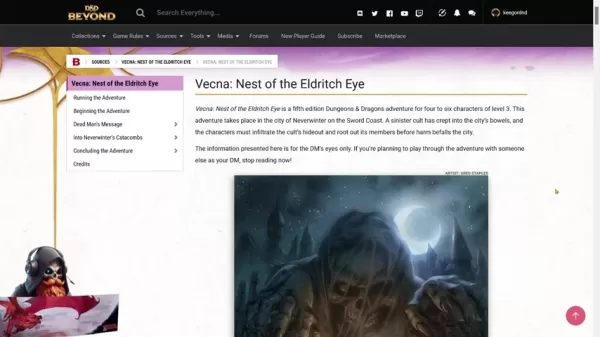
Choosing Your Adventure: Vecna: Nest of the Eldritch Eye
Picking a suitable adventure is the initial move when using ChatGPT as your DM. Opt for self-contained, level-appropriate quests so the AI can effectively handle the system's intricacies.
Be aware that proceeding with this adventure may expose key plot details.
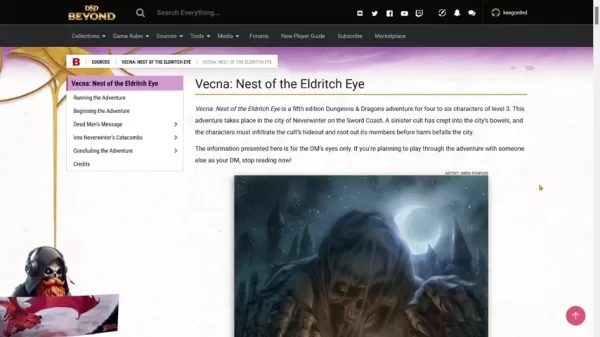
ChatGPT as Your AI Players
A central topic is deploying ChatGPT to role-play as the characters in a D&D campaign. The approach entails the AI embodying both the adventurers and the Dungeon Master, all while considering the overarching story.
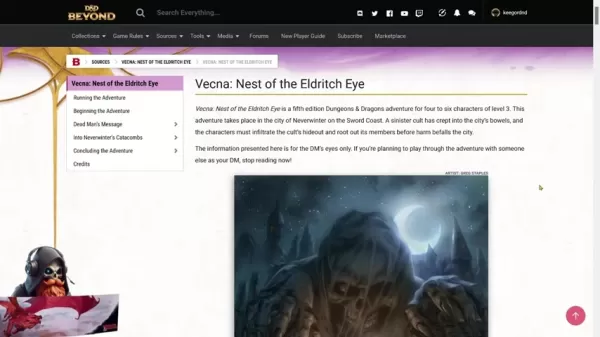
Effective prompting is the most reliable method, for example:
"I want to run a dnd campaign where you are going to be playing as the characters and as the Dungeon Master."
Using clear instructions like this, you can create AI-driven characters and launch your game.
Character Creation with ChatGPT
Crafting Character Classes and Backstories
ChatGPT can produce original and elaborate character histories and traits.
However, the AI may occasionally overstep, acting as a backseat DM. This is an inherent difficulty in this style of adventure.
Character generation starts with precise prompts:
"You'll be playing as 4 characters."
ChatGPT can outline fundamental concepts for classes, ancestries, and backgrounds. This data allows you to customize the campaign to your preferences.
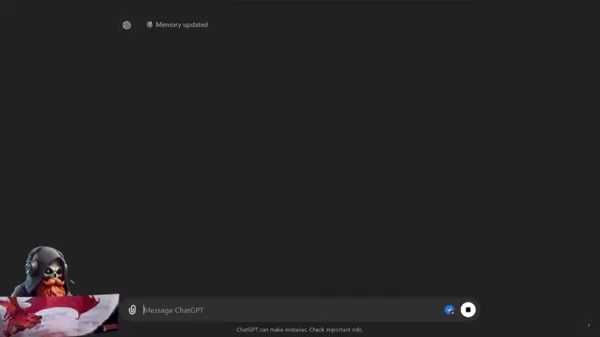
For instance, this guide explains how to engage ChatGPT in starting the journey.
ChatGPT interprets the given description to deliver the narrative. Consider pasting specific adventure excerpts into the program for better context.
Defining roles is also critical. For example:
"The city of Neverwinter stands proudly on the Sword Coast, west and North of Dessarin Valley. Fifty years ago, the city was nearly destroyed by the eruption of Mount Hotenow. Today, the city stands mostly rebuilt. It bustles with skilled tradespeople, intrepid adventurers, and hardy townsfolk. Leadership in Neverwinter falls to Dagult Neverember, lord protector of the city—and your employer. The city lacks a formal militia, so Lord Neverember often hires mercenaries and adventurers such as yourselves to keep the city secure."
Again, prompts are vital here, especially for character development. To specify the four player characters, state:
"You'll be playing as 4 characters."
The AI will reply with context-aware outputs based on the adventure. Furthermore, you can request ChatGPT to suggest classes for the player characters.
"What 4 classes would you like to make?"
It might propose these four classes:
- Paladin (Oath of the Crown)
- Rogue (Mastermind)
- Druid (Circle of the Stars)
- Sorcerer (Divine Soul)
At this stage, the AI will likely explore personality traits. A balanced party composition is crucial for a lasting and engaging game.
How to Generate D&D Characters with AI (Steps)
Step-by-step guide to generating new characters
To create D&D characters using AI with ChatGPT, follow these steps:
- Initiate a new chat and provide core details like your character’s name, class, race, and backstory.
- Ask ChatGPT to complete the remaining character specifics, such as alignment, ability scores, gear, and spells.
- Use ChatGPT to roll for your character’s stats. Always verify the information it provides, as it might occasionally make errors regarding class, race, or background features.
Weighing the Scales: Pros and Cons of Using AI in D&D
Pros
Introduces fresh concepts to improve character design.
Assists in establishing story context.
Offers a novel approach to collaborative storytelling.
Cons
The AI might intrude as a backseat Dungeon Master.
Demands extensive prompting to obtain satisfactory outcomes.
Could diminish the personal, human touch in the game.
FAQ
What are the limitations of using AI for D&D?
Although AI can improve the gaming experience, it doesn't fully replicate human creativity and subtle storytelling. It may falter with unexpected player decisions and needs precise guidance to remain aligned with the adventure. Additionally, AI's knowledge isn't always current, so double-checking its output is important. AI excels at generating responses from its training data. Yet, as any seasoned D&D enthusiast understands, much of the enjoyment stems from the game's unpredictable, creative, and dynamic nature. This uniquely human aspect is irreplaceable. Below is a summary of key limitations:LimitationDescriptionPredictabilityResponses are derived from patterns in training data, limiting its ability to manage completely novel or irrational scenarios.Nuance and EmotionIt often misses complex emotional undertones and subtle social interactions that are vital in D&D.Memory and ContinuitySustaining long-term coherence in a detailed campaign can be difficult for AI.Ethical ConsiderationsPotential biases in training data and risks of generating inappropriate content require vigilance.The Fun FactorThe inherent thrill of dice rolls and spontaneous human reactions contributes significantly to the game's enjoyment.
Can AI replace a human Dungeon Master?
No, AI cannot completely substitute a human Dungeon Master. It serves as a powerful aid for specific tasks—like generating plot hooks, running NPC conversations, or offering quick rules references. However, the ingenuity, quick thinking, and emotional depth a human DM provides are unmatched. A human DM can instantly adjust to player actions, build genuine rapport with the group, and craft a narrative with profound emotional impact. Remember, D&D is ultimately about shared enjoyment, and over-dependence on software might detract from that.
Related Questions
What are some other applications of AI in gaming?
Outside of D&D, artificial intelligence is reshaping the gaming landscape in numerous forms. AI drives smarter, more lifelike non-player characters in video games, tailors difficulty to player proficiency, and creates original game elements like quests, worlds, and plots. It also plays roles in game testing, quality control, and anti-cheat measures. As AI technology progresses, its influence on gaming is set to expand further.
Related article
 Florida sues OpenAI, Sam Altman over violent incidents
Florida’s Attorney General filed a first-of-its-kind state lawsuit against OpenAI and CEO Sam Altman on Monday, alleging the company’s ChatGPT is linked to multiple violent incidents.The complaint argues that OpenAI prioritized winning “the AI arms r
OpenAI unveils advanced voice models for more natural real-time conversations
OpenAI has launched new conversational models, GPT-Live-1 and GPT-Live-1 mini, designed to sound more natural and manage turn-taking more effectively. These full-duplex models can speak and listen simultaneously, allowing users to interrupt naturally
OpenAI unveils GPT-5.6, the newest addition to its model family
OpenAI launched its latest model family on Thursday, introducing powerful new options into an increasingly competitive AI landscape.GPT-5.6 comes in three variants: Sol (designed as the primary workhorse), Terra (a mid-range option), and Luna (the bu
Related Special Topic Recommendations
Music composition
Florida sues OpenAI, Sam Altman over violent incidents
Florida’s Attorney General filed a first-of-its-kind state lawsuit against OpenAI and CEO Sam Altman on Monday, alleging the company’s ChatGPT is linked to multiple violent incidents.The complaint argues that OpenAI prioritized winning “the AI arms r
OpenAI unveils advanced voice models for more natural real-time conversations
OpenAI has launched new conversational models, GPT-Live-1 and GPT-Live-1 mini, designed to sound more natural and manage turn-taking more effectively. These full-duplex models can speak and listen simultaneously, allowing users to interrupt naturally
OpenAI unveils GPT-5.6, the newest addition to its model family
OpenAI launched its latest model family on Thursday, introducing powerful new options into an increasingly competitive AI landscape.GPT-5.6 comes in three variants: Sol (designed as the primary workhorse), Terra (a mid-range option), and Luna (the bu
Related Special Topic Recommendations
Music composition
 AI Stem Separation Tools for Remix Production, Sampling Prep, and Karaoke Masters
2026 Latest Best Top-rated AI Stem Separation Tools Curated for Remix Production, Sampling Prep, and Karaoke Masters. These powerful game-changing tools offer real-world tests to deliver precise audio isolation, boosting productivity significantly. XIX.AI provides a weekly updated free vs paid comparison guide to help you find the must-try solution that suits your needs. Explore now to unlock your AI edge.
 8 tools
 xix.ai
Data Analysis
AI SQL Copilots for Revenue Dashboards, Funnel Analysis, and Product Metrics
xix.ai
Data Analysis
AI SQL Copilots for Revenue Dashboards, Funnel Analysis, and Product Metrics
2026 Latest Best AI SQL Copilots Ranked Top-Rated! XIX.AI curates a powerful game-changing collection for weekly updated real-world tests. These must-try tools help you generate accurate revenue dashboards, analyze sales funnels, and track product metrics swiftly, boosting productivity massively. Explore now to Discover your perfect tool for data-driven decision making! 238 characters
9 tools
xix.ai
Music composition
Best AI Melody Writing Tools for Song Drafts
2026 Latest Best Top-Rated AI Melody Writing Tools for Song Drafts! XIX.AI has curated a highly powerful game-changing collection that goes through rigorous real-world tests to deliver the best writing experience. You can find detailed free vs paid comparisons, accurate rankings, and must-try options designed to help you create stunning song drafts effortlessly and boost your creative productivity significantly. Explore now to discover your perfect tool!
8 tools
xix.ai
chatbot
Best AI Conversation Trainer Tools for Interview Practice
2026 Latest Best Top-rated AI Conversation Trainer Tools for Interview Practice are here on XIX.AI! This curated collection features powerful, game-changing tools that go through rigorous real-world tests to deliver accurate feedback. You’ll find a free vs paid comparison and detailed rankings to help you choose the must-try option that boosts your confidence and skills. Explore now to Discover your perfect tool for interview success!
12 tools
xix.ai
Design & Art
Best AI Style Transfer Tools for Creative Experiments
2026 Latest Best Top-rated AI Style Transfer Tools for Creative Experiments! XIX.AI has curated a powerful, game-changing collection of must-try tools that deliver exceptional results through real-world tests and rigorous rankings. These top solutions help creatives boost productivity significantly by accelerating content creation and unlocking endless creative possibilities. Explore now to discover your perfect tool and start creating today!
9 tools
xix.ai
Comic Creation
Best AI Dialogue Bubble Tools for Visual Storytelling
2026 Latest Best Top-Rated AI Dialogue Bubble Tools for Visual Storytelling are here on XIX.AI! This curated collection features powerful, game-changing tools that help creators boost productivity and overcome creative bottlenecks. Get a free vs paid comparison, see real-world tests, and check the latest rankings to find the must-try solutions perfect for crafting engaging visual narratives. Explore now to discover your ideal tool!
10 tools
xix.ai

 Comments (1)
0/500
Comments (1)
0/500
![DennisRodriguez]()
Honestly, I tried using ChatGPT as a DM last weekend and it was both hilarious and frustrating. The AI kept describing my rogue as a 'shadowy figure' even after I said I was wearing bright pink armor. 😂 It's great for generating random encounters on the fly, but the moment you try to roleplay a nuanced conversation with a goblin merchant, it forgets your character's name. Still, the potential is wild—imagine a campaign that adapts to your playstyle in real time. Just don't expect it to handle your party's chaotic thirst for burning down taverns.
Explore the innovative realm of Dungeons & Dragons enhanced by artificial intelligence. This article delves into using ChatGPT as your virtual Dungeon Master. Whether you're a solo adventurer craving deep immersion or a group aiming to enrich your narrative, learn how AI can reshape your D&D journeys—from creating compelling characters to weaving engaging plots.
Key Points
Leverage ChatGPT to craft distinctive backstories and personalities for D&D characters.
Manage a D&D campaign with ChatGPT serving as the Dungeon Master.
Discover how to incorporate D&D source material by pasting text into ChatGPT for seamless story integration.
Examine the opportunities and constraints of integrating AI into tabletop RPGs.
Setting the Stage: AI and D&D Campaigns
Embracing the AI Dungeon Master
Combining artificial intelligence with classic tabletop role-playing games like Dungeons & Dragons unveils new avenues to elevate gameplay. One fascinating use is employing AI as a Dungeon Master. Conventionally, the DM is a person who directs the narrative, governs non-player characters, enforces rules, and designs the overall story arc. Today, with tools like ChatGPT, AI can manage some or all of these duties.
Yet, the question remains: Is the experience identical with AI? This is a common concern when discussing automated storytelling. Where exactly can it assist? The concept involves the AI assuming the roles of both players and Dungeon Master, all while respecting the ongoing narrative framework. Therefore, clearly defining expectations and charting a course for your quest is essential.
Choosing Your Adventure: Vecna: Nest of the Eldritch Eye
Picking a suitable adventure is the initial move when using ChatGPT as your DM. Opt for self-contained, level-appropriate quests so the AI can effectively handle the system's intricacies.
Be aware that proceeding with this adventure may expose key plot details.
ChatGPT as Your AI Players
A central topic is deploying ChatGPT to role-play as the characters in a D&D campaign. The approach entails the AI embodying both the adventurers and the Dungeon Master, all while considering the overarching story.
Effective prompting is the most reliable method, for example:
"I want to run a dnd campaign where you are going to be playing as the characters and as the Dungeon Master."
Using clear instructions like this, you can create AI-driven characters and launch your game.
Character Creation with ChatGPT
Crafting Character Classes and Backstories
ChatGPT can produce original and elaborate character histories and traits.
However, the AI may occasionally overstep, acting as a backseat DM. This is an inherent difficulty in this style of adventure.
Character generation starts with precise prompts:
"You'll be playing as 4 characters."
ChatGPT can outline fundamental concepts for classes, ancestries, and backgrounds. This data allows you to customize the campaign to your preferences.
For instance, this guide explains how to engage ChatGPT in starting the journey.
ChatGPT interprets the given description to deliver the narrative. Consider pasting specific adventure excerpts into the program for better context.
Defining roles is also critical. For example:
"The city of Neverwinter stands proudly on the Sword Coast, west and North of Dessarin Valley. Fifty years ago, the city was nearly destroyed by the eruption of Mount Hotenow. Today, the city stands mostly rebuilt. It bustles with skilled tradespeople, intrepid adventurers, and hardy townsfolk. Leadership in Neverwinter falls to Dagult Neverember, lord protector of the city—and your employer. The city lacks a formal militia, so Lord Neverember often hires mercenaries and adventurers such as yourselves to keep the city secure."
Again, prompts are vital here, especially for character development. To specify the four player characters, state:
"You'll be playing as 4 characters."
The AI will reply with context-aware outputs based on the adventure. Furthermore, you can request ChatGPT to suggest classes for the player characters.
"What 4 classes would you like to make?"
It might propose these four classes:
- Paladin (Oath of the Crown)
- Rogue (Mastermind)
- Druid (Circle of the Stars)
- Sorcerer (Divine Soul)
At this stage, the AI will likely explore personality traits. A balanced party composition is crucial for a lasting and engaging game.
How to Generate D&D Characters with AI (Steps)
Step-by-step guide to generating new characters
To create D&D characters using AI with ChatGPT, follow these steps:
- Initiate a new chat and provide core details like your character’s name, class, race, and backstory.
- Ask ChatGPT to complete the remaining character specifics, such as alignment, ability scores, gear, and spells.
- Use ChatGPT to roll for your character’s stats. Always verify the information it provides, as it might occasionally make errors regarding class, race, or background features.
Weighing the Scales: Pros and Cons of Using AI in D&D
Pros
Introduces fresh concepts to improve character design.
Assists in establishing story context.
Offers a novel approach to collaborative storytelling.
Cons
The AI might intrude as a backseat Dungeon Master.
Demands extensive prompting to obtain satisfactory outcomes.
Could diminish the personal, human touch in the game.
FAQ
What are the limitations of using AI for D&D?
Although AI can improve the gaming experience, it doesn't fully replicate human creativity and subtle storytelling. It may falter with unexpected player decisions and needs precise guidance to remain aligned with the adventure. Additionally, AI's knowledge isn't always current, so double-checking its output is important. AI excels at generating responses from its training data. Yet, as any seasoned D&D enthusiast understands, much of the enjoyment stems from the game's unpredictable, creative, and dynamic nature. This uniquely human aspect is irreplaceable. Below is a summary of key limitations:LimitationDescriptionPredictabilityResponses are derived from patterns in training data, limiting its ability to manage completely novel or irrational scenarios.Nuance and EmotionIt often misses complex emotional undertones and subtle social interactions that are vital in D&D.Memory and ContinuitySustaining long-term coherence in a detailed campaign can be difficult for AI.Ethical ConsiderationsPotential biases in training data and risks of generating inappropriate content require vigilance.The Fun FactorThe inherent thrill of dice rolls and spontaneous human reactions contributes significantly to the game's enjoyment.
Can AI replace a human Dungeon Master?
No, AI cannot completely substitute a human Dungeon Master. It serves as a powerful aid for specific tasks—like generating plot hooks, running NPC conversations, or offering quick rules references. However, the ingenuity, quick thinking, and emotional depth a human DM provides are unmatched. A human DM can instantly adjust to player actions, build genuine rapport with the group, and craft a narrative with profound emotional impact. Remember, D&D is ultimately about shared enjoyment, and over-dependence on software might detract from that.
Related Questions
What are some other applications of AI in gaming?
Outside of D&D, artificial intelligence is reshaping the gaming landscape in numerous forms. AI drives smarter, more lifelike non-player characters in video games, tailors difficulty to player proficiency, and creates original game elements like quests, worlds, and plots. It also plays roles in game testing, quality control, and anti-cheat measures. As AI technology progresses, its influence on gaming is set to expand further.








 Florida sues OpenAI, Sam Altman over violent incidents
Florida’s Attorney General filed a first-of-its-kind state lawsuit against OpenAI and CEO Sam Altman on Monday, alleging the company’s ChatGPT is linked to multiple violent incidents.The complaint argues that OpenAI prioritized winning “the AI arms r
Florida sues OpenAI, Sam Altman over violent incidents
Florida’s Attorney General filed a first-of-its-kind state lawsuit against OpenAI and CEO Sam Altman on Monday, alleging the company’s ChatGPT is linked to multiple violent incidents.The complaint argues that OpenAI prioritized winning “the AI arms r
 OpenAI unveils advanced voice models for more natural real-time conversations
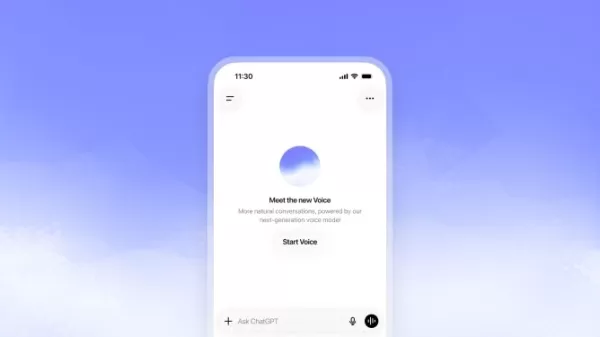
OpenAI has launched new conversational models, GPT-Live-1 and GPT-Live-1 mini, designed to sound more natural and manage turn-taking more effectively. These full-duplex models can speak and listen simultaneously, allowing users to interrupt naturally
OpenAI unveils advanced voice models for more natural real-time conversations
OpenAI has launched new conversational models, GPT-Live-1 and GPT-Live-1 mini, designed to sound more natural and manage turn-taking more effectively. These full-duplex models can speak and listen simultaneously, allowing users to interrupt naturally
 OpenAI unveils GPT-5.6, the newest addition to its model family
OpenAI launched its latest model family on Thursday, introducing powerful new options into an increasingly competitive AI landscape.GPT-5.6 comes in three variants: Sol (designed as the primary workhorse), Terra (a mid-range option), and Luna (the bu
OpenAI unveils GPT-5.6, the newest addition to its model family
OpenAI launched its latest model family on Thursday, introducing powerful new options into an increasingly competitive AI landscape.GPT-5.6 comes in three variants: Sol (designed as the primary workhorse), Terra (a mid-range option), and Luna (the bu

2026 Latest Best Top-rated AI Stem Separation Tools Curated for Remix Production, Sampling Prep, and Karaoke Masters. These powerful game-changing tools offer real-world tests to deliver precise audio isolation, boosting productivity significantly. XIX.AI provides a weekly updated free vs paid comparison guide to help you find the must-try solution that suits your needs. Explore now to unlock your AI edge.
8 tools
xix.ai

2026 Latest Best AI SQL Copilots Ranked Top-Rated! XIX.AI curates a powerful game-changing collection for weekly updated real-world tests. These must-try tools help you generate accurate revenue dashboards, analyze sales funnels, and track product metrics swiftly, boosting productivity massively. Explore now to Discover your perfect tool for data-driven decision making! 238 characters
9 tools
xix.ai
2026 Latest Best Top-Rated AI Melody Writing Tools for Song Drafts! XIX.AI has curated a highly powerful game-changing collection that goes through rigorous real-world tests to deliver the best writing experience. You can find detailed free vs paid comparisons, accurate rankings, and must-try options designed to help you create stunning song drafts effortlessly and boost your creative productivity significantly. Explore now to discover your perfect tool!
8 tools
xix.ai
2026 Latest Best Top-rated AI Conversation Trainer Tools for Interview Practice are here on XIX.AI! This curated collection features powerful, game-changing tools that go through rigorous real-world tests to deliver accurate feedback. You’ll find a free vs paid comparison and detailed rankings to help you choose the must-try option that boosts your confidence and skills. Explore now to Discover your perfect tool for interview success!
12 tools
xix.ai
2026 Latest Best Top-rated AI Style Transfer Tools for Creative Experiments! XIX.AI has curated a powerful, game-changing collection of must-try tools that deliver exceptional results through real-world tests and rigorous rankings. These top solutions help creatives boost productivity significantly by accelerating content creation and unlocking endless creative possibilities. Explore now to discover your perfect tool and start creating today!
9 tools
xix.ai
2026 Latest Best Top-Rated AI Dialogue Bubble Tools for Visual Storytelling are here on XIX.AI! This curated collection features powerful, game-changing tools that help creators boost productivity and overcome creative bottlenecks. Get a free vs paid comparison, see real-world tests, and check the latest rankings to find the must-try solutions perfect for crafting engaging visual narratives. Explore now to discover your ideal tool!
10 tools
xix.ai

Honestly, I tried using ChatGPT as a DM last weekend and it was both hilarious and frustrating. The AI kept describing my rogue as a 'shadowy figure' even after I said I was wearing bright pink armor. 😂 It's great for generating random encounters on the fly, but the moment you try to roleplay a nuanced conversation with a goblin merchant, it forgets your character's name. Still, the potential is wild—imagine a campaign that adapts to your playstyle in real time. Just don't expect it to handle your party's chaotic thirst for burning down taverns.












