Discover quality AI tools
Bring together the world’s leading artificial intelligence tools to help improve work efficiency

Articles published by JohnTaylor
Google has purchased a large volume of core corporate data from bankrupt low-cost airline Spirit Airlines for 10 million US dollars, beating rival AI talent firm Mercor whose bid was 7.5 million US dollars. The acquired data includes 7.5 billion passenger transaction records, 7.2 billion competitive flight pricing entries, 500 million Microsoft Teams chat records, 100 million emails, 30 million lines of code, and over 175,000 employee records dating back to 1986. The dataset will undergo strict anonymization by a third party before delivery to ensure compliance and privacy, as it contains no personal data or confidential materials. Google plans to use the processed data to enhance its products and AI models.
Google has purchased a large volume of core corporate data from bankrupt low-cost airline Spirit Airlines for 10 million US dollars, beating rival AI talent firm Mercor whose bid was 7.5 million US dollars. The acquired data includes 7.5 billion passenger transaction records, 7.2 billion competitive flight pricing entries, 500 million Microsoft Teams chat records, 100 million emails, 30 million lines of code, and over 175,000 employee records dating back to 1986. The dataset will undergo strict anonymization by a third party before delivery to ensure compliance and privacy, as it contains no personal data or confidential materials. Google plans to use the processed data to enhance its products and AI models.

Low-quality AI-generated content has flooded major online platforms, reducing content quality and polluting the information ecosystem. Tech companies are launching cleanup campaigns (Spotify removed 75 million junk tracks, Google deleted 130,000 low-quality channels, LinkedIn added a reporting tool for AI garbage). Many of these low-quality pieces were created by their own AI tools. Merriam-Webster named such content the word of the year, and sources estimate nearly half of new songs on some music platforms are AI generated. The companies responsible often face criticism for contradicting their promises to address the issue. Current cleanup methods include identifying abuse patterns rather than reviewing each piece individually and auto labeling AI videos, though experts warn these approaches may harm legitimate creators and fail to solve systemic problems, risking user loss if not handled properly.
Low-quality AI-generated content has flooded major online platforms, reducing content quality and polluting the information ecosystem. Tech companies are launching cleanup campaigns (Spotify removed 75 million junk tracks, Google deleted 130,000 low-quality channels, LinkedIn added a reporting tool for AI garbage). Many of these low-quality pieces were created by their own AI tools. Merriam-Webster named such content the word of the year, and sources estimate nearly half of new songs on some music platforms are AI generated. The companies responsible often face criticism for contradicting their promises to address the issue. Current cleanup methods include identifying abuse patterns rather than reviewing each piece individually and auto labeling AI videos, though experts warn these approaches may harm legitimate creators and fail to solve systemic problems, risking user loss if not handled properly.
Horizon and Volkswagen deepen their China joint venture Coretech, licensing Horizon's AI foundation model via a white-box approach. This integrates with Coretech's C7H chip and GAIA platform to power L3/L4 autonomous driving and Robotaxi, tied to Volkswagen's CEA regional architecture for scalable deployment across multiple models.
Horizon and Volkswagen deepen their China joint venture Coretech, licensing Horizon's AI foundation model via a white-box approach. This integrates with Coretech's C7H chip and GAIA platform to power L3/L4 autonomous driving and Robotaxi, tied to Volkswagen's CEA regional architecture for scalable deployment across multiple models.
Honda of America integrates Google Gemini AI into Civic Accord CR-V and Pilot models enabling natural voice interaction for navigation weather and music control. The partnership enhances driving experience with continuous tech updates signaling Honda's push for smarter digital transformation.
Honda of America integrates Google Gemini AI into Civic Accord CR-V and Pilot models enabling natural voice interaction for navigation weather and music control. The partnership enhances driving experience with continuous tech updates signaling Honda's push for smarter digital transformation.
Meta is developing a self-designed AI data center processor codenamed Iris with Broadcom and TSMC, set for mass production in September 2026. The chip optimizes ranking and recommendation systems on Facebook and Instagram, reducing reliance on third-party GPUs. Meta also secured long-term supply contracts with Samsung, SanDisk, and Sumitomo Electric amid hardware shortages. It plans 7 gigawatts of computing capacity by end of 2026, doubling to 14 GW by 2027, with $14.5 billion in infrastructure capex for 2026. Iris complements existing NVIDIA and AMD chips, giving Meta greater hardware autonomy.
Meta is developing a self-designed AI data center processor codenamed Iris with Broadcom and TSMC, set for mass production in September 2026. The chip optimizes ranking and recommendation systems on Facebook and Instagram, reducing reliance on third-party GPUs. Meta also secured long-term supply contracts with Samsung, SanDisk, and Sumitomo Electric amid hardware shortages. It plans 7 gigawatts of computing capacity by end of 2026, doubling to 14 GW by 2027, with $14.5 billion in infrastructure capex for 2026. Iris complements existing NVIDIA and AMD chips, giving Meta greater hardware autonomy.

The US Commerce Department lifted export restrictions on Anthropic’s advanced AI models Fable 5 and Mythos 5. Previously, the White House suspended foreign employee access over tech leak fears. Anthropic changed its communication strategy, sent co-founder Tom Brown to negotiations, and agreed to proactively detect abuse risks and cooperate on security standards, securing regulatory approval.
The US Commerce Department lifted export restrictions on Anthropic’s advanced AI models Fable 5 and Mythos 5. Previously, the White House suspended foreign employee access over tech leak fears. Anthropic changed its communication strategy, sent co-founder Tom Brown to negotiations, and agreed to proactively detect abuse risks and cooperate on security standards, securing regulatory approval.

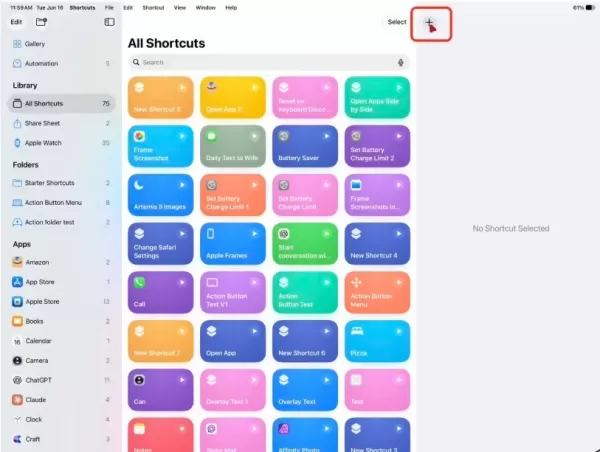
iPadOS 27 boosts productivity with Magic Keyboard auto-activation, natural language shortcut creation, smarter Siri search, and Safari tab organization, bridging the gap between tablets and computers.
iPadOS 27 boosts productivity with Magic Keyboard auto-activation, natural language shortcut creation, smarter Siri search, and Safari tab organization, bridging the gap between tablets and computers.
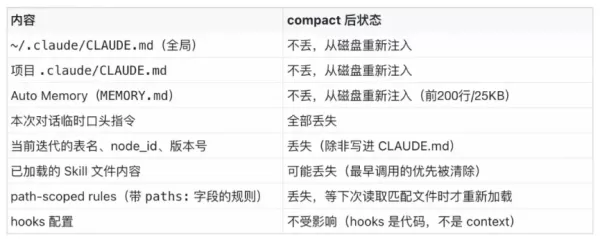
Chinese e-commerce platform Dewu identifies key challenges in its AI-powered data warehouse development, including AI context memory loss leading to significant SQL errors and unstable compliance enforcement. To address these, the team proposes Harness Engineering, a system that embeds standards into automated checks to enhance reliability and reduce errors in complex development tasks.
Chinese e-commerce platform Dewu identifies key challenges in its AI-powered data warehouse development, including AI context memory loss leading to significant SQL errors and unstable compliance enforcement. To address these, the team proposes Harness Engineering, a system that embeds standards into automated checks to enhance reliability and reduce errors in complex development tasks.
Tsinghua University AIR and Shuimu Molecular open-sourced OpenBioMed Skills, a set of 45 AI agent plugins for biomedical research. It converts expert decision-making into executable code, enabling natural language to drive complex drug R&D processes. The system integrates specialized models like PharMolixFM, outperforming general LLMs in pharmaceutical tasks, and supports control via mobile apps like WeChat.
Tsinghua University AIR and Shuimu Molecular open-sourced OpenBioMed Skills, a set of 45 AI agent plugins for biomedical research. It converts expert decision-making into executable code, enabling natural language to drive complex drug R&D processes. The system integrates specialized models like PharMolixFM, outperforming general LLMs in pharmaceutical tasks, and supports control via mobile apps like WeChat.
Lenovo CEO Yang Yuanqing announced a target to exceed $100 billion annual revenue within two years and fully transform into an AI-native company. This follows strong financial results, with the company's revenue hitting 440 billion yuan in the first three quarters of fiscal 2025/26, up 18% year-on-year. AI-related business now contributes over one-third of total revenue, having doubled from the previous year.
Lenovo CEO Yang Yuanqing announced a target to exceed $100 billion annual revenue within two years and fully transform into an AI-native company. This follows strong financial results, with the company's revenue hitting 440 billion yuan in the first three quarters of fiscal 2025/26, up 18% year-on-year. AI-related business now contributes over one-third of total revenue, having doubled from the previous year.