


 Home
HomeQuest AI



Helps TikTok sellers, brands, MCNs, and TAPs discover winning products and find creators.

HelpLook is an AI-powered all-in-one knowledge base tool that helps businesses quickly build knowledge bases, help centers, and...

Your AI Workspace

302.AI is an enterprise-grade AI resource platform with pay-as-you-go pricing, API access to a full range of AI models, and ready-to-use online applications.

剧火AI — AI Screenwriter + Director, a One-Person Short Drama Studio In one sentence, what is it?
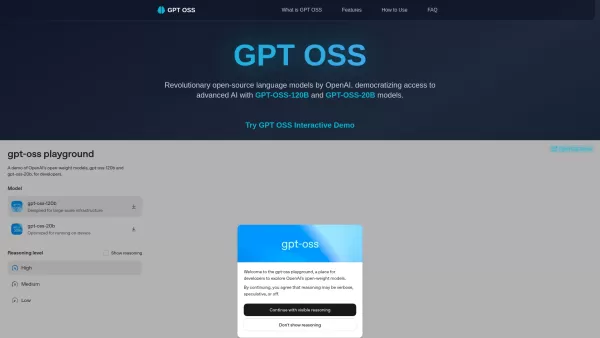
What is GPT OSS? GPT OSS marks a transformative step in making advanced AI widely available, introduced by OpenAI on August 5, 2025. This open-source family includes two robust models, GPT-OSS-120B and GPT-OSS-20B, engineered for complex reasoning an
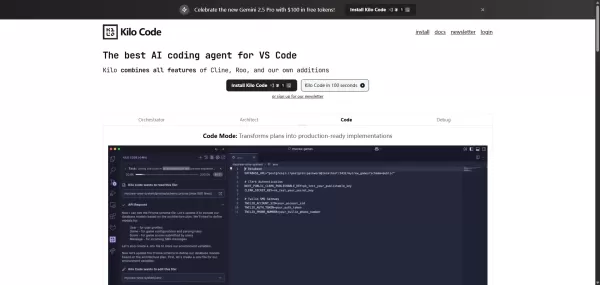
What is Kilo Code?Kilo Code brings AI-powered tools directly into your VS Code environment, helping developers automate routine coding work, debug more effectively, and produce code faster. Its distinct modes—Orchestrator, Architect, Code, and Debug—
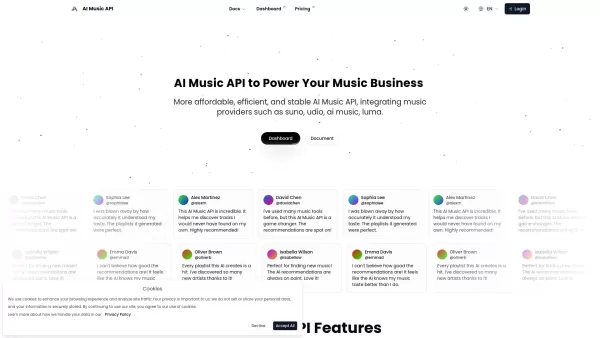
The AI Music API is a powerful tool that serves as a gateway for developers, allowing them to tap into a variety of music services from providers like Suno, Udio, and Luma. It's like having a universal remote for music integration, making it easier to bri
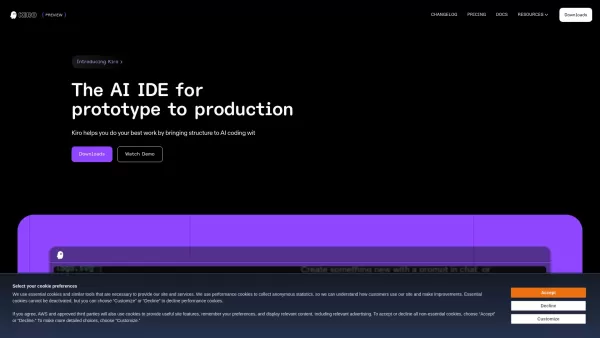
What is Kiro? Kiro is an AI-powered IDE that optimizes software development from prototype to production. It structures AI coding with spec-driven development, simplifying complexity, automating tasks
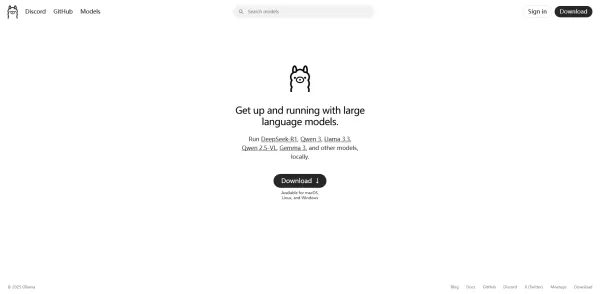
What is Ollama?Ollama is an innovative platform that makes AI models easier to use by offering a streamlined command-line interface. It lets users effortlessly access, run, and manage a variety of AI models, eliminating complicated installation or co
Quest AI Product Information
What is Quest AI?
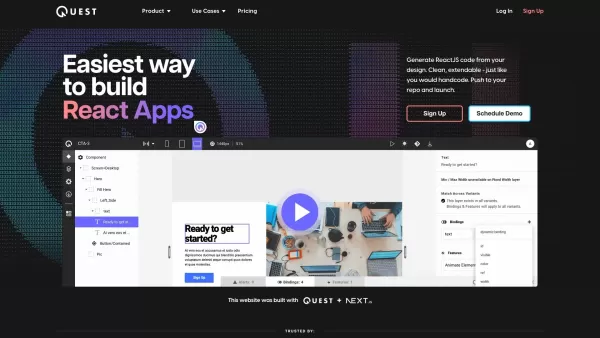
Quest AI is a no-code platform designed to simplify the development of React applications. It transforms Figma designs into clean, highly customizable React code, automating time-consuming tasks such as styling and setting up backend connections. Built with support for design systems like MUI and Chakra UI, Quest AI enables seamless integration that boosts productivity and accelerates time-to-market. This makes it an essential tool for developers looking to streamline their workflows and focus more on the creative aspects of application development.
Who will use Quest AI?
- Developers
- Product teams
- Startups
- Designers
How to use the Quest AI?
- Step 1: Import your Figma design into Quest AI.
- Step 2: Let Quest’s AI automatically generate React components from your design.
- Step 3: Customize the code as required.
- Step 4: Export the clean, production-ready code.
Platform
- web
Quest AI's Core Features & Benefits
The Core Features
- Convert Figma designs into React code
- Clean and extendable code generation
- Support for MUI and Chakra UI design systems
- Automates styling and backend connections
The Benefits
- Streamlines the development process
- Reduces manual coding effort
- Lowers time-to-market
- Improves code quality and consistency
Quest AI's Main Use Cases & Applications
- Automating frontend development
- Implementing design system integration
- Speeding up product deployment
- Enhancing productivity for startups and product teams
Quest AI's Pros & Cons
The Pros
It generates production-ready React code directly from design files, significantly reducing development time. It also supports popular design systems such as MUI and Chakra UI for smooth integration. Users retain full control over the generated code, avoiding vendor lock-in. Additionally, it facilitates better team collaboration and workflow optimization for agencies, startups, and product teams. It offers responsive design capabilities along with the ability to customize breakpoints and multi-screen experiences.
The Cons
There is no publicly available information regarding whether the platform is open source. Pricing details can only be accessed through an external form, which may delay users from obtaining that information. It lacks integrations with mobile app stores such as Google Play or Apple App Store, and there is no direct link to a Github repository for users to reference.
Quest AI's Pricing
Has free plan | No |
|---|---|
Free trial details | |
Pricing model | |
Is credit card required | No |
Paid from | |
Has lifetime plan | No |
Billing frequency |
To view the most current pricing information, please visit: https://docs.google.com/forms/d/e/1FAIpQLScx4tisscBGt2tyG3QkskZXqTP51bTlBBC6P-NqLHFA0FODUg/viewform?usp=sf_link
FAQs of Quest AI
What does Quest AI do?
Quest AI converts Figma designs into clean, production-ready React code, thereby streamlining the app development process.
Can I customize the code generated by Quest AI?
Yes, the code produced is clean and highly extensible, allowing developers to incorporate custom business logic as needed.
Does Quest AI support multiple design systems?
It does support MUI and Chakra UI design systems.
How do I start using Quest AI?
Import your Figma design into Quest, have the AI generate the code, make any necessary customizations, and then export the result.
Is Quest AI a no-code platform?
Indeed, Quest AI enables users to build React applications without having to write any manual code.
What platforms does Quest AI support?
Quest AI is primarily designed for web platforms.
Who can benefit from using Quest AI?
Developers, product teams, startups, and designers can all reap significant benefits from using Quest AI.
What are the benefits of using Quest AI?
It streamlines the development process, reduces the need for manual coding, shortens time-to-market, and enhances code quality.
What are some competitors of Quest AI?
Competitors of Quest AI include Anima, Bubble, Salesforce Einstein, Replit, and Framer.
Does Quest AI support prototyping features in Figma?
Yes, it supports Figma’s prototyping features, including animation capabilities.
Quest AI Company Information
Quest AI Screenshot

2026 Latest Best Top-Rated AI Wellness Tools for Sleep and Habit Tracking! XIX.AI curates a powerful, game-changing collection of must-try tools that offer real-world tests and detailed free vs paid comparison. These top-rated solutions help users boost sleep quality, monitor daily habits effectively, and unlock significant productivity improvements. Explore now to Discover your perfect tool and Start creating today to Unlock your AI edge!
 11 tools
 xix.ai

2026 Latest Best Top-rated AI Vendor Due Diligence Platforms for Procurement Reviews and Risk Screening! This curated list features powerful game-changing tools that go through rigorous real-world tests to deliver accurate rankings. You’ll find a free vs paid comparison, helping you identify the must-try solutions that boost procurement efficiency and cut risks. Backed by XIX.AI, it’s updated weekly. Explore now to discover your perfect tool for smarter sourcing! 238 characters
10 tools
xix.ai

2026 Latest Best Top-Rated AI Video Generators for Demos are curated here, offering powerful game-changing solutions to turn scripts into professional explainer videos fast. XIX.AI provides weekly updated rankings based on real-world tests, including free vs paid comparison details. Must-try tools help boost productivity significantly. Explore now to discover your perfect demo video creation tool!
9 tools
xix.ai

2026 Latest Best Top-rated AI Cash Flow Forecasting Tools for Small Business Finance are here on XIX.AI! Our curated list features powerful, game-changing solutions that go through real-world tests to help small business owners boost financial accuracy, plan budgets more effectively, and avoid cash flow issues. Get a free vs paid comparison and explore now to find your perfect tool for seamless financial management.
7 tools
xix.ai

2026 Latest Best Top-Rated AI Coding Chatbots Curated for Developers! Experience powerful game-changing tools that help you debug Python, JS, and SQL issues quickly. Get a free vs paid comparison along with real-world tests and detailed rankings to find the perfect fit for boosting your coding productivity. Try XIX.AI today to unlock your AI edge! Explore now.
12 tools
xix.ai

2026 Latest Best Top-rated AI Prompt Versioning Platforms for Reusable Playbooks are here on XIX.AI! Our curated list includes powerful game-changing tools that help you keep track of all prompts, test variations efficiently, and boost productivity across writing, content creation, and more. Get a free vs paid comparison along with real-world tests and updated rankings weekly. Explore now to discover your perfect tool for staying ahead in AI tasks!
9 tools
xix.ai


