


Discover quality AI tools
Bring together the world’s leading artificial intelligence tools to help improve work efficiency

Articles published by TimothyBaker
Apple introduces Apple Reference Image on iPhone 18 Pro, enabling pixel-level annotation and hardware-level verification. This feature creates a tamper-proof digital negative by signing metadata in the Secure Enclave Processor at the moment of capture, ensuring authenticity and resisting AI forgeries. It provides trusted evidence for news organizations by binding timestamps and sensor data during shooting, rather than post-processing, while maintaining user privacy through private cloud validation.
Apple introduces Apple Reference Image on iPhone 18 Pro, enabling pixel-level annotation and hardware-level verification. This feature creates a tamper-proof digital negative by signing metadata in the Secure Enclave Processor at the moment of capture, ensuring authenticity and resisting AI forgeries. It provides trusted evidence for news organizations by binding timestamps and sensor data during shooting, rather than post-processing, while maintaining user privacy through private cloud validation.

OpenAI has regained over 40% of the U.S. enterprise AI market share, surpassing Anthropic, according to data from Ramp, a corporate credit card and expense management platform. In May OpenAI held a 39% share while Anthropic had 41%, with Anthropic’s share rising to nearly 44% by July and OpenAI’s falling to around 40%. Since the third quarter, OpenAI’s growth rate has been faster than Anthropic’s. The data covers spending by over 70,000 U.S. technology industry companies using Ramp’s services, though it does not represent the full market as large firms use other expense management tools. Ara Kharazian of Ramp notes GPT-5.6Sol is gaining developer favor due to its strong performance, while Anthropic’s Fable product faces issues with pricing and data retention requirements (formerly requiring 30 days of data storage, which caused controversy). The paid penetration rate of enterprise AI rose from over 50% in March to nearly 56% in July, indicating ongoing market expansion despite vendor competition. Customer loyalty among AI companies remains highly volatile as firms continue to choose between OpenAI and Anthropic based on new model developments.
OpenAI has regained over 40% of the U.S. enterprise AI market share, surpassing Anthropic, according to data from Ramp, a corporate credit card and expense management platform. In May OpenAI held a 39% share while Anthropic had 41%, with Anthropic’s share rising to nearly 44% by July and OpenAI’s falling to around 40%. Since the third quarter, OpenAI’s growth rate has been faster than Anthropic’s. The data covers spending by over 70,000 U.S. technology industry companies using Ramp’s services, though it does not represent the full market as large firms use other expense management tools. Ara Kharazian of Ramp notes GPT-5.6Sol is gaining developer favor due to its strong performance, while Anthropic’s Fable product faces issues with pricing and data retention requirements (formerly requiring 30 days of data storage, which caused controversy). The paid penetration rate of enterprise AI rose from over 50% in March to nearly 56% in July, indicating ongoing market expansion despite vendor competition. Customer loyalty among AI companies remains highly volatile as firms continue to choose between OpenAI and Anthropic based on new model developments.

OpenAI has entered a 20-year lease deal with SB Energy, a SoftBank subsidiary, for a 10 gigawatt data center in Ohio, aiming to build one of the largest AI computing hubs. NVIDIA will invest $1.5 billion in SB Energy for equity and provide asset value guarantees to aid debt financing. The initial guarantee covers the first phase with 5 gigawatts of capacity, requiring NVIDIA to be the exclusive chip supplier initially with an option to expand support later. If OpenAI exits, SB Energy must re Rent the facility at original price before attempting a sale, with NVIDIA covering any shortfall below the project’s value up to $10.5 billion for the first phase. The deal was finalized after weeks of negotiations, addressing concerns over NVIDIA’s risk exposure. It reflects the rising competition among AI firms for computing power, with chip giants using their financial strength to support startups while limiting their own risks.
OpenAI has entered a 20-year lease deal with SB Energy, a SoftBank subsidiary, for a 10 gigawatt data center in Ohio, aiming to build one of the largest AI computing hubs. NVIDIA will invest $1.5 billion in SB Energy for equity and provide asset value guarantees to aid debt financing. The initial guarantee covers the first phase with 5 gigawatts of capacity, requiring NVIDIA to be the exclusive chip supplier initially with an option to expand support later. If OpenAI exits, SB Energy must re Rent the facility at original price before attempting a sale, with NVIDIA covering any shortfall below the project’s value up to $10.5 billion for the first phase. The deal was finalized after weeks of negotiations, addressing concerns over NVIDIA’s risk exposure. It reflects the rising competition among AI firms for computing power, with chip giants using their financial strength to support startups while limiting their own risks.

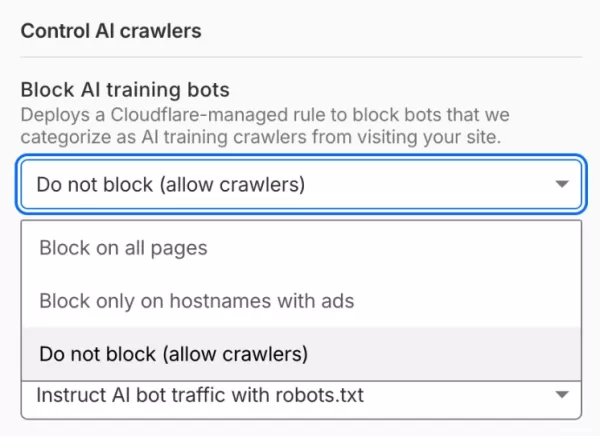
Cloudflare launched AI traffic management tools on July 1, allowing website owners to finely control search crawlers, bot crawlers, and training crawlers separately. This replaces blunt blocking that hurt SEO and ad revenue, letting sites protect content from training bots while maintaining search engine traffic. The move signals a shift toward strategic governance in AI content competition.
Cloudflare launched AI traffic management tools on July 1, allowing website owners to finely control search crawlers, bot crawlers, and training crawlers separately. This replaces blunt blocking that hurt SEO and ad revenue, letting sites protect content from training bots while maintaining search engine traffic. The move signals a shift toward strategic governance in AI content competition.
Beijing Space Computing Innovation Center was inaugurated in Zhongguancun on June 29. Operating under a company plus alliance model, it focuses on joint R&D of satellite AI chips, intelligent platforms, space models, and cloud platforms, provides public verification infrastructure, leads standard setting, and commercializes space computing services for urban governance. This marks a practical step in China's space computing industry layout.
Beijing Space Computing Innovation Center was inaugurated in Zhongguancun on June 29. Operating under a company plus alliance model, it focuses on joint R&D of satellite AI chips, intelligent platforms, space models, and cloud platforms, provides public verification infrastructure, leads standard setting, and commercializes space computing services for urban governance. This marks a practical step in China's space computing industry layout.


