Discover quality AI tools
Bring together the world’s leading artificial intelligence tools to help improve work efficiency

Articles published by RalphGarcia
Anthropic launches Claude Opus 5.2 with faster response and autonomous iteration. Apple releases iOS 27, upgrading Siri AI and optimizing older devices. GPT-6 Astra outperforms rivals in a vending machine simulation. Ant Group open-sources SingProbe, offering real-time risk blocking with under 0.5% overhead. Instagram restricts AI photo editing behind a subscription. Shanghai AI Lab releases ShuSheng-S2, a multimodal model excelling in scientific tasks. WeChat clarifies Xiao Wei AI privacy policies. StepX unveils StepAudio3 series, featuring advanced voice and music generation capabilities.
Anthropic launches Claude Opus 5.2 with faster response and autonomous iteration. Apple releases iOS 27, upgrading Siri AI and optimizing older devices. GPT-6 Astra outperforms rivals in a vending machine simulation. Ant Group open-sources SingProbe, offering real-time risk blocking with under 0.5% overhead. Instagram restricts AI photo editing behind a subscription. Shanghai AI Lab releases ShuSheng-S2, a multimodal model excelling in scientific tasks. WeChat clarifies Xiao Wei AI privacy policies. StepX unveils StepAudio3 series, featuring advanced voice and music generation capabilities.

Google DeepMind and Google Research launched WeatherNext3, an AI weather model using real-time satellite data for hourly updates. It offers multi-resolution forecasts up to 15 days, improving accuracy fivefold over previous versions. Key features include precise precipitation and clean energy variable predictions, aiding grid operators. Data is accessible via BigQuery and Earth Engine, though weights remain closed. This upgrade marks a shift toward high-precision, timely global forecasting.
Google DeepMind and Google Research launched WeatherNext3, an AI weather model using real-time satellite data for hourly updates. It offers multi-resolution forecasts up to 15 days, improving accuracy fivefold over previous versions. Key features include precise precipitation and clean energy variable predictions, aiding grid operators. Data is accessible via BigQuery and Earth Engine, though weights remain closed. This upgrade marks a shift toward high-precision, timely global forecasting.
OpenAI announced on August 25th that its newly developed Jalapeno chip outperforms NVIDIA’s current flagship GB300 series in internal tests, delivering higher efficiency per unit of power for AI workloads and faster data response speeds. As large model development drives up computing costs and supply chain risks, leading AI firms are shifting to build their own specialized chips to overcome performance bottlenecks. The chip’s success shows OpenAI can compete directly with traditional hardware makers in chip design, potentially reshaping the global semiconductor and computing power industry landscape and intensifying competition in the AI infrastructure market.
OpenAI announced on August 25th that its newly developed Jalapeno chip outperforms NVIDIA’s current flagship GB300 series in internal tests, delivering higher efficiency per unit of power for AI workloads and faster data response speeds. As large model development drives up computing costs and supply chain risks, leading AI firms are shifting to build their own specialized chips to overcome performance bottlenecks. The chip’s success shows OpenAI can compete directly with traditional hardware makers in chip design, potentially reshaping the global semiconductor and computing power industry landscape and intensifying competition in the AI infrastructure market.
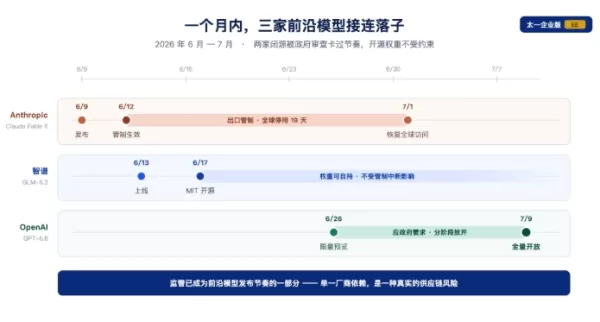
OpenAI launches GPT-5.6 series with three models: Sol, Terra, Luna. Pricing ranges from $1-$30 per million tokens. Sol outperforms Claude Fable5 by 13.1 points in Agents Last Exam but trails in SWE-Bench and math. Chinese rival GLM-5.2 emerges as a strong open-source alternative.
OpenAI launches GPT-5.6 series with three models: Sol, Terra, Luna. Pricing ranges from $1-$30 per million tokens. Sol outperforms Claude Fable5 by 13.1 points in Agents Last Exam but trails in SWE-Bench and math. Chinese rival GLM-5.2 emerges as a strong open-source alternative.
OpenAI updated ChatGPT to integrate Voice directly into the main chat interface Users can now talk with the AI and simultaneously view text responses and shared images in real time This eliminates the need to switch to a separate screen for voice conversations The update is rolling out to all mobile and web users
OpenAI updated ChatGPT to integrate Voice directly into the main chat interface Users can now talk with the AI and simultaneously view text responses and shared images in real time This eliminates the need to switch to a separate screen for voice conversations The update is rolling out to all mobile and web users
Google launched AP2, an open payment protocol for AI agents to facilitate seamless, traceable transactions across platforms, with support from 60+ merchants and financial institutions. The system enables AI agents to negotiate purchases, requiring dual approvals (intent and cart mandates) and integrates cryptocurrency via x402. Backed by Mastercard, Amex, and PayPal, AP2 aims to streamline AI-driven commerce.
Google launched AP2, an open payment protocol for AI agents to facilitate seamless, traceable transactions across platforms, with support from 60+ merchants and financial institutions. The system enables AI agents to negotiate purchases, requiring dual approvals (intent and cart mandates) and integrates cryptocurrency via x402. Backed by Mastercard, Amex, and PayPal, AP2 aims to streamline AI-driven commerce.

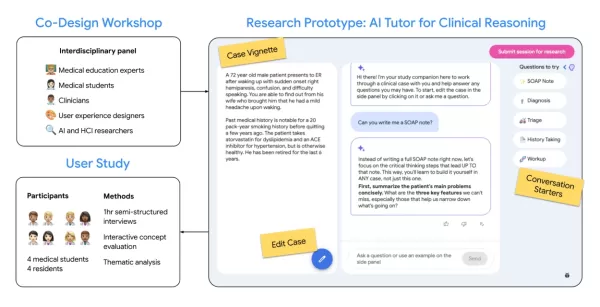
Google’s AI models, particularly LearnLM, show promise in transforming health professions education by addressing a projected 11 million healthcare worker shortage by 2030. Studies at CHI 2025 and MedEd on the Edge reveal LearnLM’s ability to adapt to medical learners’ needs, offering personalized feedback and promoting critical thinking, with physician educators rating it superior to base models in pedagogy and tutor-like behavior.
Google’s AI models, particularly LearnLM, show promise in transforming health professions education by addressing a projected 11 million healthcare worker shortage by 2030. Studies at CHI 2025 and MedEd on the Edge reveal LearnLM’s ability to adapt to medical learners’ needs, offering personalized feedback and promoting critical thinking, with physician educators rating it superior to base models in pedagogy and tutor-like behavior.