Discover quality AI tools
Bring together the world’s leading artificial intelligence tools to help improve work efficiency

Articles published by PaulHarris
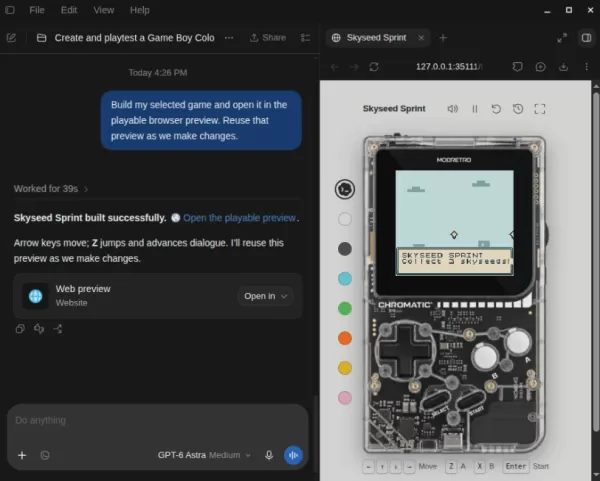
OpenAI partners with ModRetro to integrate its Codex AI coding tool into the Chromatic retro handheld console. The new Game Studio plugin allows users to generate game code via natural language descriptions, eliminating traditional development barriers. It features a built-in emulator for real-time testing and one-click streaming to the physical device, enabling seamless game creation and deployment on retro hardware.
OpenAI partners with ModRetro to integrate its Codex AI coding tool into the Chromatic retro handheld console. The new Game Studio plugin allows users to generate game code via natural language descriptions, eliminating traditional development barriers. It features a built-in emulator for real-time testing and one-click streaming to the physical device, enabling seamless game creation and deployment on retro hardware.
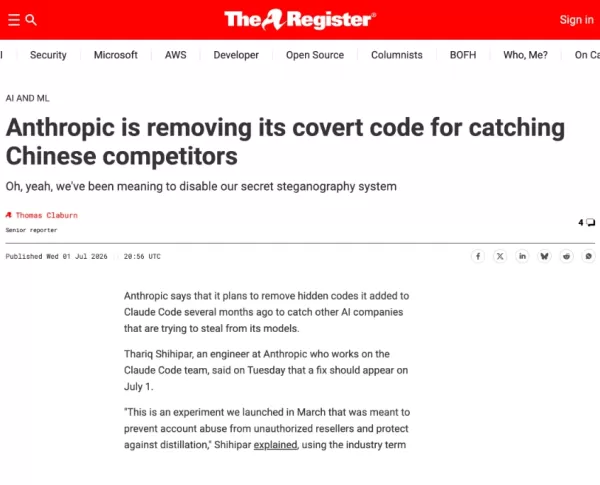
A hidden code in Claude Code ran secretly from April 2 to July 1, identified via reverse engineering. It used Unicode steganography in date texts to detect Chinese users and proxy interfaces of domestic AI firms like Baidu and ByteDance. Double checks on time zone and encrypted domain blacklists triggered data poisoning injection. Anthropic called it a short-term anti-resale experiment and removed it, but the covert mechanism raised severe privacy and trust concerns.
A hidden code in Claude Code ran secretly from April 2 to July 1, identified via reverse engineering. It used Unicode steganography in date texts to detect Chinese users and proxy interfaces of domestic AI firms like Baidu and ByteDance. Double checks on time zone and encrypted domain blacklists triggered data poisoning injection. Anthropic called it a short-term anti-resale experiment and removed it, but the covert mechanism raised severe privacy and trust concerns.
South Korea restructures power policy to boost semiconductor and AI competitiveness, introducing regional differential pricing and a special AI data center electricity rate. The government aims to provide stable low-cost power to key infrastructure, reduce costs in four regions, and disperse semiconductor clusters and AI centers nationwide. Specific plans include 1500 MW for Yeoju cluster and over 800 MW for AI computing by 2029.
South Korea restructures power policy to boost semiconductor and AI competitiveness, introducing regional differential pricing and a special AI data center electricity rate. The government aims to provide stable low-cost power to key infrastructure, reduce costs in four regions, and disperse semiconductor clusters and AI centers nationwide. Specific plans include 1500 MW for Yeoju cluster and over 800 MW for AI computing by 2029.

AI video startup Runway hits a $5.3 billion valuation as its Gen-4.5 model boosts its Hollywood presence and sparks a computing power race with giants like Google. The firm, focusing on video-based world models over text, is expanding into scientific research and robotics. Despite facing well-funded rivals, Runway credits its art-school roots and agility for its competitive edge.
AI video startup Runway hits a $5.3 billion valuation as its Gen-4.5 model boosts its Hollywood presence and sparks a computing power race with giants like Google. The firm, focusing on video-based world models over text, is expanding into scientific research and robotics. Despite facing well-funded rivals, Runway credits its art-school roots and agility for its competitive edge.
Voice actors in China, led by Zhang Jiaming, are protesting widespread AI voice theft. Zhang reports over 700 daily infringements using his signature character voice, causing lost work and income. He and others, like Lü Yanting and Ji Guanlin, face legal hurdles as many infringers are minors. Their company and an industry committee have issued statements condemning all unauthorized AI voice use and are pursuing legal action to protect actors' rights.
Voice actors in China, led by Zhang Jiaming, are protesting widespread AI voice theft. Zhang reports over 700 daily infringements using his signature character voice, causing lost work and income. He and others, like Lü Yanting and Ji Guanlin, face legal hurdles as many infringers are minors. Their company and an industry committee have issued statements condemning all unauthorized AI voice use and are pursuing legal action to protect actors' rights.

Warner Music Group settled its copyright lawsuit against AI startup Suno and struck a partnership The deal includes launching advanced licensed AI music models next year and a paid tier for audio downloads WMG artists gain full control over AI use of their work WMG also sold its Songkick platform to Suno This follows WMG’s similar settlement with AI firm Udio signaling an industry shift toward licensing AI music tech
Warner Music Group settled its copyright lawsuit against AI startup Suno and struck a partnership The deal includes launching advanced licensed AI music models next year and a paid tier for audio downloads WMG artists gain full control over AI use of their work WMG also sold its Songkick platform to Suno This follows WMG’s similar settlement with AI firm Udio signaling an industry shift toward licensing AI music tech