Discover quality AI tools
Bring together the world’s leading artificial intelligence tools to help improve work efficiency

Articles published by DouglasMartin
Google announced on August 20 that its open-source large model Gemma has surpassed 1 billion downloads, with over 100,000 customized variants developed to form a large open-source ecosystem known as Gemmaverse. The model is used in various fields including space image analysis, medical report standardization, cancer treatment plan design, and animal language recognition. A specialized medical version called MedGemma has been created to assist with structured medical reports and imaging analysis, and it has been used in research alongside other institutions to study cancer mechanisms. A jointly developed model called C2S-Scale 27B sorted single-cell gene data into text-like forms to help identify effective drugs for cold tumors, leading to a treatment combination that increased antigen presentation by 50% in lab tests. Though still in early research stages, the high download count for Gemma shows its value as a technical foundation and signals growing open-source use in life science research.
Google announced on August 20 that its open-source large model Gemma has surpassed 1 billion downloads, with over 100,000 customized variants developed to form a large open-source ecosystem known as Gemmaverse. The model is used in various fields including space image analysis, medical report standardization, cancer treatment plan design, and animal language recognition. A specialized medical version called MedGemma has been created to assist with structured medical reports and imaging analysis, and it has been used in research alongside other institutions to study cancer mechanisms. A jointly developed model called C2S-Scale 27B sorted single-cell gene data into text-like forms to help identify effective drugs for cold tumors, leading to a treatment combination that increased antigen presentation by 50% in lab tests. Though still in early research stages, the high download count for Gemma shows its value as a technical foundation and signals growing open-source use in life science research.

Amazon employees are reportedly misusing an internal AI tool called MeshClaw by assigning it unnecessary tasks to artificially inflate their scores on the company's AI usage leaderboard. This practice is raising concerns about negative impacts on work efficiency, resource allocation, and team collaboration. The situation highlights a potential need for Amazon to reassess its incentive structures to ensure technology use genuinely improves work quality.
Amazon employees are reportedly misusing an internal AI tool called MeshClaw by assigning it unnecessary tasks to artificially inflate their scores on the company's AI usage leaderboard. This practice is raising concerns about negative impacts on work efficiency, resource allocation, and team collaboration. The situation highlights a potential need for Amazon to reassess its incentive structures to ensure technology use genuinely improves work quality.

Taobao and Tmall have launched an AI model to identify fake images used in fraudulent refund claims. The system detects AI-generated or edited images of product damage, helping protect merchants from losses. Available first to top-rated sellers, the feature aims to curb false evidence and secure the e-commerce environment.
Taobao and Tmall have launched an AI model to identify fake images used in fraudulent refund claims. The system detects AI-generated or edited images of product damage, helping protect merchants from losses. Available first to top-rated sellers, the feature aims to curb false evidence and secure the e-commerce environment.
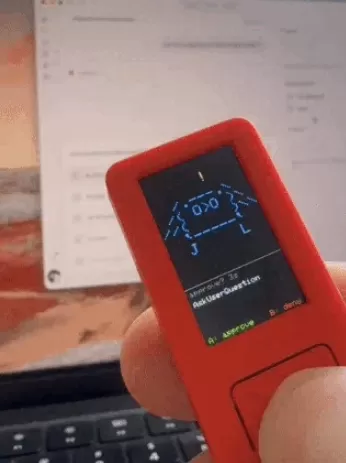
Anthropic engineer Felix Rieseberg unveils Claude Buddy, an open-source hardware device that serves as a physical companion for the Claude Code AI tool. The palm-sized gadget, built on an ESP32 board, syncs via Bluetooth to display Claude's status via pixel art pets and uses LED alerts with a button for quick user approvals, streamlining developer workflows. Its design features 18 ASCII animal forms and a dual-layer personality system. The project's core hardware, the M5StickC Plus, is produced by Shenzhen-based M5Stack, highlighting the city's role in global AI and IoT hardware.
Anthropic engineer Felix Rieseberg unveils Claude Buddy, an open-source hardware device that serves as a physical companion for the Claude Code AI tool. The palm-sized gadget, built on an ESP32 board, syncs via Bluetooth to display Claude's status via pixel art pets and uses LED alerts with a button for quick user approvals, streamlining developer workflows. Its design features 18 ASCII animal forms and a dual-layer personality system. The project's core hardware, the M5StickC Plus, is produced by Shenzhen-based M5Stack, highlighting the city's role in global AI and IoT hardware.